Amazon building more devices with in-house AI chips, says executive
Amazon's hardware chief Panos Panay tells CNBC that custom AZ3 chips now power Echo and Fire TV devices
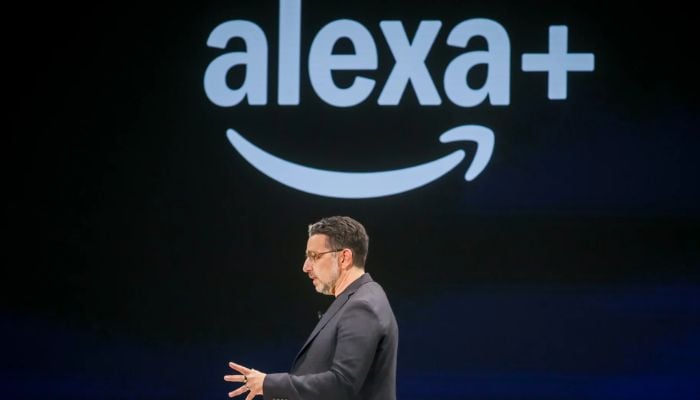
Amazon's top hardware executive says custom silicon is now central to how the company builds its most important consumer devices, part of a broader bet on running AI directly on hardware rather than in the cloud.
Speaking on CNBC's "The Tech Download" podcast, Panos Panay, Amazon's head of devices and services, said the company builds its own silicon for devices including the Echo Show 8, Echo Show 11, and Fire TV.
Amazon launched two new chips, AZ3 and AZ3 Pro, during October, which can operate AI models without connecting with any remote server since device manufacturers believe that it is better than using cloud computing.
Panay drew a comparison between this strategy and Apple's strategy to design their own chips because, according to him, closer interaction between software and hardware is required to provide the "ambient experience" in the home.
Panay admitted that Amazon is still dependent on third parties such as Qualcomm for some devices, but end-to-end silicon is the priority for their most important hardware.
The chip strategy ties directly into Alexa+, Amazon's upgraded assistant that became generally available in the US this year and can handle more complex, context-aware tasks.
According to Panay, interactions with devices would no longer be done via apps or screens but rather through conversational interfaces, thereby shifting the burden of processing to the hardware.
Panay cited the 2025 acquisition of the $49.99 wristband made by Bee in partnership with Amazon as the company's first step towards wearables, adding that the company has a "whole roadmap of on-the-go devices" that would remain contextually connected to the user's home and workplace.
While he did not go into details on any specific product yet, he stated that "it won't take long", especially after the similar comments made by Cristiano Amon, the CEO of Qualcomm, last month during a podcast interview about their plans to develop some 40 AI-enabled devices.


-
 Google launches Gemini 4 Argon as its new frontier model
 -
 Bill Gates has a plan for AI taking human jobs: Tax robots
 -
 OpenAI’s new API to give AI agents a watchdog
 -
 Google challenges EU ruling that could open its search services to rivals
 -
 US added jobs, but that doesn’t mean companies are hiring
 -
 Google Play to turn your game library into playlists
 -
 WhatsApp Channels may move to chats tab in new test
 -
 Android Auto's Razr calling bug just got worse with Gemini