China backs DeepSeek at $50bn valuation
Investors expect V4 to accelerate AI adoption across Chinese industries, automating complex tasks
DeepSeek, China's breakthrough AI startup, is raising capital at a $50 billion valuation from government-backed investors as Beijing doubles down on technology self-sufficiency. A one-year-old Chinese state-sponsored fund called China's National Artificial Intelligence Industry Investment Fund, which holds about $8.8 billion in assets, is in advanced negotiations to join this investment round in Chinese currency.
The Hangzhou-based company aims to raise several hundred million dollars, with the valuation marking a dramatic increase from discussions earlier this year that envisioned a $10 billion to $30 billion range.
DeepSeek alarmed global financial markets at the beginning of last year when it revealed a viable AI competitor, created at a much cheaper price than what the Western countries spend on developing their models.
When DeepSeek was just launched, its founder, Liang Wenfeng, was very reluctant to seek external funding and financed his operations with his own money and those generated by his hedge fund. This shift has changed now because the company wants to respond to Beijing's call for strengthening China's technology autonomy.
Just last month, DeepSeek launched V4, their latest upgraded version, which uses Nvidia's powerful processors while being developed in partnership with Chinese chip manufacturers such as Huawei.
Though DeepSeek's algorithms continue to be open source and freely available, the firm makes money through subscription payments for the use of its computational power through an API.
For Beijing, DeepSeek is considered an infrastructure for technological independence. In 2024, China collected about $50 billion for their semiconductor fund, and their new AI fund will be the foundation of government support for their AI firms. At the same time, China has been tightening regulations, with some AI firms required to get clearance from the government to receive US investments and having banned Meta from acquiring Manus, a Chinese AI firm operating in Singapore.


-
 AI could boost US GDP to $44 trillion by 2030, Anthropic model forecasts
 -
 What Anthropic's draft AI bill would let Washington block?
 -
 Apple reshuffles legal team with two former Meta executives
 -
 Elon Musk reveals Tesla Roadster’s most ‘unexpected’ new feature
 -
 Google's Waymo to launch first Canadian robotaxi service in Toronto by 2028
 -
 UK regulator targets Microsoft’s business software over competition concerns
 -
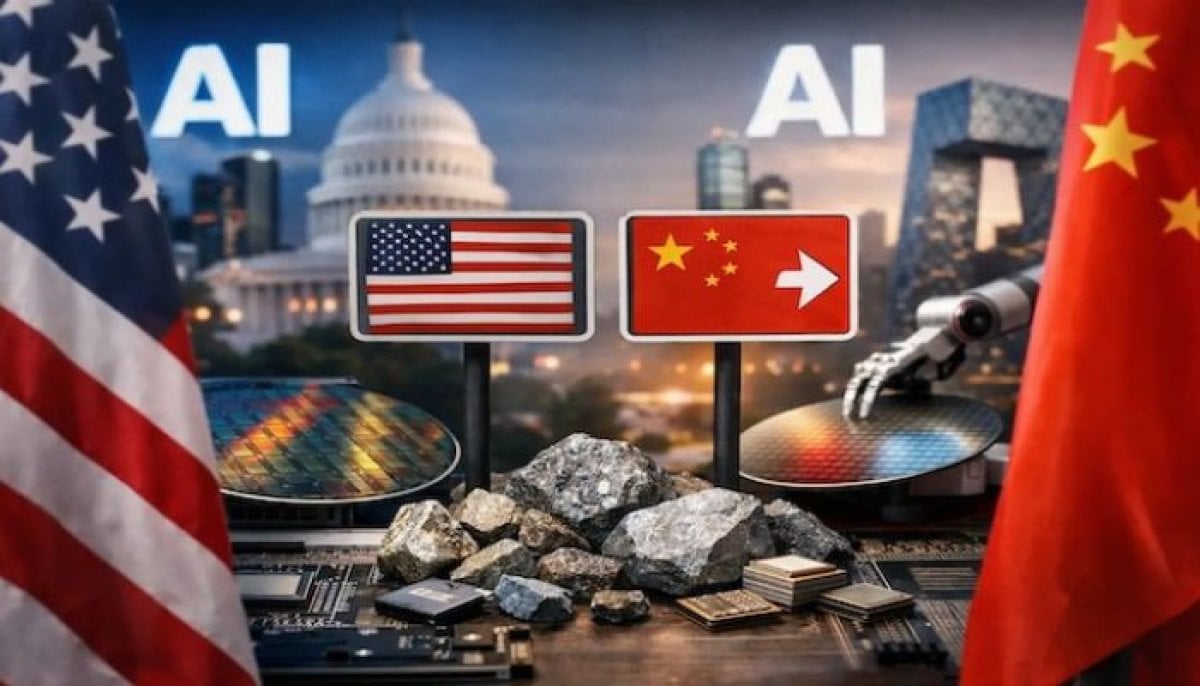 China proposes tighter AI export controls amid US rivalry
 -
 WhatsApp tests new way to request someone's location