Penn researchers crack AI method to solve hidden gene equations
University of Pennsylvania's new 'Mollifier Layers' method helps AI solve complex equations driving gene expression
Researchers at the University of Pennsylvania have solved a persistent obstacle in computational mathematics: how to reliably use artificial intelligence to reverse-engineer inverse partial differential equations.
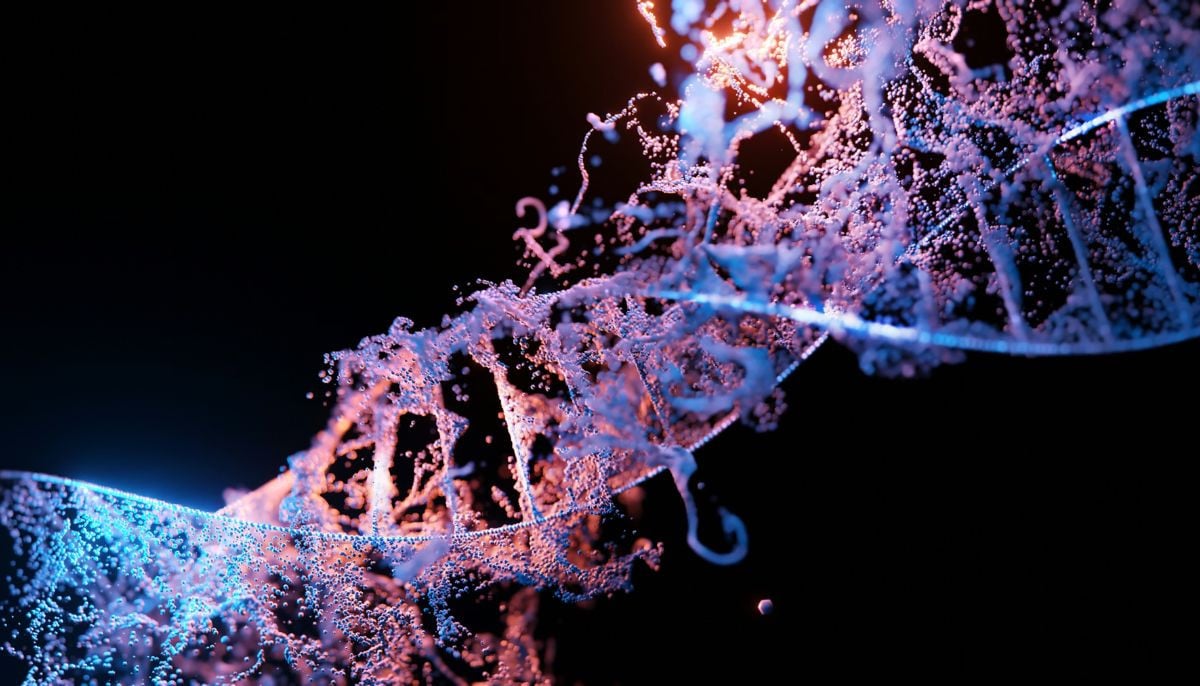
The innovation by the team, which is presented in their paper in Transactions on Machine Learning Research and has been selected for presentation at the 2026 Neural Information Processing Systems Conference, involves chromatin domains measuring only 100 nanometres in length that regulate gene activation and deactivation.
"Inverse problems involve solving problems by starting with the effects and then figuring out what caused them," explains Vivek Shenoy, Eduardo D. Glandt President's Distinguished Professor in Materials Science and Engineering at the University of Pennsylvania.
Scientists observe chromatin structures reorganising inside cells, but inferring the epigenetic chemical processes driving those changes has resisted conventional approaches.
Partial differential equations describe the development of systems both spatially and temporally, while back-solving them to find the causes behind their effects requires an entirely different set of mathematics.
Classical AI models compute derivatives via recursive automatic differentiation, continually measuring the differences at each point when data is passed through neural networks. It works poorly for intricate systems because it magnifies each error during computations, leading to instability and requiring vast amounts of computing power.
However, the University of Pennsylvania researchers realised that the constraint did not lie in the technology used but in the mathematics employed. The researchers borrowed a trick devised by German-American mathematician Kurt Otto Friedrichs in the 1940s, adding "mollifier layers" that cleaned up any noise in the data before it was measured.
Graduate researchers Vinayak Vinayak and Ananyae Kumar Bhartari helped demonstrate that mollifier layers could unlock epigenetic reaction rates controlling chromatin organisation and gene activity.
Understanding these rates during ageing, cancer progression, or development could inform therapies that redirect cells toward desired states. The implications extend across materials science, fluid dynamics, and any field where scientists must infer hidden parameters from noisy observations.




-
 Apple speeds up software updates amid AI-driven cybersecurity threats
 -
 WhatsApp will now let you chat without sharing your phone number
 -
 Trillionaire Elon Musk celebrates birthday with rocket-themed cake
 -
 Breaking: Is Minecraft down? Several users report outages
 -
 Europe's heatwave puts AI data centres under pressure
 -
 US plans to build world's first fault-tolerant quantum computer: Check details
 -
 Base iPhone 18 likely to feature 9GB RAM, leak suggests
 -
 South Korea plans massive $576bn AI-chip bet to challenge global rivals