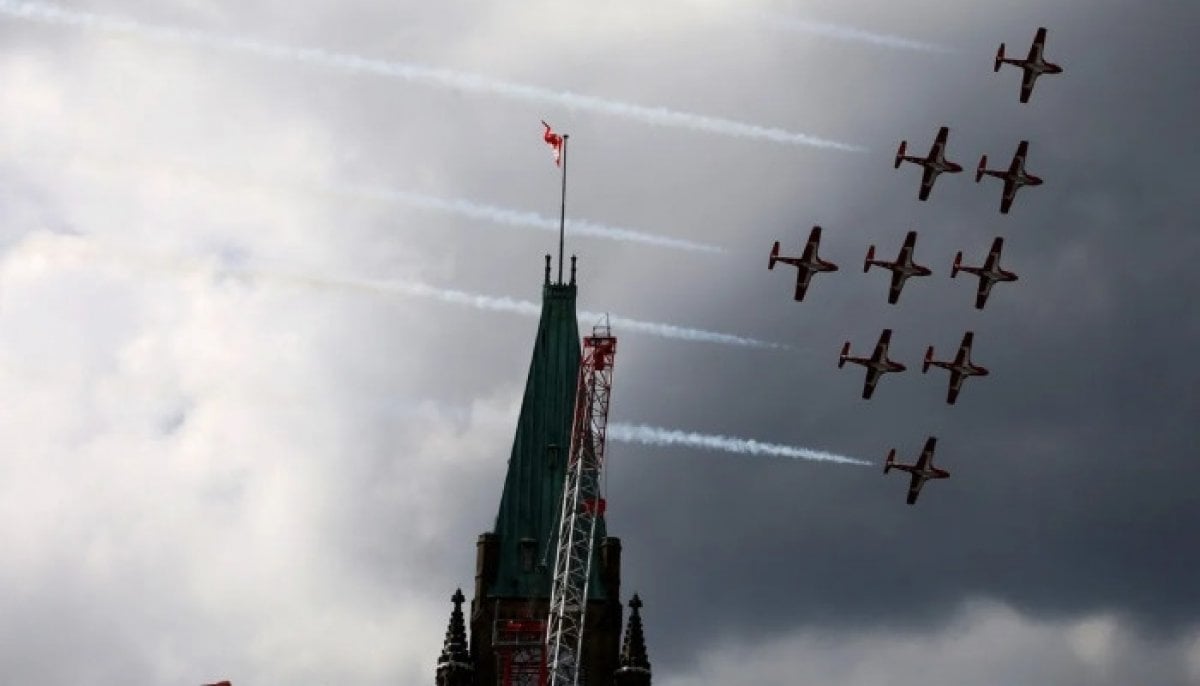
Britain to form joint naval force with nine European countries to strengthen defence cooperation
Britain teams up with European nations under JEF to form unified naval force to complement NATO, deter threats and boost maritime defence coordination

Britain has announced it will create a joint naval force with nine European countries so as to complement NATO.
The head of the Royal Navy announced that Britain has agreed to create a unified naval force with European countries to deter future Russian threats from the “open sea border” to the north.
Gen. Sir Gwyn Jenkins said that despite the ongoing crisis in the Middle East, where the Strait of Hormuz remains closed after the US-Israeli war in Iran, “Russia remains the gravest threat to our security."
In a speech, the first sea lord said the 10 members of the Joint Expeditionary Force (JEF) had signed last week a statement of intent to create a “multinational maritime force” to act as a “complement to NATO."
Military cooperation between the US and the UK is at a low point, with the two countries at odds over the Strait of Hormuz.
The US has said it wants help forcing the strait and criticized British and French discussions over creating defensive patrols after the war ends.
The naval force further stressed that it would not include the US, as President Donald Trump has repeatedly criticized the UK for not actively supporting the Iran war, at one point describing the Royal Navy’s aircraft carriers as "toys."
The JEF includes the Netherlands, all five Nordic and three Baltic states, and the UK as its largest military member. Canada is also considering joining as some NATO members refine their response to rising Russian aggression.
Earlier this month, the UK said that Russian spy submarines had been tracked engaging in what appeared to be covert surveillance of the undersea infrastructure around Britain.
The aim of the new maritime force, which would be “commanded if necessary” from the UK’s military headquarters in Northwood, north-west London, would be to train and prepare together.
It also would be “designed to fight immediately if required, with real capabilities, real war plans, and real integration," Jenkins said, though the navy struggled to make a warship available at the start of the war in Iran.
Jenkins said the Middle East crisis had put the Navy in the spotlight. “Were we prepared enough? Can we fight today, and if so, with what?” he said, adding that the service had an overall plan of action.
Additionally, the Naval sources have said the availability crisis at the start of the war stemmed from a lack of prior investment and highlighted the impact of cuts made to shipbuilding by previous governments.





-
 Self-exiled Chinese tycoon Guo Wengui sentenced to 30 years in US prison
 -
 Ex-Pentagon official makes chilling claim: UFOs provoke US military
 -
 Inmates stage daring takeover of Bertie-Martin Regional Jail
 -
 Paris mortuaries at capacity as heatwave death toll climbs
 -
 US Supreme Court allows Lisa Cook to remain at Fed
 -
 Car crashes into North Circular Bus stop, two injured
 -
 Germany Shooting: 5 adults killed at Stade Youth Centre, suspects detained
 -
 'Iran has requested a meeting': Trump announces surprise Doha talks
-
 Dangerous heat wave sweeps US before July 4: Which states will be hottest?
 -
Andy Burnham rules out Cabinet appointments until leadership race concludes
-
Will missing flight MH370 ever be found? Malaysia extends search until 2027
-
Spanish PM Pedro Sanchez faces pressure as wife Begona Gomez ordered to stand trial