Reflection on Trump's economic agenda: Outcomes of new policies amid political challenges
Economic growth ended the year on a slower note, largely due to the record-long government shutdown that temporarily reduced government spending
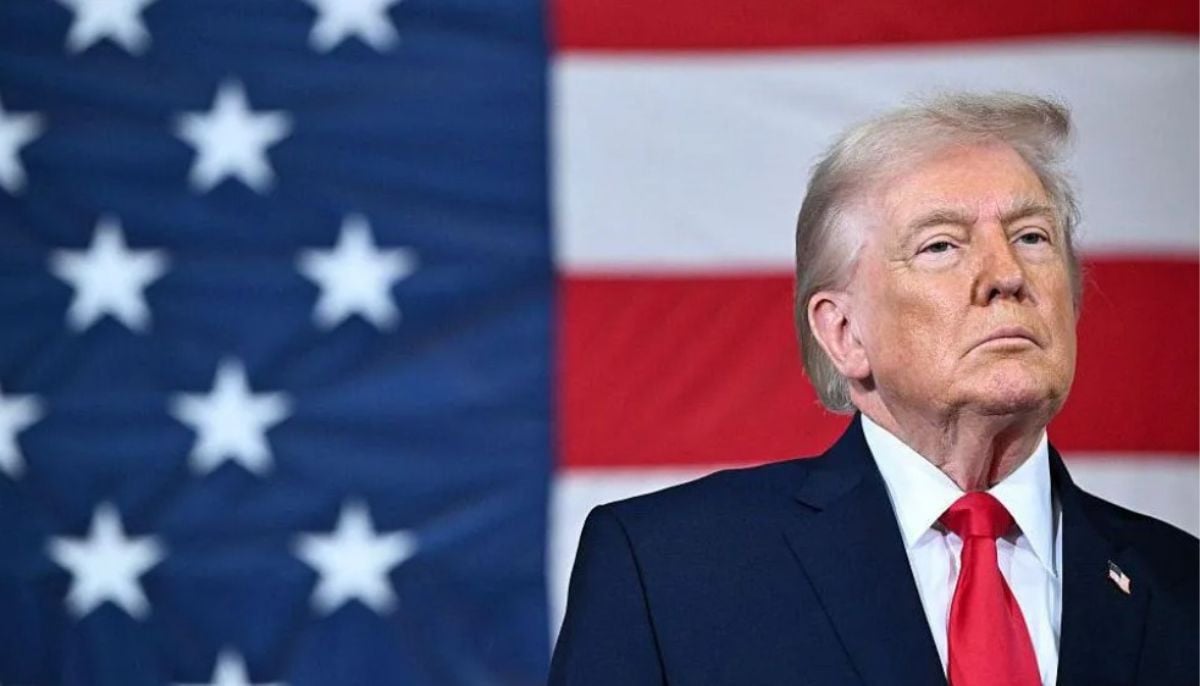
Trump's economic agenda has delivered on some promises and missed on others.
Trump’s use of tariffs on imported goods as a blunt instrument of foreign policy has raised doubts among voters about his commitment to improving affordability.
His sweeping tax bill, while expected to boost business investment, will effectively strip health coverage from millions of Americans.
While his immigration crackdown has turned violent and deadly at times, which became the major reason for opposition and backlash he faced by his followers and supporters, reports Bloomberg.
Over a year into Donald Trump's second presidential term, his suite of sweeping economic policy changes has delivered on some promises and fallen short on others, leaving American households and businesses with a mixed bag that includes strong economic growth and a tech investment boom but also stalled job gains and still too-high inflation.
Tariffs:
Last week, the Supreme Court decision revealed the striking down of the emergency tariffs that were major part of Trump's economic agenda, and the uncertainty that has characterized the American economic outlook since Trump returned to power seems only to have deepened.
As reported by Reuters, Trump's signature economic policies have run the gamut, often overlapping with his foreign policy and "America First" political agenda.
They have included tax cuts to fuel spending and economic growth; tariffs to raise government revenue, reduce U.S. dependence on imports and bolster domestic manufacturing; an immigration crackdown that was also framed as a boon for American job jobseekers and a path to better housing affordability; and a broad push to deregulate industries including energy and banking.
Here is a look at where some key measures of the $30 trillion U.S. economy stand as the second year of Trump's second term gets under way.
GDP Growth Beats Expectations:
A line graph showing US GDP growth from 2016 to 2025.
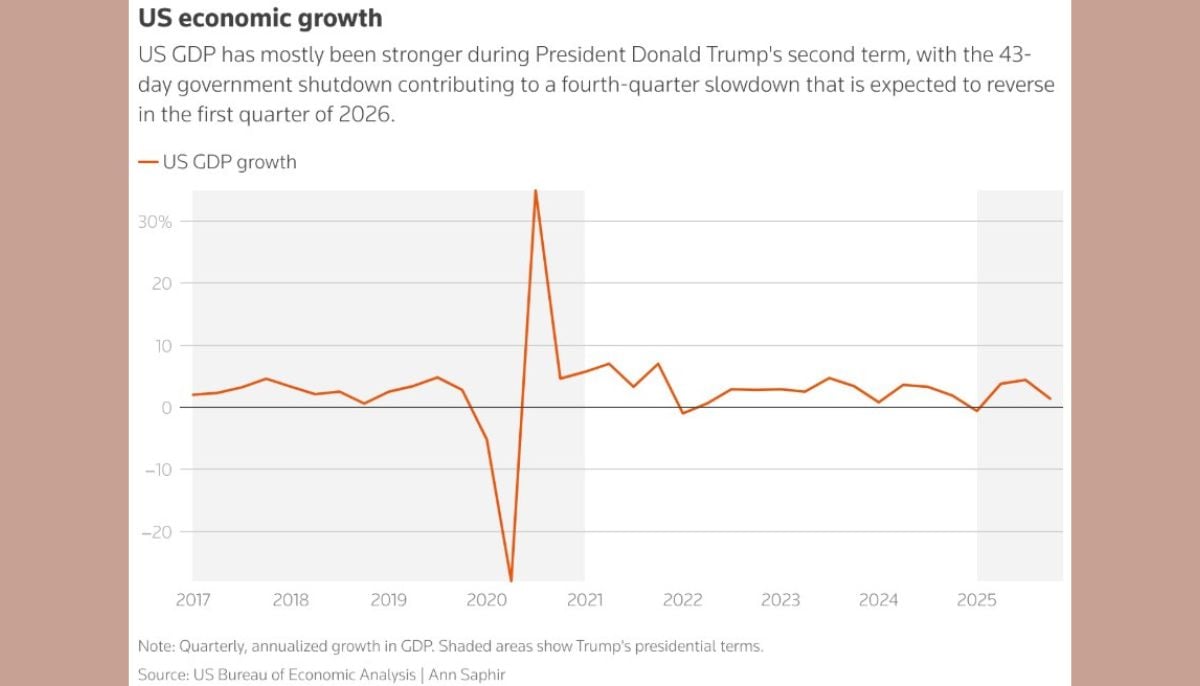
The U.S. economy began last year by shrinking as businesses sought to beat impending tariffs by front-loading their imports.
Economic growth ended the year on a slower note, largely due to the record-long government shutdown that temporarily reduced government spending.
But in between, growth charged ahead at an expectations-beating pace, and this year the tailwinds from the tax cuts in Trump's One Big Beautiful Bill Act (OBBBA) are expected to bolster growth further, all else equal.
Investment in artificial intelligence has driven some of the growth, but robust consumer spending has also been key.
Tariff Income and Trade Deficit:
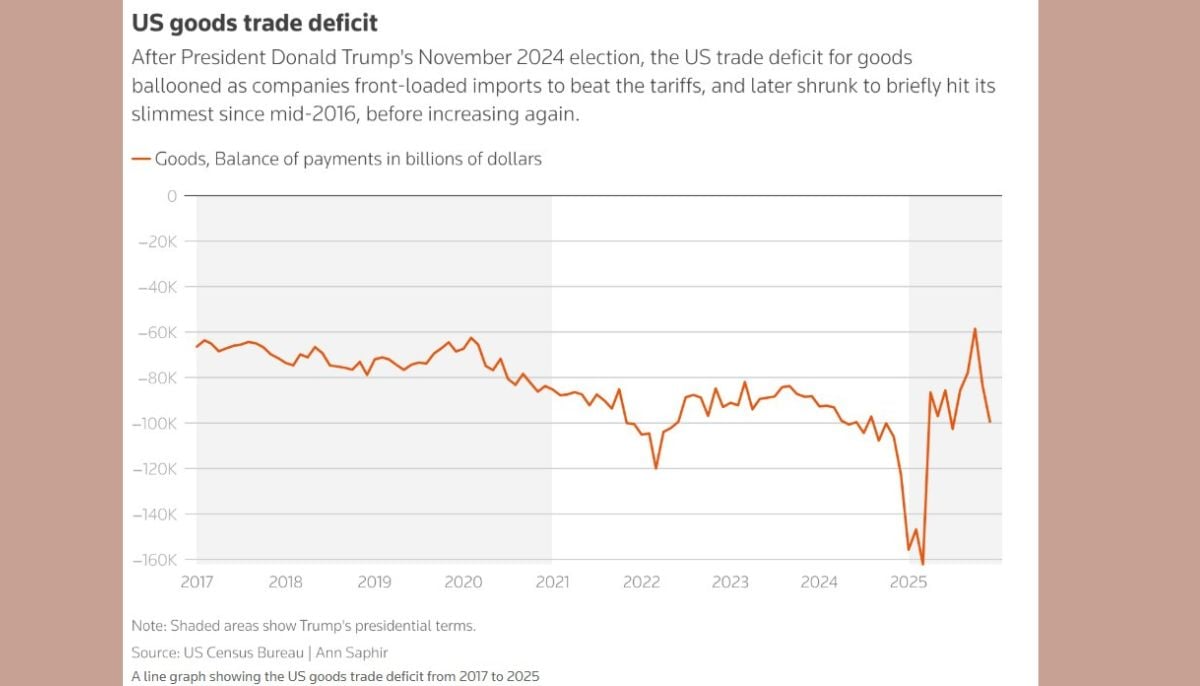
Tariffs have been a central part of Trump's economic policies from the beginning. Indeed, even before he was inaugurated, businesses moved to speed up imports to try to get ahead of the levies, temporarily deepening the U.S. trade deficit that Trump had said his tariffs were designed to reduce.
Analysts say that over time, tariffs may narrow the gap between imports and exports that Trump sees as a measure of U.S. economic strength, but so far that has not happened.
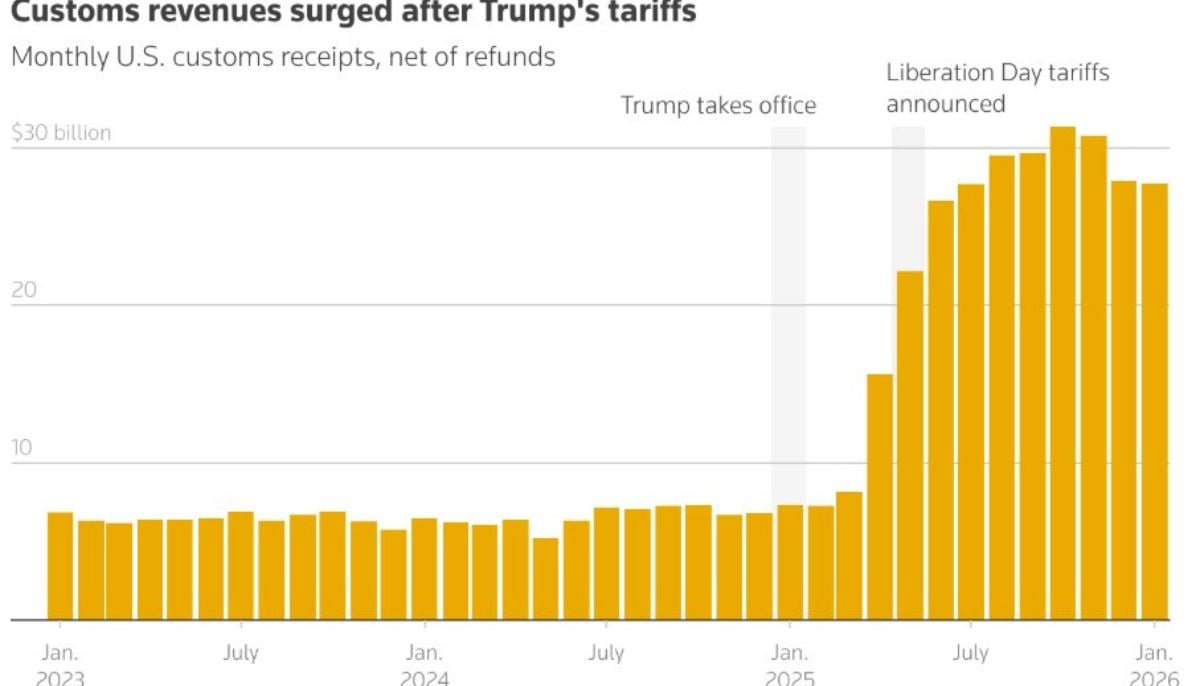
The Supreme Court's ruling invalidated Trump's sweeping "emergency" global tariffs, but the Trump administration has already put on new 15% tariffs to partially replace the ones that have gone by the board and has vowed to use a range of authorities to make sure that revenue from import levies does not drop.
Broader Job Market Stasis:
A line graph showing the unemployment rate from 2016 to 2025
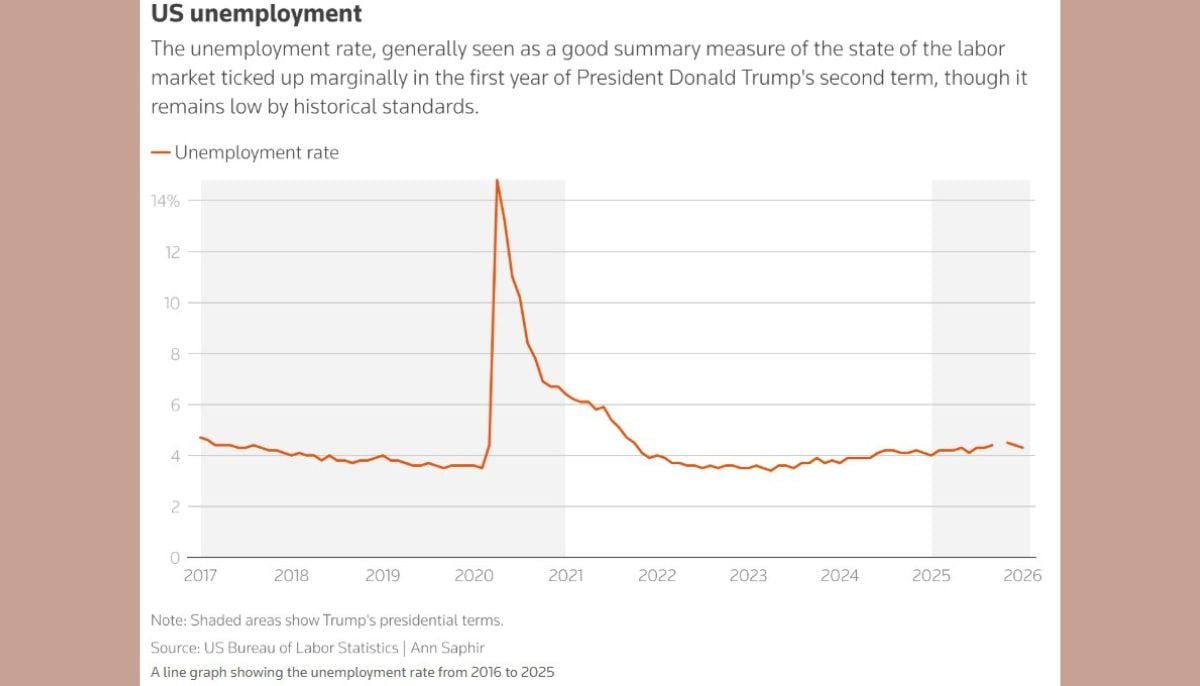
Unemployment has ticked up but remains low, measuring 4.3% in January. Monthly job gains, however, slowed last year to a trickle, with the 180,000 increases in employment for the entire year only slightly more than the 168,000 average monthly job gain in 2024.
Analysts link the deceleration to Trump's immigration crackdown, which reduced both the supply of and the demand for jobs. U.S. employers did add 130,000 jobs in January, though it is unclear if that healthy showing will continue.
Inflation and affordability concerns remain:
A line graph showing year-over-year PCE inflation from 2016 to 2025
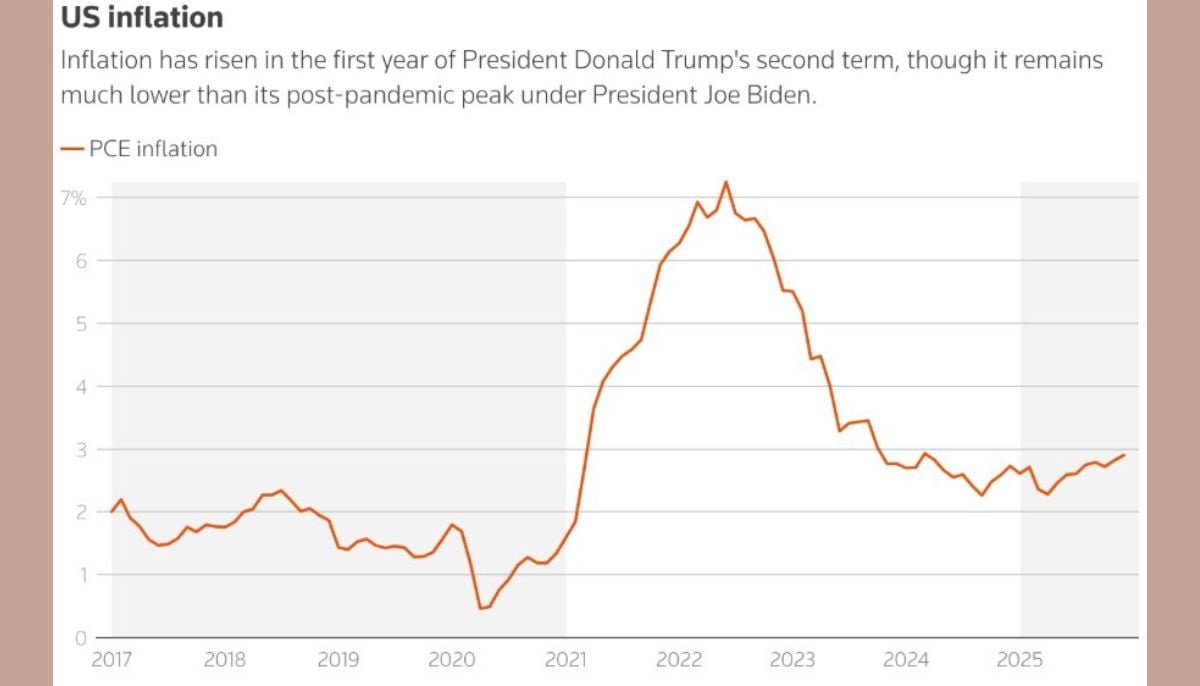
Inflation has cooled since the post-pandemic surge during President Joe Biden's administration, but year-over-year prices by the measure the Federal Reserve tracks inflation actually was trending upward at the end of last year.
Trump has nominated former Fed Governor Kevin Warsh to take over from Jerome Powell as Fed chair in May, and financial markets are betting that by then inflation will have cooled and that Warsh in his new role will oversee a couple of interest-rate cuts starting in June.
Rate cuts could also be motivated by further weakening in the labor market.
A line graph showing the annual cost of homeownership as a percentage of median income from 2017 to 2025.
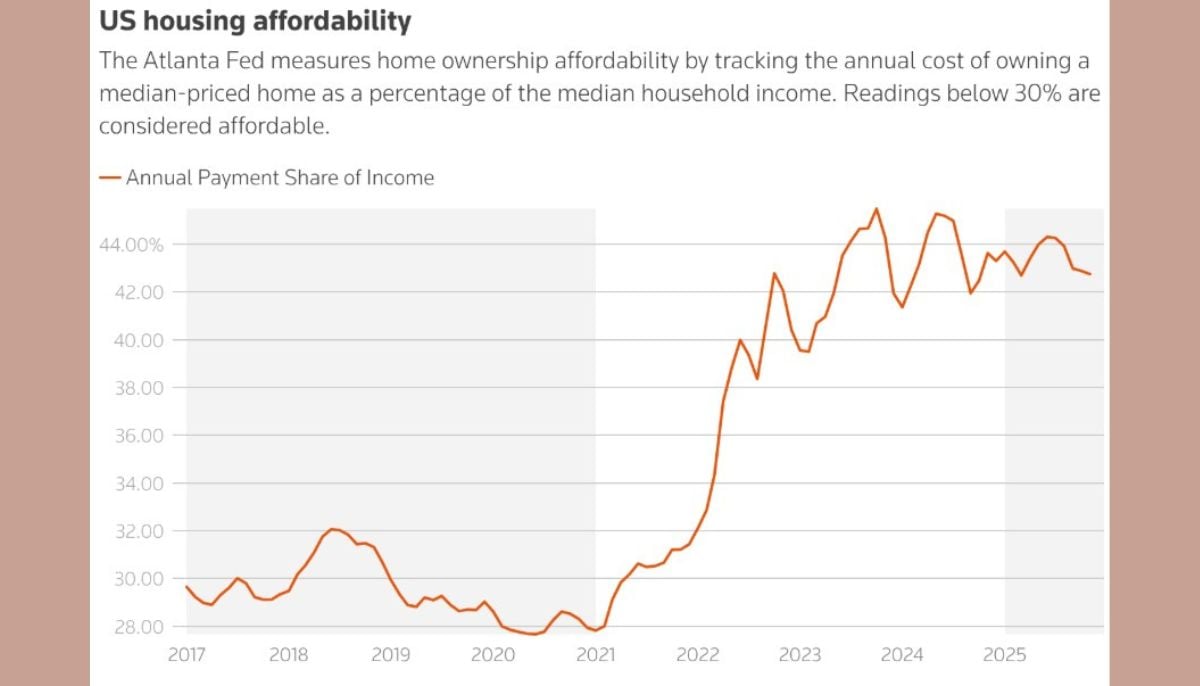
Overall affordability concerns remain central to American household worries. Late last year, Trump announced a few policies aimed at addressing the problem, but mortgage rates remain high and the housing supply in most of the country is short of what is needed to meet demand.
This leaves the cost of home ownership increasingly out of reach for families whose incomes are not well above the median.


-
 Abdul El-Sayed heckler linked to Republican strategist that was paid $250K to oppose him
 -
 Flights to Europe could get more expensive in 2027 as fuel costs surge, Ryanair warns
 -
 CNN threatens to sue Trump administration again over Air Force One press ban
 -
 Attack on Australian MP Helen Haines highlights escalating threats to public figures
 -
 Ilhan Omar's sister questioned by investigators amid US citizenship fraud probe
 -
 Zelenskyy calls Rubio talks constructive after Trump eases Russia sanctions for 60 days
 -
 Milan on high alert as Italy deploys 500 troops following days of riots and looting
 -
 Ex-Toronto Blue Jays player Richard Butler and wife accused of defrauding baseball families