Penguin starvation crisis: New study revealed sardine population collapse causes 60,000 bird deaths
The climate crisis is directly linked to the loss of 95% of penguins in the two nurseries in South Africa
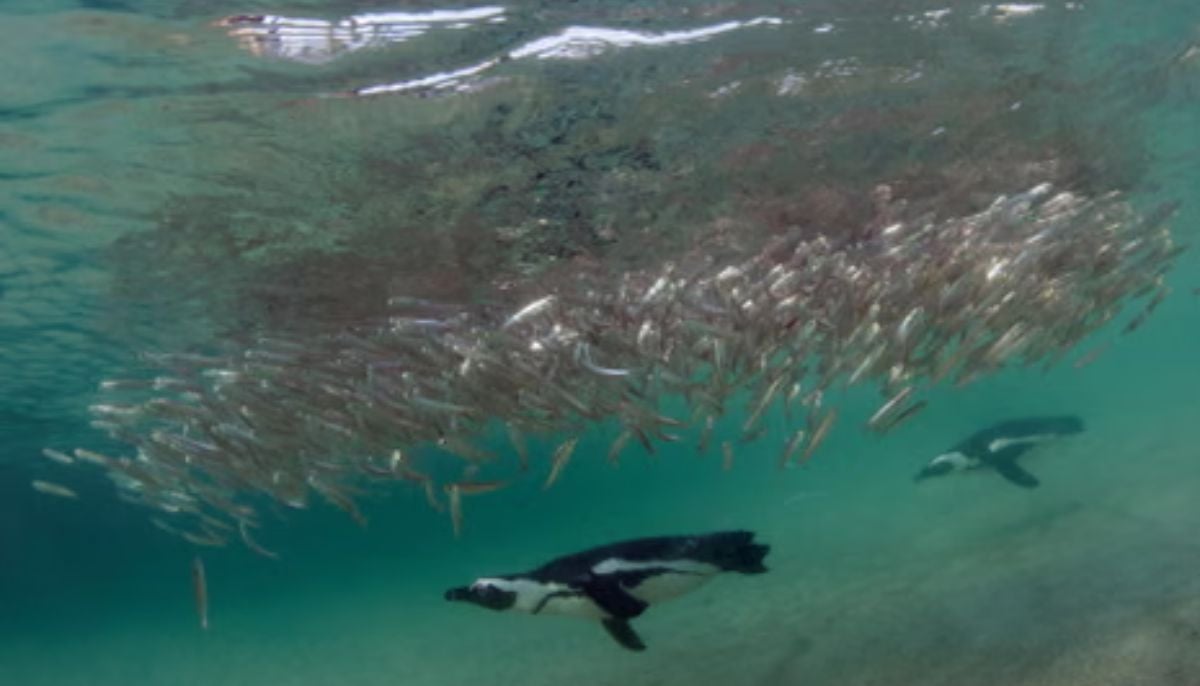
According to a new study published by researchers from the University of Exeter and South Africa’s Department of Forestry, more than 60,000 penguins in colonies off the coast of South Africa have died of starvation as a result of disappearing pilchard.
The research paper primarily found that more than 95% of the African penguins in two of the selective breeding colonies on Dassen Island and Robben Island, died between 2004 and 2012.
As reported by The Guardian, the death of the breeding penguins occurred due to starvation during the moulting period, and the study clearly links this decline to the climate crisis and overfishing.
The study was published in Ostrich: Journal of African Ornithology which demonstrated that the losses researchers recorded in those colonies were not isolated.
In this connection, Dr Richard Sherley from the Centre of Ecology and Conservation at the University of Exeter said, “The African penguin species has undergone a population decline of nearly 80% in 30 years."
The African penguin’s dense feather structure is a natural phenomenon that ensure insulation
African penguins restore their worn-out feathers to safeguard their insulation and waterproofing. During the moulting period, they stay on land for about 21 days.
It has been observed that in order to survive this fasting period, they need to build up their fat reserves immediately before the moult.
In this regard, Sherley said, “If food is too hard to find before they moult or immediately afterwards, they will have insufficient reserves to survive the fast.”
He further explained, “We don’t find large rafts of carcasses-our sense is that they probably die at sea.”
The study has further scrutinized that every year, the biomass of the Southern African pilchard had fallen to 25% of its maximum profusion off the coast of western South Africa.
The fish are a vital element for African penguins, and fluctuations in the temperature and brackish water off the west coast of Africa have made the fishes’ procreation less successful. However, levels of fishing will remain high in the region.
Conservationists are effectively implementing action on the ground, by building artificial nests to shelter chicks.
Commercial seining involves encompassing a school of fish with a large net and then trapping them by closing the bottom.
This activity has been carried out around the six largest penguin-breeding colonies in South Africa.
Nonetheless, the study concludes that discussing low levels of small fish stocks requires imperative attention, not only for African penguins but also for other indigenous species depending on these stocks.


-
 New study explains 364-day Qumran calendar puzzle
 -
 Why does time feel faster as you age? Science explains
 -
 Scientists name newly discovered snake after Guns N' Roses' Slash
 -
 SpaceX secures three new NASA crew flights: What to know
 -
 Sovereign AI fund in talks to back Political Sciences: What to know
 -
 What recent discovered Moon Crater Means for Future Astronauts
 -
 Scientists discover new wild cat species in Bolivia for the first time in a century
 -
 SpaceX turns to failed startups for AI training: Here’s why