Asia’s factories are facing manufacturing slowdown: Inside demand crisis
Asia’s manufacturing factories hit a demand meltdown as US trade deals fall flat
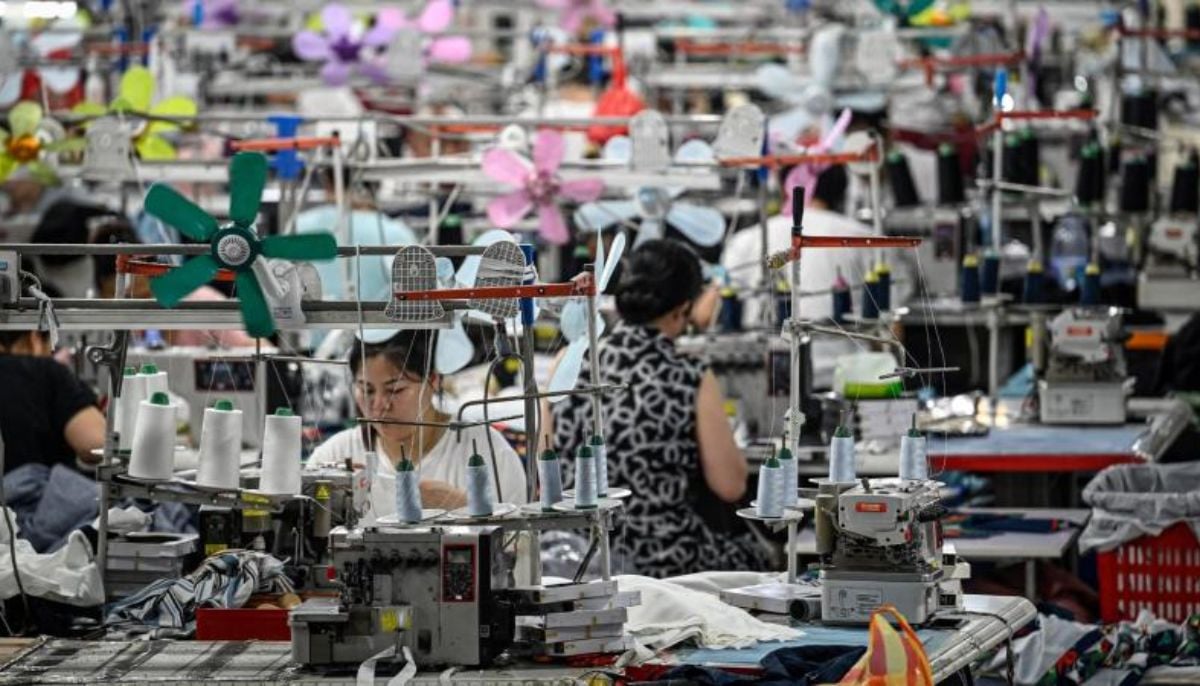
Asia’s manufacturing powerhouses experienced a demand slowdown in November as US trade negotiations fail to produce significant outcomes across the exporting nations characterized by the fresh revival in orders.
The Asian countries have been reeling from trade uncertainties driven by US President Donald Trump sweeping tariffs.
Manufacturing hubs struggling with contraction
According to purchasing managers’ indexes (PMIs), China, South Korea and Japan showed a massive decline in growth. On the other hand, South Asian countries witnessed an uplift in growth.
The world’s largest manufacturer, China also experienced a plunge in factory activity, followed by the contraction for the eighth executive month.
The consistent decline in demand has failed to boost production in the midst of already high inventory levels, thereby contributing to persistent deflationary shockwaves.
Zichun Huang, China economist at Capital Economics, said "Container throughput at Chinese ports was little changed last month compared to October. To the extent that demand did improve, it didn't do much to support production amid already high inventory levels - the output component dropped to a four-month low.”
Another Asian country, Japan, despite having trade deals with the US, has witnessed a decline in new export orders, expanding the meltdown to two-and-a-half years. The recession is often attributed to restricted capital investment and a stagnant business environment globally.
As per official data, Japanese corporate spending on factories spiked to 2.9 percent in July-September, demonstrating a slowdown from the previous quarter.
Although, recently South Korea secured a trade deal with the United States, the country’s manufacturing activity still contracted for a second month.
Taiwan is also experiencing a similar fate characterized by decline in factory activity but fortunately at a slower rate as compared to other countries.
Emerging South Asian markets
On the contrary, South Asian economies are outperforming the major manufacturing hubs.
For instance, Vietnam and Indonesia both have reported rapid growth in factory activity. Similarly, Malaysia also reported its recovery to massive growth.


-
 OpenAI seek to raise $30 billion at $1.4 trillion valuation ahead of Anthropic IPO
 -
 Supreme Court rejects Google challenge to patent office review policy: Here's why
 -
 Netflix faces scrutiny over user engagement ahead of Q3 report
 -
 Meta and Tesla are set to report earnings next week: What to know
 -
 SpaceX sets Q3 2026 earnings release date: What to know
 -
 Hyundai to recall nearly 100,000 US vehicles over fire risk from overheating
 -
 Will Tesla and SpaceX merge? Barclays expects announcement ahead of December meeting
 -
 GSK eyes over 1,200 Belgian job cuts in cost-saving drive