Asbestos contamination forces schools in Australia, New Zealand to close
Recalls issued for play sand products after laboratory testing detected traces of tremolite, chrysotile asbestos
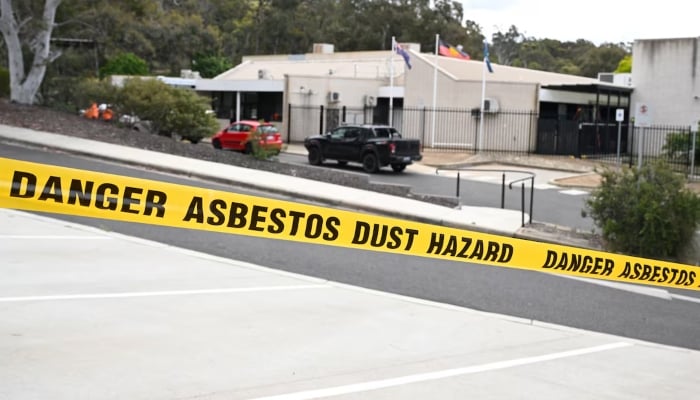
SYDNEY: More than 70 schools in Australia and New Zealand were closed on Monday for cleaning after asbestos was discovered in widely used children’s play sand products.
Recalls have been issued for several colourful play sand products after laboratory testing detected traces of tremolite and chrysotile asbestos.
A number of schools and preschools in the Australian Capital Territory (ACT) and one in Brisbane shut on Friday after the Australian Competition and Consumer Commission (ACCC) issued a national recall notice on Wednesday for products supplied by Educational Colours.
Further recalls were then issued by Kmart and Target on Saturday for a 14-piece sand castle building set as well as blue, green and pink magic sand.
As of Monday, more than 70 schools in the ACT were closed to allow for assessment and clean-up, the territorial government said.
“We have found that use of this product is widespread across ACT public schools,” it said.
“In the interest of the safety of our students, staff and community we have decided to close some schools that have this product.”
Asbestos is a prohibited substance in Australia and New Zealand that can cause several types of cancer when its fibres are inhaled or ingested.
The sand products used in sensory play at school were sold by retailers in Australia between 2020 and 2025, the ACCC said.
The ACCC said respiratory asbestos had not been detected in any of the tested samples.
“While the risk that any asbestos found is likely to be airborne or fine enough for inhalation is low, this may still pose a risk,” it said.
In New Zealand, local media reported at least five schools that used Kmart's sand products were closed for asbestos testing on Monday.
More than 120 have also contacted the government over fears they used one of the recalled sand products.
“We appreciate that the presence of asbestos in products that are used by children will be concerning to parents and caregivers,” said Ian Caplin, the Ministry of Business, Innovation and Employment's product safety spokesperson.
“We urge families who have purchased these products to stop using them immediately.”


-
 Rabies concerns grow in US, sparking health warnings over fatal virus
 -
 This popular cooking garnish may offer surprising benefits for brain health
 -
 Was the human brain once two separate organs? Scientists find new clues
 -
 Novo Nordisk partners with Anthropic to accelerate AI-powered drug discovery
 -
 Congo Ebola outbreak reaches turning point as daily infections fall
 -
 Study reveals why some babies are born with heart defects
 -
 Third measles-associated death reported as Pennsylvania outbreak reaches 676 cases
 -
 Cyclosporiasis outbreak: US officially ends largest outbreak linked to contaminated lettuce
-
 Hot beverages increase risk of cancer? New research provides in-dept details
 -
Highest-level recall issued for potato chips over banned ingredient posing death risk
-
Very hot tea and coffee could triple cancer risk, Oxford study warns
-
Global study reveals nearly 1.7 million deaths linked to second-hand smoke exposure in 2023