Iran's Khamenei says will not bow down to US
Iran is due to meet on Tuesday with Britain, France and Germany for nuclear talks
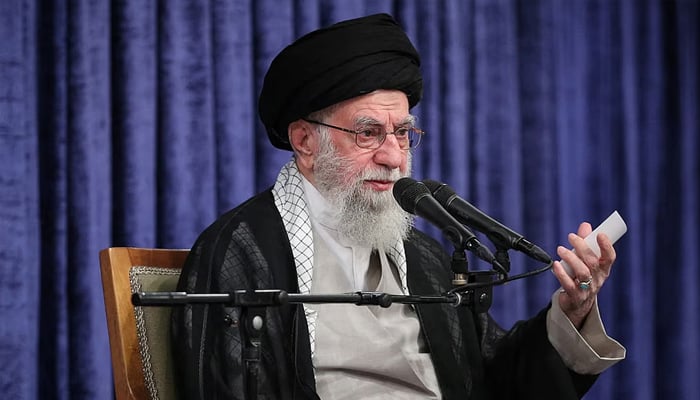
Iran's supreme leader Ayatollah Ali Khamenei on Sunday called for a united national front to confront what he described as US efforts to subjugate the Islamic republic.
The remarks, delivered at a mosque in the capital Tehran and published on Khamenei's official website, come two months since fighting halted between Iran and its sworn enemy Israel in a war that the United States had briefly joined, and as Tehran is engaged in talks with world powers about its nuclear programme.
The rare Israeli and US attacks in June, which targeted key nuclear sites and prompted Iranian retaliation, were designed to destabilise the Islamic republic, Khamenei argued.
He said that a day after "Iran was attacked" by Israel at the start of the war, "American agents" met in Europe "to discuss what government should rule Iran after the Islamic republic".
Khamenei claimed that the United States was ultimately seeking to make Iran "obedient to it".
To the leader, the country has emerged strong from the 12-day war in June, the most intense direct confrontation in its history with arch foes Israel and the United States.
"The Iranian nation, by standing firm alongside the armed forces, the government and the system, delivered a strong blow" to its enemies, Khamenei said.
The supreme leader, who has the final say on state affairs, also warned against internal divisions he said foreign powers were fomenting.
"The way forward for the enemy is to create discord" in Iran, he said, blaming "agents of America and the Zionist regime" — a reference to Israel — for seeking to sow division.
"Today, thanks to God, the country is united. There are differences of opinion, but when it comes to defending the system, defending the country, and standing up against the enemy, the people are united," Khamenei added.
Relations between Tehran and Washington were severed after the 1979 Islamic revolution and the subsequent hostage crisis at the US embassy.
Washington has since imposed successive waves of sanctions on Tehran, most recently over its nuclear programme.
The United States and its allies accuse Iran of seeking to acquire nuclear weapons, a claim Tehran has repeatedly denied.
The June war broke out as Tehran and Washington were due to hold their sixth round of talks on Iran's nuclear programme, but the negotiations that had begun weeks earlier were derailed by the conflict.
Iran is due to meet on Tuesday with Britain, France and Germany for nuclear talks, as the European powers have threatened to reimpose sanctions if no agreement is reached.


-
 Trump declares US-Iran ceasefire over, agrees to keep
 -
 US demands Iran publicly ensure Strait of Hormuz is open and safe for shipping
 -
 Iran vows 'full-scale defence' if US abandons MoU
 -
 New Mexico AG claims DOJ withholding critical Jeffrey Epstein evidence
 -
 Spain wildfire victims died trying to escape through river bed as efforts continue to contain blaze
 -
 Ann Widdecombe murder case — What we know so far
 -
 Arrest made in Ann Widdecombe murder case
 -
 Trump opposes 'bipartisan housing bill,' refuses to sign it