Explainer: What the Pakistan-US trade deal means
Islamabad, Washington working to finalise company to lead partnership to develop oil reserves
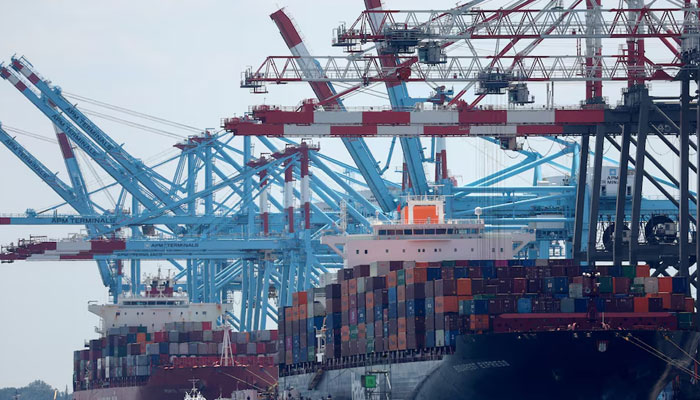
Pakistan and the Untied States on Thursday announced reaching a highly-anticipated trade agreement ahead of the President Donald Trump's August 1 deadline which will be expiring on Friday (tomorrow) resulting imposition higher tariffs by Washington against various countries on a reciprocal basis.
The development came as Finance Minister Muhammad Aurangzeb reached a breakthrough with the Trump administration in a meeting with the US Secretary of Commerce Howard Lutnick and US Trade Representative Ambassador Jamieson Greer.
"We have just concluded a Deal with the Country of Pakistan," President Trump said in a post on TruthSocial.
Although specific details have not surfaced either from Islamabad or Washington on the trade deal, the Ministry for Finance has said that the agreement "will result in a reduction of reciprocal tariff, especially on Pakistani exports to the US" — leading to a fresh beginning in bilateral economic cooperation.
The deal, the ministry adds, aims to boost bilateral trade, improve market access, attract investment, and strengthen cooperation in areas of mutual interest.
Expanding on a key aspect of the trade deal, President Trump said that the two countries will "work together on developing their massive oil reserves" and were currently "in the process of choosing the oil company" which will be leading this partnership.
Under the said understanding, Pakistan and the US will also focus on energy, minerals, information technology, cryptocurrency, and other key areas.
With the trade deal likely to attract US investment as well, FinMin Aurangzeb said that the development reflected a broader economic and strategic partnership that’s now taking shape.
It is pertinent to mention that Pakistan faced a potential 29% tariff on exports to the US under tariffs announced by Washington in April on countries around the world. Tariffs were subsequently suspended for 90 days so negotiations could take place.
The tariffs, if they had come into force, would have had a significant impact, as the US total goods trade with Pakistan was an estimated $7.3 billion in 2024, according to the website of the Office of the US Trade Representative, up from around $6.9 billion in 2023.
The US goods trade deficit with Pakistan was $3 billion in 2024, a 5.2% increase over 2023.
— With additional input from Reuters


-
 Supreme Court rejects Google challenge to patent office review policy: Here's why
-
 Netflix faces scrutiny over user engagement ahead of Q3 report
-
 Meta and Tesla are set to report earnings next week: What to know
-
 SpaceX sets Q3 2026 earnings release date: What to know
-
 Hyundai to recall nearly 100,000 US vehicles over fire risk from overheating
-
 Will Tesla and SpaceX merge? Barclays expects announcement ahead of December meeting
-
 GSK eyes over 1,200 Belgian job cuts in cost-saving drive
-
 Netflix slashes 1,000 jobs: What’s behind the cuts?
-
 Anthropic to reveal new revenue figures as AI financial race heats up
-
HSBC to phase out fixed-pay allowances by 2028 in major compensation overhaul
-
TotalEnergies expands US renewable venture with KKR in $1.2B solar portfolio deal
-
Australian telecom shares tumble as SpaceX moves closer to direct-to-cell market