Champions Trophy: Australia, England break myriad records in epic cricket battle
Both sides collectively scored 707 runs, highest match aggregate in Champions Trophy history
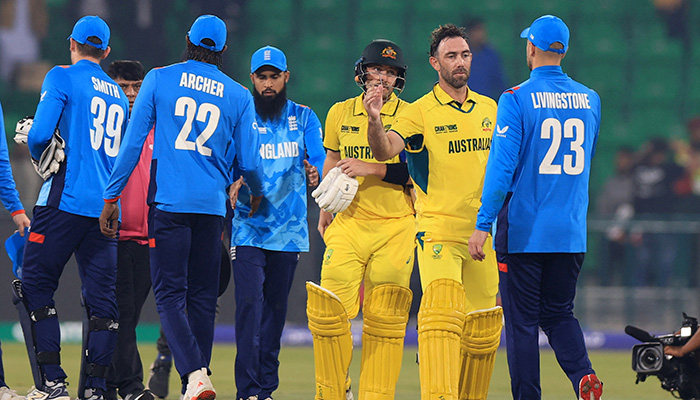
KARACHI: England and Australia created history in the ICC Champions Trophy on Thursday, combining for the highest aggregate score in the tournament's history during a thrilling match at Lahore's Gaddafi Stadium.
The two teams collectively scored 707 runs, surpassing the previous record of 643 runs set by India and Sri Lanka in 2017.
England, batting first, posted an imposing total of 351 for 8 in their allotted 50 overs, becoming the first team in Champions Trophy history to score 350 or more runs.
In response, Australia chased down the target with five wickets in hand, reaching 356 for 5 in 47.3 overs. This marked the first time in the tournament's history that a team successfully chased a target exceeding 350 runs.
The match also saw Australia set a new record in ICC men’s ODI events, becoming the first team to chase down a 350-plus target in the history of the tournament. Prior to this, no team had achieved such a feat in any ICC ODI event.
They surpassed Pakistan’s record of chasing the target of 345 against Sri Lanka during the ICC men’s World Cup in India in 2023.
This record-breaking encounter also highlighted Australia's prowess in high-pressure chases.
Notably, this was Australia’s second-highest successful run chase in ODI cricket, following their pursuit of 359 runs against India in 2019.






-
 Alejandro Kirk injury concern grows as Blue Jays await X-ray results after his exit
 -
 Patrick Corbin joins Blue Jays on $1 million contract after improved 2025 season
 -
 Bruins vs Panthers: Bobrovsky shines as Florida end Boston streak in tight NHL clash
 -
 Canucks vs Wild: Boldy and Kaprizov lead Minnesota to playoffs as Vancouver end season at the bottom
 -
 Capitals vs Devils: Jack Hughes shines with five points as devils cruise past capitals
 -
 OKC thrash Lakers as Luka Doncic exits with hamstring issue ahead of MRI scan
 -
 Vancouver Canucks call up Ty Mueller from Abbotsford as season nears end
 -
 Avalanche star Nathan MacKinnon reaches 50 goals milestone as Canucks win thriller
-
 Colorado Avalanche injury update: Cale Makar to miss time with upper-body injury ahead of playoffs
 -
Canadiens vs Lightning: Montreal extend winning streak as Caulfield and Slavkovsky shine
-
Max Scherzer shines as Blue Jays beat Rockies with strong outing and late offensive surge
-
Canada vs Tunisia game halted as Ralph Priso exits early with apparent injury