Fact-finding body links negligence at Nishtar Hospital dialysis ward to HIV cases
Health Commission report highlights hospital’s failure to follow SOPs
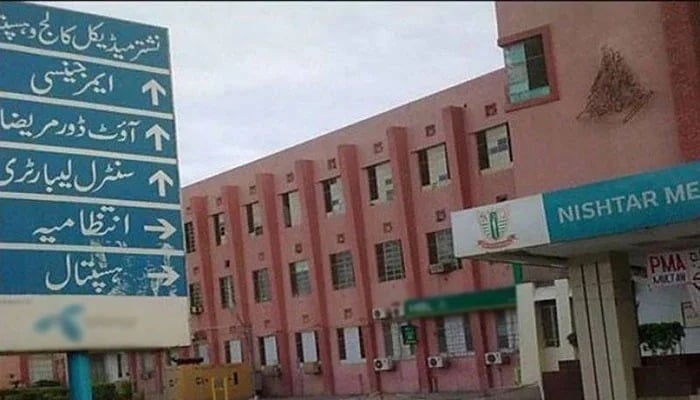
MULTAN: An investigation into Multan's Nishtar Hospital's dialysis centre has uncovered severe breaches in screening and sterilisation protocols, exposing numbers of already seriously ill patients to diseases such as hepatitis and HIV.
A report by an investigation panel has accused the hospital authorities' scandalous negligence to enforce standard operating procedures (SOPs), including regular HIV and hepatitis screening and the use of sterilised equipment for each patient.
The fact-finding committee was formed on the directions of provincial Health Minister Khawaja Salman Rafique and Secretary Health Punjab to dig into the HIV outbreak — blamed on the staff in the dialysis unit at Nishtar Hospital Multan.
According to the body's findings, medical officials at the dialysis ward had not conducted mandatory HIV tests for over a year, violating healthcare guidelines that require such screenings every six months. Similarly, hepatitis tests, mandated every three months, were also neglected.
The first HIV case at the dialysis unit was reported on October 11, but the administration allegedly attempted to cover up the incident, fearing backlash from patients, families, and the media.
Even a month later, the families of 25 affected patients remain untested, raising concerns about further transmission.
The committee has held senior hospital officials, including the medical superintendent, head of nephrology, and a senior registrar, responsible for the negligence that led to patients contracting the deadly HIV.
A visit by South Punjab's additional chief secretary earlier this month revealed malfunctioning dialysis machines at the hospital.
Senior doctors, speaking anonymously, claimed that impoverished patients were often forced to seek treatment at private dialysis clinics, which lack proper sterilisation protocols. These clinics, they alleged, are breeding grounds for infections, including HIV.
Doctors further alleged that Nishtar Hospital failed to thoroughly screen patients before dialysis and used inadequately sterilised machines, potentially spreading the virus.
While some sources estimate the number of HIV-positive cases linked to the dialysis ward to be around 30, Nishtar Hospital Medical Superintendent (MS) Dr Kazim Khan vehemently denied this figure.
"HIV-positive patients' dialysis is performed on dedicated machines, and all patients undergo thorough screening before treatment," claimed Dr Khan.
Khan explained that the recent incident involved a patient who had previously tested negative for HIV but was later found to be positive.
Health experts have warned that the true extent of HIV transmission at Nishtar Hospital remains uncertain, with the risk of more cases emerging.
The investigation committee comprises Punjab Human Organ Transplantation Authority (PHOTA) Director General Professor Shahzad Anwar, Punjab Aids Control Programme Project Director Dr Zahid Rafique, the head of nephrology at the Services Institute of Medical Sciences (SIMS) and a deputy secretary (technical) from the department of specialised healthcare and medical education.


-
 Cyclosporiasis outbreak: US officially ends largest outbreak linked to contaminated lettuce
 -
 Hot beverages increase risk of cancer? New research provides in-dept details
 -
 Highest-level recall issued for potato chips over banned ingredient posing death risk
 -
 Very hot tea and coffee could triple cancer risk, Oxford study warns
 -
 Global study reveals nearly 1.7 million deaths linked to second-hand smoke exposure in 2023
 -
 AI-designed drug also slowed biological aging, study finds
 -
 Always tired and foggy? This vitamin deficiency could be the clue
 -
 Is loneliness becoming the next global health crisis?