WhatsApp's upcoming feature allows users to choose their Meta AI voice
Exciting new feature will be available in future update, revolutionising engagement with AI assistants

Mark Zuckerberg's Meta is set to roll out a fascinating update for WhatsApp that will allow users to personalise the voice of Meta AI on their devices, according to WABetaInfo.
This exciting addition to Meta's instant messaging app will offer users the option to select from 10 different voices for the AI assistant, providing a diverse range of options to suit individual preferences.
With this feature, users can tailor their interactions with the AI to feel more natural and better aligned with their preferences.
For example, users might prefer a soothing and calm voice for relaxing conversations or a more energetic tone when seeking motivation or quick responses.
According to the latest WhatsApp beta for Android 2.24.17.16 update, the new feature is on its way and will be available in a future update. It promises to revolutionise the way users experience and engage with AI assistants.
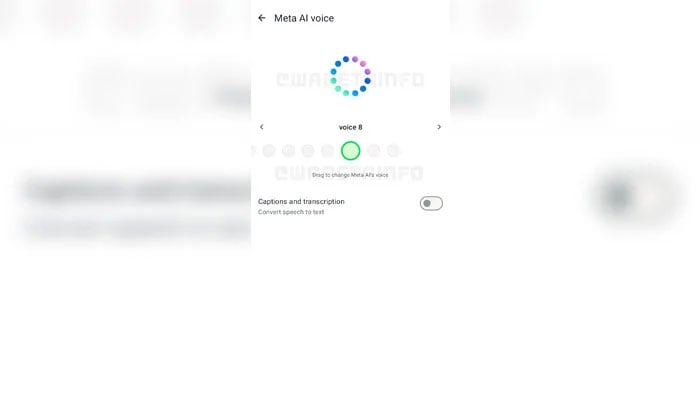
Additionally, the variety of voices could cater to different accents and speech patterns, making the AI more relatable to users from diverse linguistic backgrounds.
This feature could also enhance accessibility, as users with hearing difficulties might find certain voices easier to understand, adding a new layer of customisation to the user experience.


-
 Hunter’s Moon 2026: When and how to watch October’s full moon
 -
 Elon Musk’s Mars colonization dream faces reality check from Nobel laureate
 -
 NASA competition model 2.0 cuts mission selection by 45%
 -
 A ‘neglected’ neutrino may hold the key to why the Universe exists
 -
 Can cancer drugs be made in space? Here’s what the new mission aims to find out
 -
 SpaceX Falcon 9 successfully launches Bandwagon-5 mission with 32 payloads
 -
 Europe launched 8 orbital rockets last year, can it rival Starlink?
 -
 Japan launches world’s first mission to bring sample back from phobos