Pakistan economic survey 2023-24 to be unveiled today
Survey comes ahead of federal budget for fiscal year 2024-25, which aims to set stage for IMF bailout for Pakistan
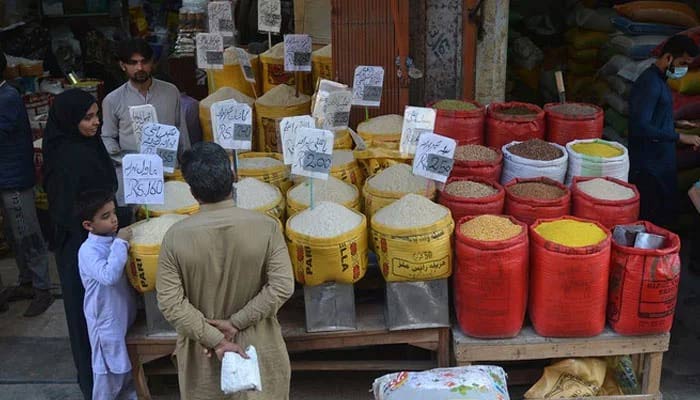
The Economic Survey of Pakistan 2023-24, a pre-budget document containing the details of major socio-economic achievements during the outgoing fiscal year, is set to be launched today (Tuesday).
Finance Minister Muhammad Aurangzeb will present the survey in the National Assembly at 5pm, a statement issued by the finance ministry said on Monday.
The survey comes ahead of the federal budget for the fiscal year 2024-25, which is slated to be presented on June 12 (Wednesday).
The coalition government led by Pakistan Muslim League-Nawaz (PML-N) is expected to lay out ambitious fiscal targets in the Budget 2024-25 that will help strengthen its case for a new bailout deal with the International Monetary Fund (IMF), officials and analysts said.
Conceding severe financial constraints and cutting down on the development funding under the IMF programme, the Annual Plan Coordination Committee (APCC) has recommended Rs1,221 billion for the development programme at the federal level for the financial year 2024-25.
It would be the first budget to be presented by the incumbent government.
As Pakistan strives to secure a loan programme to avert a default in a slow-paced economy, the global lender has asked the country to raise provincial taxes, especially on agriculture, sales tax on services and property tax.
The country is in talks with the IMF for a loan estimated to be anything between $6 billion to $8 billion to avert a default for an economy that is growing at the slowest pace in the region.
"The budget holds critical significance for Pakistan's IMF programme and must close the gap between our revenue collection and total expenditure; it is thus likely to be contractionary," said Ali Hasanain, associate professor of economics at the Lahore University of Management Sciences.
Pakistan narrowly averted a default last summer thanks to a short-term IMF bailout of $3 billion over nine months.
While its fiscal and external deficits have been brought under control, it came at the expense of a sharp drop in growth and industrial activity as well as high inflation, which averaged close to 30% in the last financial year and 24.52% over the last 11 months.
The growth target for the upcoming year is expected to be higher at 3.6% compared to 2% this year and economic contraction last year.
Prime Minister Shehbaz Sharif has expressed public commitment to tough reforms since being elected in the February 8 general elections, but high prices, unemployment and a lack of new job opportunities have piled political pressure on his coalition government.
Another key point to look out for in the budget will be targets set for proceeds from privatisation. Pakistan is looking to make its first major sale in nearly two decades as it sells a stake in its national airline.
It is expected to be the first in a series of sales of loss-making entities, particularly in the troubled power sector.
— With additional input from Reuters


-
 Asian stocks slide as oil prices surge amid Middle East ceasefire uncertainty
 -
 Wall Street future rises as ceasefire eases Middle East tensions
 -
 Universal Music faces massive $64 billion takeover bid
 -
 Oil prices surge as Trump’s Iran deadline looms
 -
 Oil prices turn volatile after Trump’s fiery warning to Iran
 -
 Cathie Wood invests millions in rising tech stock as Ark Innovation fund faces mixed returns
 -
 Here's when poker tactics secured Microsoft’s DeepMind deal
 -
 JBS strike ends: Why Colorado workers are returning to the plant