New rocket company reduces Mars travel time from years to months
Take a trip to the red planet on the new Pulsed Plasma Rocket covering 225m kilometre journey
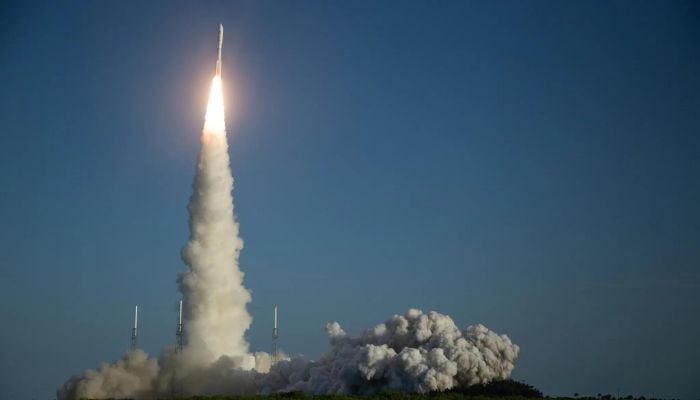
A private space company, in collaboration with the American space agency Nasa, is working on a new rocket that will reduce space travel time significantly, VOA News reported.
The engine of this new rocket is being designed to sharply increase the amount of thrust to speed up space travel and improve efficiency.
Thrust is the force that propels a spacecraft into the atmosphere. Generally, a spaceship moves forward at a fast speed by burning gas or liquid fuel to create thrust from the back of the craft.
Howe Industries, based in Arizona, is developing a new design called the Pulsed Plasma Rocket (PPR). The company is currently in the early stages of studying the technology before building working engine models.
In a recent statement, a Howe Industries spokesperson said: "Such rocket technology will be needed to support NASA’s plans to return humans to the moon and, after that, possibly Mars."
The private company has also set a goal to build a long-term base in space.
According to Nasa, the average distance between the Earth and Mars is 225 million kilometres.
So a trip to Mars with existing spacecraft would take at least 200 days each way. The developers of the proposed Pulsed Plasma Rocket say that the new rocket will reduce travel time to the red planet to about two months each way.


-
 SpaceX: Falcon 9 boosts record-setting ‘Cygnus XL’ cargo spacecraft toward the ISS
 -
 NASA Artemis II mission: real or fake conspiracies spread online
 -
 ‘Howl at the Moon’: NASA’s new strategy for cosmic curiosity
 -
 Inside deadly chimp ‘civil war’ in Uganda—What they reveal about human nature
 -
 NASA Artemis II splashdown: What could go wrong on mission’s final stage
 -
 What happens to human body in deep space? NASA Artemis II will find out
 -
 Scientists find Earth’s core may be leaking gold
 -
 Mission for the ages: Artemis II crew returns after breaking deep-space historic records
-
 Robot dogs on Mars: Swiss researchers reveal how autonomy speeds up space exploration
 -
From Apollo to Artemis: How astronauts honor loved ones with lunar names
-
Emperor penguins on verge of extinction: ‘A grim story shaped by climate change’
-
NASA Artemis II crew prepares Earth return after historic Moon mission