Heeramandi: Soul-touching dialogues from the historical-fiction
Heeramandi: The Diamond Bazaar revolves around courtesans, nawabs, British officials and rebels of British India
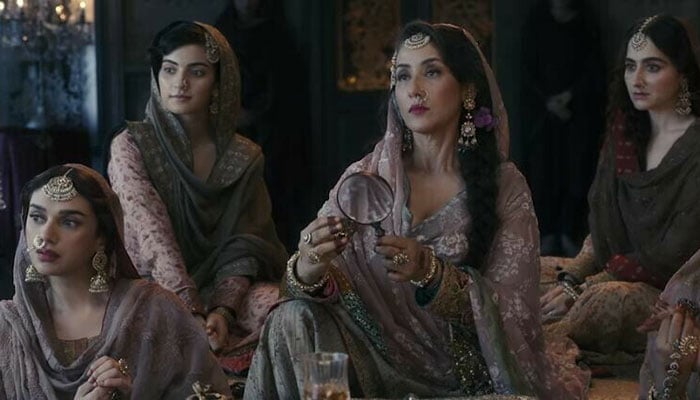
From his super-hit Devdas, to Padmaavat, to Bajirao Mastani, to Ganugbai, Sanjay Leela Bhansali has not only rocked the cinema world but has managed to make a lasting impact on fans through his movies.
With his ingress into the OTT world, Heeramandi: The Diamond Bazaar has undoubtedly ascended to the trending list and is poised to maintain this prominence for a while.
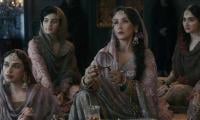
Set against the backdrop of the 1920s, the historical series is staged in the retro period of British-ruled India, within the walled city of Lahore, and revolves around the courtesans, nawabs, British officials and rebels.
Bhansali’s signature style, characterised by his fondness for glamourising the struggle of women and elegantly portraying their pain, is evident throughout the series.
While the depiction of the Diamond Bazaar, palaces, streets and the actual events may not be historically accurate, the overall setting paints the picture and captures the enchanting essence of the era.
Although the casting might have left something to be desired, cinematography elevates the grandeur of the narrative. From Malikajahan to Alamzeb, all the lead courtesans gave such wonderful performances, with elegant dresses and mesmerizing dialogues that the leads cakewalked. These dialogues clearly needed to be said in such a way that the fans could feel them.
Let's talk about some of those unforgettable dialogues that pack a punch harder than a diamond's sparkle!
Hum chaand hen, jo dikhta tw h khirki se magar kabhi kisi k baramde me utarta ni hai.
(We are the moon, visible from the window but never descending into someone's courtyard)
- Mallika Jaan
With this dialogue, Mallika Jaan's essence is captured in a celestial dance of pride, reserve, and her unattainable position as Huzoor in the Heeramandi. Manisha Koirala, with her performance, delivers these lines with the grace and majesty befitting a lunar deity. But beyond the surface, the dialogue not only reflects her personality but her status in the glittering world.
Purani deewarein paar nahi ki jati, gira di jati hen
(The old walls are not passed through, they are brought down)
- Fareedein
Sonakshi Sinha, with her electrifying performance, infuses Fareedein's words with a potent mix of vengeance and determination. Like a sorceress waving her wand, she commands attention, emphasizing the urge for vengeance and her desire to overpower Mallikkajaan.
Aurat k asli dushman toh uske khuwab hote hen Alamzeb, dikhai toh dete hen magar poore nahi hote
(A woman's real enemies are her dreams, Alamzeb. They can be felt but never fulfilled)
- Lajjo
As we empathize with Lajjo's yearning for a better life, we're reminded of the universal truth that dreams, though visible, often remain elusive. As much as the dialogue resonated with Lajjo, it reflected the struggles of women in that era, echoing truths still relevant today.
Saza hum jism ko nahi, rooh ko dete hen, aur isme apki rooh he
(We don't punish the body; we punish the soul, and it has your soul)
- Mallikka Jaan
Mallikka Jaan's cruelty and power are encapsulated in this chilling dialogue, portraying her as an unmistakable force within Heeramandi.
Ye Malikka Jaan ka daaman h, itne sy khoon se iski pyaas ni bujhegi
(This is the hem of Malikka Jaan, its thirst can’t be satisfied with a few drops of blood)
- Malikka Jaan
It's a statement that cuts through the air like a sharp blade, revealing the depth of Mallikka Jaan's thirst for power and control, which she indicated cannot be quenched easily.
Dard seh gaye, Daag seh gaye, dhoka b seh jate, ager apni aulaad ny na dia hota
(Endured the pain, and the scars, would have also suffered the betrayal, if it hadn’t been my own’s child)
– Waheeda
Indeed, Waheeda had endured pain, suffering, and deceit from the people closest to her. However, the cruelest blow was all by her own flesh and blood. Whether it be the diamond bazaar or beyond, mothers everywhere share Waheeda's anguish, grappling with the unthinkable betrayal of their own offspring.
Mohabbat bhalle adhuri reh jaye, gham mukkamal hona chahye, ek bar rolegi toh haqeeqat jhel paaegi
(Even if love remains incomplete, mourning should be completed; once she cries, she can deal with the reality)
– Bibbojan
With this dialogue, Bibbo Jaan unveils the bittersweet truth of love and heartache. She reminds us that tears are not just a symbol of sorrow, but a necessary step towards acceptance. By shedding tears, we confront the harsh realities of life and emerge stronger, ready to face whatever challenges come our way.
Azadi ki qeemat hum se zyada kon janta hai, sharafat humne chordi, mohabbat ne hume chordiya, ab sirf bhagawat hamari zindagi ko maaine de skti h, ek bar mujre wali nahi, mulk wali bn kr socho.
(Who knows the value of freedom more than us? We abandoned integrity, love abandoned us; now only revolution can give meaning to our lives. Not as nautchgirls but think as the freedom fighters)
– Bibbojan
Finally, the pivotal dialogue serves as the catalyst for courtesans to fight for their own country. The dialogue conveys a sense of disillusionment and a resolve to fight for a greater cause. Losing their integrity and forsaken by their love, she emphasizes that only rebellion can give meaning to their lives, and they, the courtesans, understand the value of freedom more than anyone else.
The writer is a Media Science grad and works as an editor in a book publishing house.


-
 Ranveer Singh opts for 'silence' amid 'Don 3' controversy
 -
 Shreya Ghoshal set to release first-ever live album 'All Hearts Tour – Live Album'
 -
 'Dhurandhar: The Revenge' shows Ranveer Singh sparking more menace & gory
 -
 'Dhurandhar' announces release date for sequel
 -
 Veteran Indian actor Dharmendra passes away
 -
 Parineeti Chopra discloses 'name' of baby boy in viral post
 -
 Govinda rushed to hospital after health deteriorates
 -
 Dharmendra gets discharged from hospital after death hoax