Queen bumblebees' unique ability to survive underwater
Bumblebee queens' surprising adaptation to underwater environments, study finds
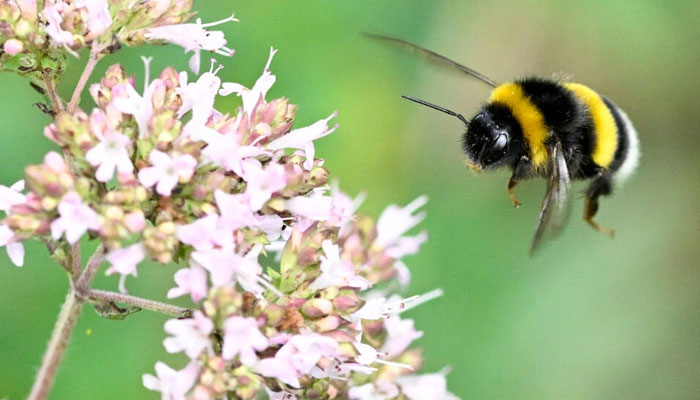
Do you know that queen bumblebees can survive underwater for days?
The surprising answer is yes. Queen bumblebees have shown an unexpected ability to survive underwater, according to recent research.
The study, published Wednesday, reveals that these bees could endure the increased flooding caused by climate change, which threatens their winter burrows.
The survival of these essential pollinators underwater is good news amidst the concerning global trend of declining bee populations. Lead author of the study, Sabrina Rondeau, finds the newfound fact encouraging.
Climate change is leading to more frequent and severe floods worldwide. This presents a significant challenge for species that live in the soil, especially bees that nest or overwinter underground, says co-author Nigel Raine from the University of Guelph.
Rondeau stumbled upon the bees' ability to survive drowning quite by accident. While studying the impact of pesticide residues on queen bumblebees that hibernate underground, water accidentally seeped into the tubes housing some of the bees. She was surprised to find that they had survived.
To understand this phenomenon better, Rondeau conducted another experiment. She placed 143 hibernating queen bumblebees in tubes, some with no water, some floating in water, and some fully submerged for a period ranging from eight hours to seven days.
The results were remarkable. Experiments revealed that a staggering 81 percent of queen bumblebees submerged for up to seven days not only survived but also remained alive eight weeks later after returning to dry conditions. However, the long-term effects on the bees' health and potential impacts on a colony still require further research.
The bees used in the study, common eastern bumblebees, are native to North America and are known for their resilience. Rondeau speculates that this resistance to flooding might be a factor in their relative success compared to other bee species.
While this trait's prevalence among other bumblebee species remains to be seen, it is heartening to know that flooding might not pose an additional significant threat to these vital pollinators.


-
 Can we finally find aliens? Scientists reveal a surprising new ‘organizational’ approach
 -
 Study reveals how to tell real alien life from chemical fakes
 -
 Scientists find hidden third ancestral group in Japanese genomes
 -
 SpaceX ‘Space Junk’ is on a collision course with the Moon, scientists say
 -
 Do you know what happened on May 10, 1967? NASA's M2-F2 disaster explained
 -
 Why the Southern Ocean is melting: Antarctica’s sea ice resilience reaches a breaking point
 -
 Giant black holes are cosmic ‘Frankensteins’ built by mergers, new study reveals
 -
 NASA’s Artemis 2 moon launch becomes the largest event in Space Coast history
-
 Is success written in your DNA? New study reignites nature vs nurture debate
 -
Researchers found 240-million-year-old giant mysterious 'sand creeper'
-
New solar-powered process turns plastic waste into clean hydrogen
-
Giant squid detected off Western Australia coast as deep-sea study reveals hidden species