
This satellite from space is likely to fall on Earth this week
It remains unclear when European Remote Sensing would enter Earth, as it would be influenced by density of atmosphere
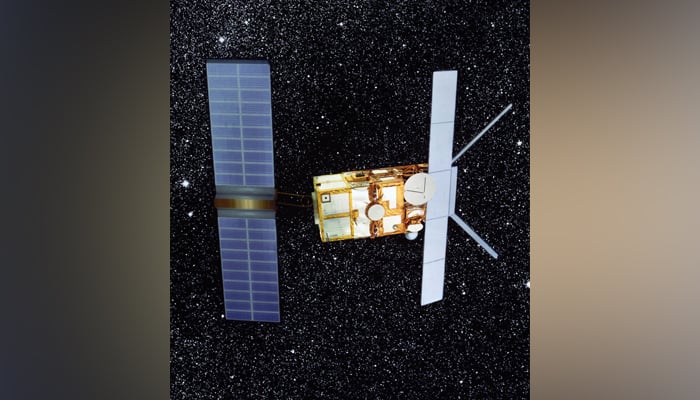
European Space Agency said that its European Remote Sensing (ERS-2) satellite was likely to enter Earth as some of its parts would break apart and burn up outside the atmosphere, according to the space officials.
The officials alongside the ESA's space debris office are tracking and tracing the ERS-2 which is expected to reenter Earth Wednesday morning after being launched in April 1995, CNN reported.
However, the agency also highlighted the window of 15-hour uncertainty.
The statement from ESA noted: "As the spacecraft’s reentry is ‘natural’, without the possibility to perform manoeuvers, it is impossible to know exactly where and when it will reenter the atmosphere and begin to burn up."
It remains unclear when the satellite would exactly enter Earth, as it would be influenced by the density of the atmosphere which would become dense due to solar activity.
Solar activity has been increasing as the sun is nearing its 11-year-cycle peak — solar maximum.
The satellite weighs around 5,057 pounds (2,294 kilograms) after fuel depletion, becoming similar in size to other space debris that makes entry into Earth’s atmosphere every week, the agency said.
Some of the components of the ERS-2 may reach Earth’s surface, however, there is no harm as they would fall into the ocean.
ERS-2 was the first-ever modern satellite by Europe in the late 20th century developed to observe the Earth.
The satellite, accompanied by similar ERS-1 acquired crucial information on the Earth’s polar caps, surface, and oceans. It also acquired data on floods and disasters in remote areas of the earth.
Its data still holds value.
The agency in 2011 decided to decommission the satellite and deorbit it.
The deorbiting activities in 2011 caused fuel depletion and decreased its altitude, setting ERS-2's orbit on a path to slow spiral closer to Earth and make entry into its atmosphere within 15 years.



-
 Scientists discover rare form of 'magnets' that might surprise you
 -
 Humans may have 33 senses, not 5: New study challenges long-held science
 -
 Northern Lights: Calm conditions persist amid low space weather activity
 -
 SpaceX pivots from Mars plans to prioritize 2027 Moon landing
 -
 Dutch seismologist hints at 'surprise’ quake in coming days
 -
 SpaceX cleared for NASA Crew-12 launch after Falcon 9 review
 -
 Is dark matter real? New theory proposes it could be gravity behaving strangely
 -
 Shanghai Fusion ‘Artificial Sun’ achieves groundbreaking results with plasma control record