Ancient viruses helped shape our bodies, brain millions of years ago: study
This finding is a breakthrough in itself, as viruses were generally considered a nuisance to society

Remember the time when COVID-19 locked us all in? Well, according to scientists, viruses are critical in bringing about a change in human nature, Science Alert reported.
Similarly, millions of years ago, vertebrates were infected by a virus, which played an important role in the evolution of human beings and the development of brains and human bodies.
The study, published in the Journal Cell, explored the beginnings of myelin, an insulating layer of fatty tissue that surrounds neurons and speeds up electrical impulses.
According to the researchers, the formation of myelin depends on a gene sequence derived from retroviruses that invade the DNA of its host and has been found in fish, amphibians, and contemporary mammals.
Neuroscientist and senior author Robin Franklin of Altos Labs-Cambridge Institute of Science said, "The thing I find most remarkable is that all of the diversity of modern vertebrates that we know of and the size they've achieved, elephants, giraffes, anacondas, bullfrogs, and condors, wouldn't have happened if it weren’t for viruses."
This finding is a breakthrough in itself, as viruses were generally considered a nuisance to society; however, the truth is much more complicated.
Over history, retroviruses have inserted themselves into the genomes of numerous animals and been integrated into their reproductive cells, enabling them to be passed on to succeeding generations.
One of the most well-known instances is the placenta, which is one of the traits that most mammals share. It was acquired from a disease that was ingrained in our genome millions of years ago.


-
 SpaceX Falcon 9 launches 21 military satellites into orbit
 -
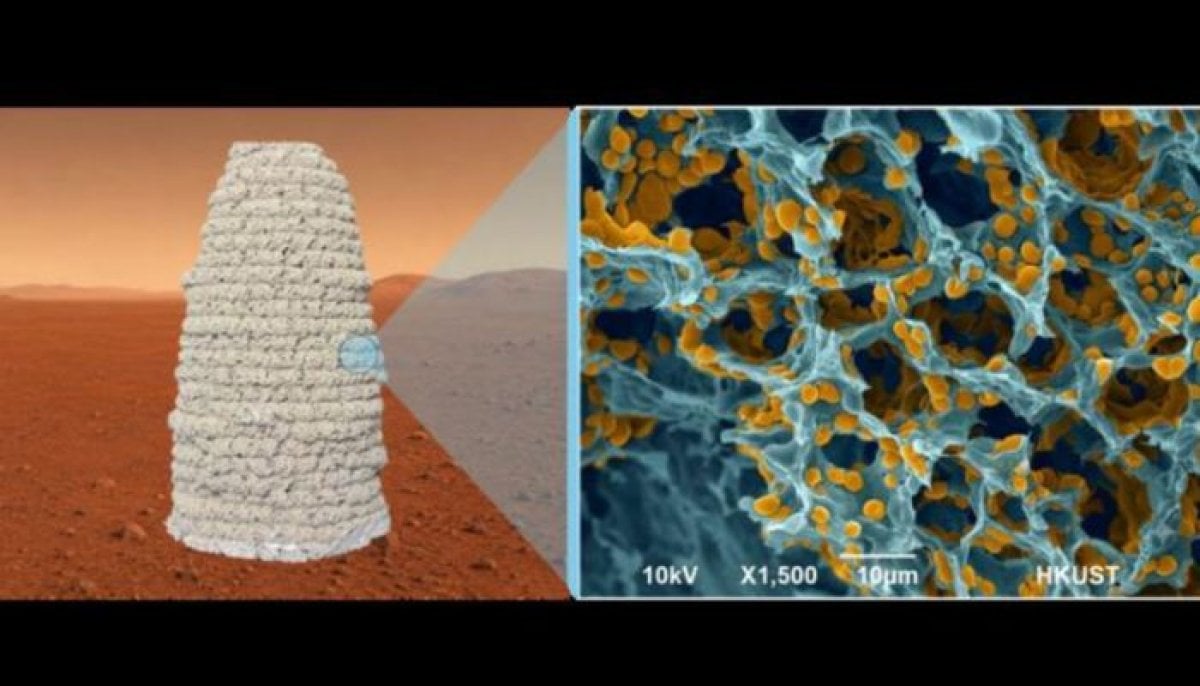 Could a newly engineered microbe help humanity survive on Mars?
 -
 Astronomers find most distant fast radio burst ever recorded
 -
 Draconid meteor shower tonight: Best time and places to see it
 -
 ‘A dream for 50 years’: Why world’s first nuclear clock could change timekeeping
 -
 NASA Curiosity captures strange ‘wind-carved’ Mars landscape in dawn image
 -
 NASA's Crew-12 Dragon begins return trip from space station
 -
 Mysterious ‘phoenix planet’ found around the remains of a dying star