
France divided over ecological toll of Christmas trees
While Christmas trees bring economic benefits, concerns about their ecological footprint are dividing opinions
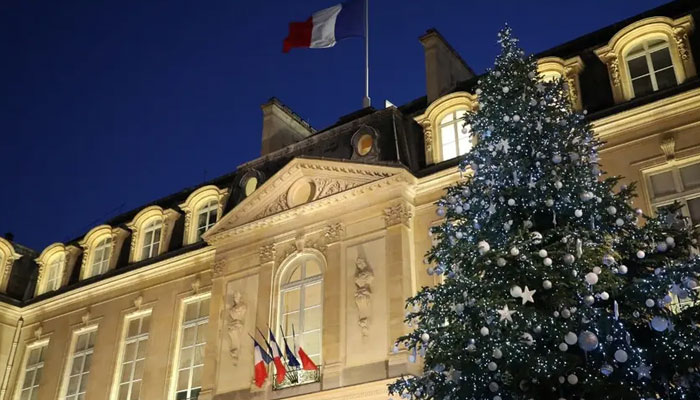
France finds itself in a nuanced debate over the environmental impact of Christmas trees, especially in the Morvan Natural Park, the nation's leading producer of festive firs.
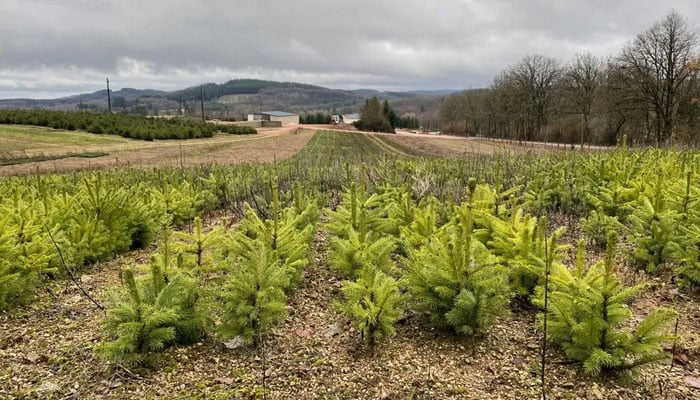
While these evergreen symbols bring economic benefits, concerns about their ecological footprint are dividing opinions. In the Morvan uplands, over a million baby firs are cultivated annually, contributing to local income and job creation.
However, the majority of Christmas tree plantations rely heavily on chemical treatments, prompting environmentalists to raise alarms about their negative effects on water resources and biodiversity.
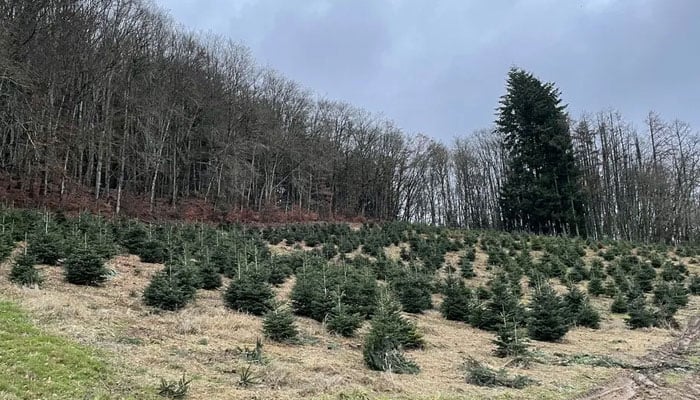
Authorities acknowledge the challenges, stating on the park's website, "The production of Christmas trees, because of the use of chemical herbicides, can have an impact on water resources."
Campaigners like Muriel André highlight the consequences, showcasing small-scale plantations where herbicides and pesticides compromise biodiversity and introduce chemicals into rivers.
Muriel André, a local farmer and activist, emphasises the need for an ecological shift, stating, "We are living through an ecological transition. Everything that pollutes has got to stop." She challenges the perception of Christmas trees as 'natural,' exposing the intensive agricultural practices behind their cultivation.
The ethical concerns extend to French consumers who are increasingly questioning the sustainability of harvesting millions of baby trees for short-lived decoration.
In central Paris, consumers express growing environmental consciousness, with some opting to forego traditional Christmas trees altogether. While recognising the ecological impact, they grapple with alternatives, including imported plastic trees.
Producers in the Morvan, such as the Naudet company, acknowledge past oversights regarding chemical use but emphasise evolving practices. Martin Naudet, the director-general, highlights efforts to minimise chemical use and experiments with methods like planting buckwheat for natural weed control.
However, he notes the challenge of selling chemical-free trees, citing both cost and appearance as deterrents.
Despite growing consumer curiosity about tree origins, sales have seen only marginal effects. The Christmas tree industry faces a dilemma between satisfying consumer demand and adopting more sustainable practices.
As the debate continues, it becomes evident that the 'green' in Christmas trees might not be as environmentally friendly as perceived.





-
 South Korea’s ex-President Yoon issues public apology after being sentenced to life over martial law
 -
 Trump officially directs US agencies to identify and release files on extraterrestrial life
 -
 Who is 'Queen of Woke'? UK first female Civil head
 -
 Dwayne Johnson confesses what secretly scares him more than fame
 -
 Daniel Radcliffe wants son to see him as just dad, not Harry Potter
 -
 Nancy Guthrie kidnapped with 'blessings' of drug cartels
 -
 Heavy snowfall disrupts operations at Germany's largest Airport
 -
 France sees record 102mn international tourists in 2025