Breakthrough: Google AI DeepMind successfully diagnoses genetic diseases
Google DeepMind AI research team believes they have identified approximately 89% of crucial genetic mutations
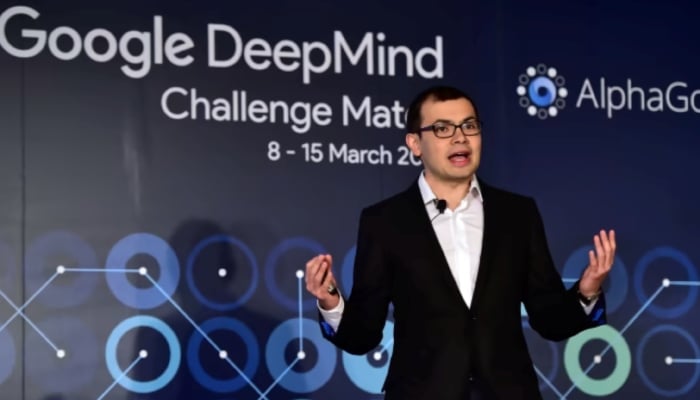
Google's AI firm DeepMind has used artificial intelligence to identify changes in human DNA that might cause diseases, a breakthrough is anticipated to accelerate the process of diagnosing genetic conditions and enhance the quest for improved treatments.
The research team believes they have identified approximately 89% of the crucial genetic mutations.
A prominent independent scientist informed BBC that this work represents a significant leap forward.
Professor Ewan Birney, Deputy Director General of the European Molecular Biology Laboratory, commented, "It will assist clinical researchers in prioritising their search for areas that may be responsible for diseases."
The methodology employed in this technique involves analyzing the sequence of components in human DNA strands.
DNA serves as the fundamental blueprint for all living organisms and is composed of four chemical building blocks: adenine (A), cytosine (C), guanine (G), and thymine (T).
In human development, these letters' order is decoded to produce proteins, the essential building blocks of cells and tissues that constitute various parts of the body. If these letters are arranged incorrectly, potentially due to a hereditary disorder, it can lead to disease.
Last year, Google DeepMind's AI successfully determined the structures of nearly all human proteins. The new system, known as AlphaMissense, can predict whether the DNA sequence will result in the correct protein structure. If not, it is flagged as a potential cause of disease. Presently, our understanding of which regions of human DNA can lead to diseases is limited, with only 0.1% of genetic mutations classified as either harmless or disease-causing.
Pushmeet Kohli from Google DeepMind noted that this new model has significantly expanded our knowledge, increasing the percentage to 89%.
Researchers previously had to search through billions of chemical building blocks comprising DNA to identify potentially disease-causing regions.
Kohli emphasised the transformative nature of this development: "Researchers can now concentrate their efforts on the newly identified areas we've highlighted as potentially disease-causing."
This innovative tool, published in the journal Science, has been rigorously tested by Genomics England, a partner of the NHS. According to Dr. Ellen Thomas, Deputy Chief Medical Officer at Genomics England, the healthcare system will be one of the first to benefit from this groundbreaking development. She stated, "This new tool provides a fresh perspective on the data, aiding clinical scientists in making sense of genetic information for the benefit of patients and their medical teams."
Professor Birney anticipates that artificial intelligence (AI) will play a substantial role in the fields of molecular biology and life sciences. He remarked, "I don't know where this will ultimately lead, but it is currently revolutionising nearly every aspect of our work."


-
 Astronomers find most distant fast radio burst ever recorded
 -
 Draconid meteor shower tonight: Best time and places to see it
 -
 ‘A dream for 50 years’: Why world’s first nuclear clock could change timekeeping
 -
 NASA Curiosity captures strange ‘wind-carved’ Mars landscape in dawn image
 -
 NASA's Crew-12 Dragon begins return trip from space station
 -
 Mysterious ‘phoenix planet’ found around the remains of a dying star
 -
 First possible evidence of Planet Nine found in infrared data
 -
 Elon Musk announces SpaceXAI rebrand to SpaceXSI following presidential order on 'Super Intelligence'