Steam cuisine: cooking in Japan's hot springs
Sulfur present in the steam imparts an "umami" to the meal, a flavour enhancer considered key to Japanese cuisine, and it contains iron, a trace element important for health
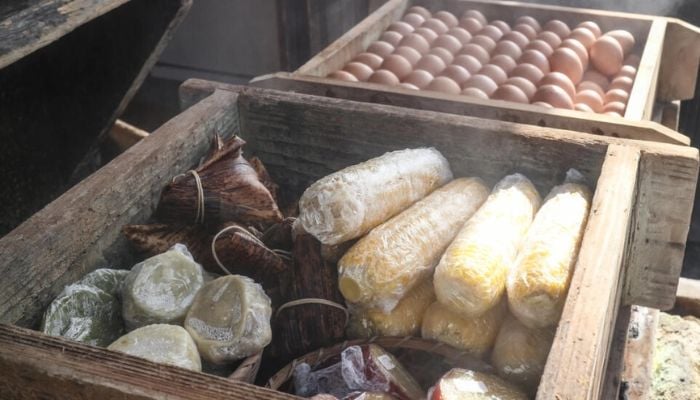
BEPPU: Using geothermal resources to generate electricity is a divisive prospect in Japan, but there is little disagreement about another use for it: natural steam for cooking.
The geothermal sources that make Japan a haven for hot springs or onsen are also used to produce a range of delicacies.
There's the "onsen tamago" — eggs cooked in geothermally heated water at around 65 degrees (149 degrees Fahrenheit) to produce a relatively firm yolk with a creamy soft white.
And then there are small round cakes called "onsen manju", a popular snack sold at approximately 2,900 hot spring locations across Japan.
Stuffed with red bean paste, they are cooked with the steam that rises from onsen water.
In Beppu, a small coastal town in Japan´s southwestern Kyushu, an abundance of natural hot springs has given rise to a local speciality: "jigoku mushi" or "hell steaming".
Customers can buy meat, fish and vegetables on-site at an onsen, and cook them in containers connected directly to the steam emanating from a nearby natural hot spring.
"This method of cooking was already being mentioned in local historical documents as far back as 200 years ago," Hitoshi Tanaka, president of Hyotan Onsen — which offers "jigoku mushi" to its customers — told AFP.
With steam at temperatures of 100 -110 degrees Celsius (212-230 Fahrenheit), cooking generally takes no more than five to 10 minutes, "so the food retains its original colour", Tanaka explains.
The sulfur present in the steam imparts an "umami" to the meal, a flavour enhancer considered key to Japanese cuisine, and it contains iron, a trace element important for health, he added.
"You savour it with your eyes, you smell the steam, you hear the sound of the source of the hot spring: so you appreciate the food here with your whole body."
The technique has another benefit: no need for electricity or gas at a time when Japan, like many other countries, is dealing with soaring energy prices.


-
 Prisons chief is stepping down after failed execution of Christa Pike
 -
 Piers Morgan laughs off 'threat' from former government official
 -
 D.A. refuses to review additional evidence in Cornell 7 rape case
 -
 North Korea tests AI-powered strategic missile as Seoul-Pyongyang DMZ tensions escalate
 -
 Americans urged to push back against Elon Musk’s influence on elections
 -
 Boston-bound plane disappears after takeoff from Bermuda, 6 missing
 -
 US-Russia Ukraine talks expand into major oil deal: Report
 -
 China launches anti-dumping probe into EU p-nitrotoluene amid trade tensions
-
 G7 moves to release 100 millions of barrels of oil 'immediately' after Trump threat
 -
First radio emission detected from planet beyond our solar system
-
Nexus rules are changing for Americans and Canadian next year: Here’s what you should know
-
Man arrested after alleged death threats to Canadian PM Mark Carney on X