
Petroleum prices to go up
The government will increase both the petroleum and electricity prices in a staggered manner in line with recommendations made by the IMF, a government official told The News
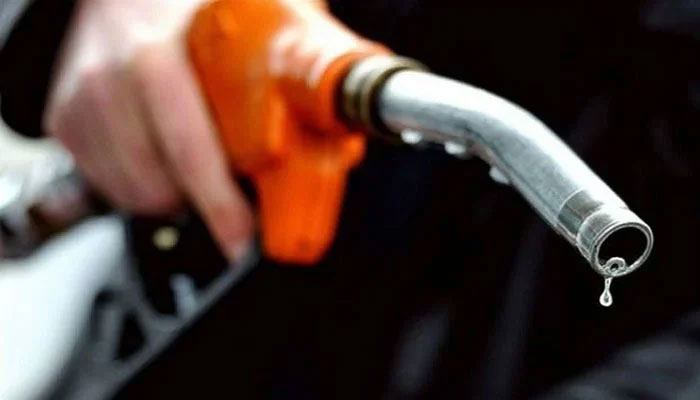
WASHINGTON/ISLAMABAD: Pakistan has agreed with the International Monetary Fund (IMF) to roll back fuel and power subsidies and also wind up a business tax amnesty scheme to revive a $6 billion loan programme, officials said on Saturday.
"The government will increase both the petroleum and electricity prices in a staggered manner in line with recommendations made by the IMF and it also pledged to pursue structural reforms," a senior official told The News.
The commitment was made by Finance Minister Miftah Ismail, who led a high-powered delegation to hold a meeting with IMF’s Deputy Managing Director (DMD) Antoinette Sayeh at the Fund’s annual spring meetings.
An increase of Rs10 to 20/litre in petroleum products prices and Rs5/unit in electricity tariff is expected to revive the Fund’s programme. "The government has also shown its willingness to undertake much-needed structural reforms in short-to medium-term to avoid a balance of payment crisis," the official said.
When The News contacted Finance Minister Miftah Ismail in Washington and inquired about his meeting with the IMF, in his brief reply, he stated, “Very good” but declined to share any further details. A finance ministry official said meetings "are going well. The IMF’s DMD has assured of resuming the consultations."
Another senior official confirmed Islamabad had assured the IMF of withdrawal of fuel subsidy through hiking of petroleum and electricity prices in a gradual manner. "Now Pakistani side and the IMF staff team will work out modalities for finalising the Memorandum of Financial and Economic Policies (MEFP) for paving the way for revival of the stalled Fund programme,” the official said.
The IMF has said it would place conditions as agreed by the two sides before forwarding a request to the IMF’s Executive Board for granting assent to completion of pending 7th Review and release of $1 billion tranche next month. The IMF in 2019 approved a $6 billion loan over three years period for Pakistan but disbursement has been slowed down on concerns about the pace of reforms. Earlier, the finance minister, who took office this month after the previous government lost a no-confidence vote, said he had "good discussions" with the IMF.
"They've talked about removing the subsidy on fuel. I agree with them," Ismail, himself a former IMF economist, said at the Atlantic Council. "We can't afford to do the subsidies that we’re doing. So we’re going to have to curtail this," he said.
He said that former prime minister Imran Khan, seeking to avoid an ouster, set a "trap" for his successors through heavy subsidies on fuel and electricity, as well as a tax amnesty scheme for businesses -- measures that derailed a disbursement from the IMF loan.
"He gave an amnesty to businesses for setting up factories so that they don't have to pay taxes, or even if they evaded taxes that’s ok," Ismail told reporters at an event organised by Pakistan’s embassy. But Ismail added that some targeted subsidies should remain for Pakistan’s poorest amid sky-high prices.
The country's new Prime Minister Shehbaz Sharif has vowed to jump start a moribund economy, certain to be a major issue in elections due next year. Pakistan has repeatedly sought international support and suffers from a chronically weak tax base. Ismail said that Pakistan, the world’s fifth most-populous nation, needed to move to a new economic model by removing obstacles and promoting exports to the world.
"We have such an elite benefitting country that almost every subsidy that you can speak of actually goes to the richest people," he said.
Ismail added that his immediate goal was reining in double-digit inflation -- a target complicated by lifting fuel subsidies -- and kickstarting job creation.
He denied Pakistan was in danger of defaulting on its debts, with foreign reserves currently standing at $10 billion, and much of its bilateral debt held with friendly countries like China, Saudi Arabia, and the UAE.
But Ismail said there was "never a wrong time to do the right thing".
"If what we claim is true, and we are actually more competent, then we should be able to make a difference in a few months. And if we don’t, we’ll be thrown out by the people, which is fine,” he added.


