
Baby infected with Covid-19 in the womb: UK takes U-turn as govt confirms facemask order
LONDON: Facemasks will become compulsory in shops and supermarkets in England from next week, health secretary Matt Hancock said on Tuesday, marking a U-turn on previous policy.
The new legislation will come into force in England on July 24, Hancock told parliament after weeks of wrangling from ministers about their effectiveness. "We want to give people more confidence to shop safely and enhance protections for those who work in shops," Hancock told MPs.
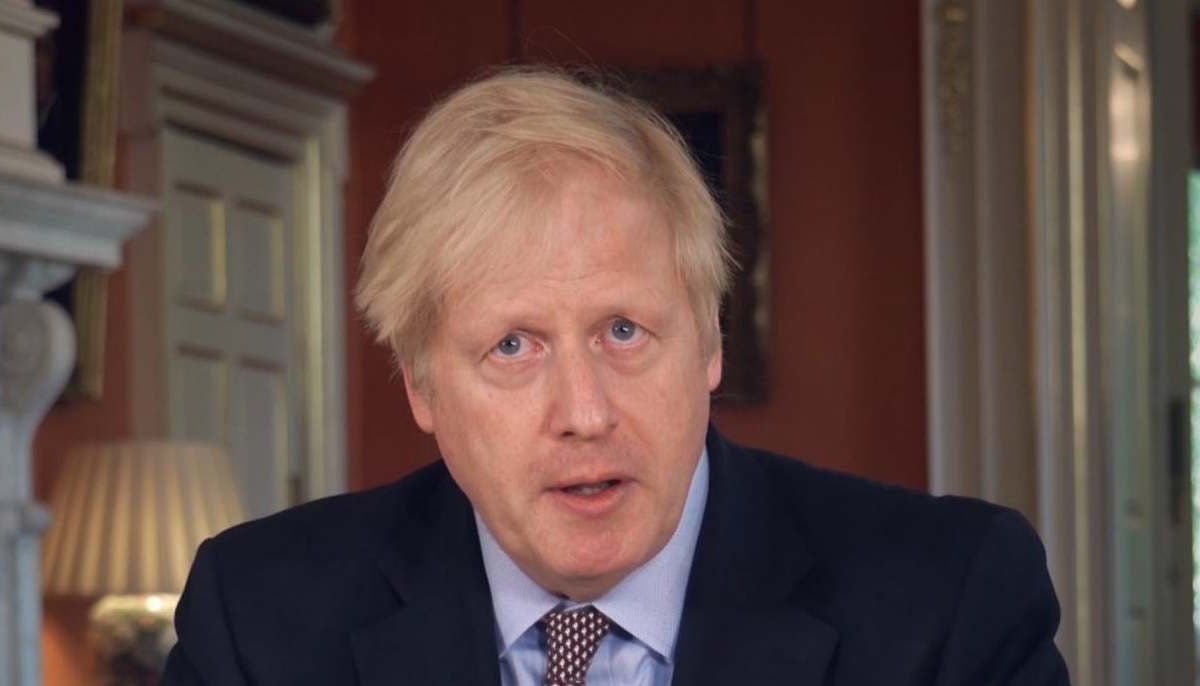
"Both of these can be done by the use of face coverings." The move was pre-empted by an overnight announcement from Prime Minister Boris Johnson’s office. Johnson, who spent several days battling Covid-19 in intensive care, said the measure was "extra insurance" against the spread of the virus.
"I do think in shops it’s very important to wear a face covering if you’re going to be in a confined space to protect other people, and receive protection," he said on Monday. People who fail to cover their face risk a fine of up to £100 ($123, 109 euros), with enforcement to be carried out by the police.
The government has been under pressure for weeks to give clear guidance about the use of facemasks in shops, as many re-open after more than three months of lockdown restrictions. Johnson’s senior cabinet colleague, Michael Gove, on Sunday appeared to rule it out, saying ministers instead trusted people’s "good sense".
Facemasks have been mandatory on public transport across the country since June 15, and Scotland has already made the coverings compulsory for shoppers. UK Environment Secretary George Eustice earlier said on Tuesday the government was changing its advice in accordance with developments in scientific thinking. But there are already concerns from the police who have called it "nigh on enforceable", with calls for shops themselves to take on the job.
"They can quite easily put signs up on their doors ‘No mask on, no entry, this is private property’," said Ken Marsh, of the Metropolitan Police Federation representing officers. The main opposition Labour party accused the government of "days of ministerial muddle" and a "shambles" on the issue and asked why the policy was coming into effect in 11 days.
Medical experts back the change in approach. David Strain, from the British Medical Association, said it would help slow the spread of the virus. "There is clear evidence that a cloth face covering will reduce up to 84 percent of droplet spread, the main source of transmission of Covid," he said.
Public opinion was split between those in favour and those against, particularly online, where #NoMasks trended on Twitter. But many social media users were responding to those opposed, after a similar campaign in the United States.
On the streets of London, some members of the public said the new rule would provide reassurance and protection but expressed concern about enforcement. The threat of a fine is "the only time that people will listen", one passer-by told AFP.
"It’s about time," said another. "We’re probably two to three weeks behind in doing it." Britain has been one of the countries worst hit by the virus, with nearly 45,000 deaths from positive coronavirus cases, according to an official government tally.
Broader statistics taking into account suspected cases puts the death toll at more than 50,000. The government was also warned on Tuesday that a second wave of infections could see 120,000 deaths in hospitals alone in a "reasonable worst-case scenario" if no action was taken now.
Meanwhile, doctors in France have described what they said was the first confirmed case of a newborn infected in the womb with Covid-19 by the mother. The baby boy, born in March, suffered brain swelling and neurological symptoms linked to Covid-19 in adults, but has since recovered, they reported Tuesday in the journal Nature Communications.
Earlier research had pointed to the likely transmission of the virus from mother to foetus, but the study offers the first solid evidence, said senior author Daniele De Luca, a doctor at Antoine Beclere Hospital near Paris.
"We have shown that the transmission from the mother to the foetus across the placenta is possible during the last weeks of pregnancy," he said. Last week, researchers in Italy said that data on 31 pregnant women hospitalised with Covid-19 "strongly suggested" that the virus could be passed on to unborn infants.
A JAMA study in March reporting on a similar number of pregnant Covid-19 patients came to a similar conclusion. But evidence remained circumstantial. "You need to analyse maternal blood, amniotic fluid, the newborn’s blood, the placenta, et cetera," De Luca said by phone.
"Getting all of these samples during a pandemic with emergencies everywhere has not been easy. This is why it has been suspected but never demonstrated." De Luca and his team pulled together this data for the case of a pregnant woman in her twenties admitted to his hospital in early March.
Because the baby was delivered by caesarean section, all of the potential sources and reservoirs of the virus remained intact. The concentration of SARS-CoV-2, the technical name given to the virus, was highest in the placenta, the researchers found.
"From there it passed through the umbilical cord to the baby, where it develops," De Luca said. "That is the pathway of transmission." The baby began to develop severe symptoms 24 hours after birth, including severe rigidity of the body, damage to white matter in the brain, and extreme irritability.
But before doctors could settle on a course of treatment, the symptoms began to recede. Within three weeks, the newborn had almost fully recovered on his own. Three months later, his mother is without symptoms.
"The bad news is that this actually happened, and can happen," De Luca said. "The good news is that it is rare -- very rare compared to the global population." Among the thousands of babies born to mothers with Covid-19, no more than one or two percent have tested positive for the virus, and even fewer show serious symptoms, said Marian Knight, a professor of maternal and child population health at the University of Oxford who was not involved in the research. "The most important message for pregnant women remains to avoid infection through paying attention to hand washing and social distancing measures," she said.
Others said the case study shed light on how the virus passes from mother to child. "This report adds knowledge to a possible mechanism of transfer to the baby, via the placenta," commented Andrew Shennan, a professor of obstetrics at King’s College London.
"But women can remain reassured that pregnancy is not a significant risk factor for them or their babies with Covid-19."







-
 Why Attorney Says Justin Baldoni 'not Off The Hook' Despite Court Ruling? Report
 -
 'Abuses' Shouted At Andrew Mountbatten-Windsor As Protesters Breach Security
 -
 Jenna Dewan Reveals Mindset She Follows When Life Gets 'nuts'
 -
 Erika Kirk Dating Claims Surface As She Reclaims Charlie Kirk's Legacy
 -
 Karoline Leavitt Joins Erika Kirk At Washington Event
 -
 Princess Beatrice’s Husband Edo ‘questioning Marriage’: ‘His Standing & Status Is Impacted’
 -
 Petition To Strip Blake Lively Of 'It Ends With Us' PGA Credit Gains Massive Support
 -
 New Development In Blake Lively Lawsuit After Judge Dismisses Major Claims
 -
 Blake Lively, Taylor Swift Texts Resurface After Court Ruling
 -
 Prince Harry’s Behavior Towards Queen Elizabeth Gets Exposed: ‘He Drove Her To Paranoia’
 -
 Blake Lively, Justin Baldoni's Legal Case Receives Latest Update
 -
 Kylie Jenner Says Goodbye To Her Halloween Era: 'I've Retired It'
 -
 Mel B Reveals Why Spice Girls Documentary May Never Happen
 -
 Maggie Gyllenhaal Recalls Emotional Impact Of Seeing Husband With Other Woman
 -
 Scarlett Johansson Shares Wild First Concert Story
 -
 Inside King Charles, Queen Camilla's First US State Visit