
Ranking last is a choice
Lo and behold, Pakistan has earned the dubious distinction of ranking 148th out of 148 countries in the World Economic Forum’s Global Gender Gap Report 2025.
With a parity score of just 56.7 per cent (declined from 57 per cent in 2024), the country sits at the very bottom of the global list, trailing behind war-torn Sudan, politically fragile Chad, and even Iran under heavy sanctions. This marks not just a statistical low but a moral failure that demands urgent reflection and radical reform.
Despite decades of rhetoric, reforms, and policy frameworks, gender inequality in Pakistan remains structurally entrenched. While the world has made incremental gains toward equality, with global gender parity inching up to 68.8 per cent, Pakistan has regressed for the second consecutive year. It is a chilling reminder that access to rights on paper does not translate into empowerment on the ground.
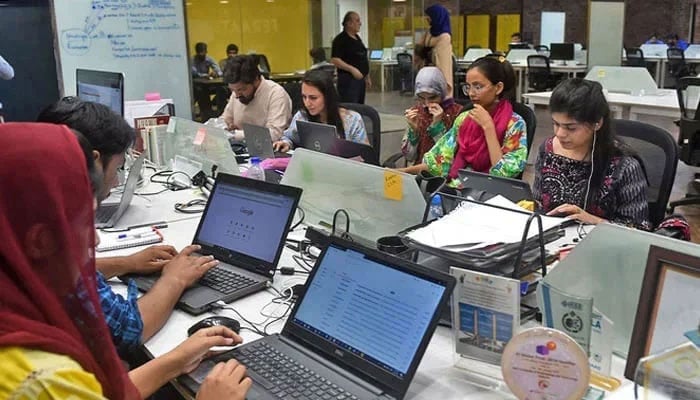
Among the four sub-indices that the WEF tracks, Pakistan fares worst in economic participation and opportunity. Women constitute a mere 25 per cent of the formal labour force, and their share in income and leadership roles remains dismally low. According to an ILO report, in Pakistan, women earn 25 per cent less per hour and 30 per cent less per month than men. For every Rs1,000 a man earns, a woman gets just Rs700. And resultantly, the economic sub-score dropped 1.3 percentage points from the previous year, a direct reflection of worsening wage inequality, occupational segregation, and limited access to decent work.
Equally alarming is the erasure of women from political leadership. The percentage of women holding ministerial roles has fallen to zero, making Pakistan one of the few countries with an all-male cabinet, joining the ranks of Vanuatu and Saudi Arabia. While there’s been a marginal increase in parliamentary participation, it’s largely symbolic, with little to no policy impact. Political empowerment now stands at 11 per cent, down from 12.2 per cent in 2024.
Even in education, where female university enrolment stands at 52 per cent, the gains are deceptive. Literacy rates for women have improved slightly (from 46.5 per cent to 48.5 per cent), but this has as much to do with a decline in male tertiary enrolment as it does with genuine progress. More importantly, education has not translated into economic or civic empowerment. A degree, it seems, is no guarantee of independence.
Beneath these dismal rankings lies a deeper malaise: a system that neither protects nor promotes women. The legal system is notoriously toothless when it comes to gender-based violence (GBV). In 2024, Punjab alone recorded 60,217 cases of abuse, with only 924 convictions. Nationally, the rape conviction rate hovers at a mere 3.0 per cent, and one case is reported every two minutes. These are not just numbers; they are systemic failures of the police, judiciary and social norms.
Digital spaces offer no respite. According to the Digital Rights Foundation, over 3,000 tech-facilitated GBV complaints were registered in a single year. Cyber harassment – often through AI-generated deepfakes – is rampant, with anonymity shielding perpetrators. And yet, Pakistan’s cybercrime laws remain outdated, enforcement is erratic, and support for victims is largely absent.
Meanwhile, economic discrimination is quietly normalised. Imported women’s essentials, from sanitary products to cosmetics, are heavily taxed, while male necessities are often locally manufactured and untaxed. This so-called ‘pink tax’ forces women to spend disproportionately more on basic goods throughout their lives, eating into their already limited earnings. It’s a perfect metaphor for how everyday sexism adds up to structural disadvantage.
Further, the ruling class is quick to point to improvements in infrastructure or legal provisions, yet access without agency is hollow. A woman may have the right to vote or attend university, but without security, financial independence, or bodily autonomy, these rights exist only in name. Many reforms, such as those targeting early marriage or workplace harassment, are also unevenly applied across provinces and riddled with loopholes.
Female leaders, too, often find themselves trapped in patriarchal political cultures, forced to toe the party line rather than challenge misogyny. Their presence is used to check a box, not to create meaningful change. The result is symbolic inclusion without structural transformation.
If Pakistan is to climb out of this gender parity abyss, it must do more than acknowledge the problem; it must dismantle the systems that sustain it. Here’s where the transformation must begin:
To advance gender equality meaningfully in Pakistan, comprehensive legal and institutional reforms are essential. Uniform and enforceable laws against gender-based violence (GBV), early marriage and workplace discrimination must be implemented across all provinces. Alongside this, judicial reforms must prioritise survivor-centric justice by ensuring quicker case resolutions and holding law enforcement accountable through strict oversight mechanisms.
However, legal reforms alone are not enough. Women's presence in political spaces must go beyond symbolic representation. Parliament must not become a gallery of tokenism; political parties should be obligated to nominate women in winnable constituencies, craft gender-sensitive policies and invest in developing female leadership.
Economic empowerment must be treated as a central policy objective. Women should have secured access to land rights, credit facilities and entrepreneurial opportunities. Contributions by women in the informal sector must be formally recognised and supported. Discriminatory taxation on women-specific products should be removed, and equal pay for equal work should be strictly enforced across all industries.
Ensuring both digital and physical safety for women is another critical front. This demands investment in gender-sensitive urban planning, safer public transportation systems, and widespread digital literacy programmes. With the rise of AI-driven online abuse, cybercrime laws need urgent reform and law enforcement must be trained to respond to complaints with competence and compassion.
Lastly, education must serve as a stepping stone to empowerment, not a dead end. Bridging the gap between education and employment is vital, through measures like career counseling, vocational training and employer incentives to recruit and retain women. Girls’ education should culminate in economic independence and self-reliance, setting the foundation for a more equitable society.
Gender inequality in Pakistan is not merely a ‘women’s issue’; it is a national development crisis. Studies show that gender-equal societies are healthier, wealthier, and more resilient. Closing the gender gap could boost Pakistan’s GDP by as much as 30 per cent. The country cannot afford to exclude half its population from full participation – not morally, not socially and certainly not economically.
In a world where even traditionally conservative regions are making strides, Pakistan’s continued stagnation is a choice, one made by institutions unwilling to give up power, by political actors afraid of true reform and by a society reluctant to imagine equality. The question, then, is not why we rank last. The question is: how long will we allow it to stay there?
Furqan Ali is a Peshawar-based researcher who works in the financial sector.
Muhammad Haris is the co-founder of Daira, a non-profit organisation working on gender, climate and governance. He is also a human rights lawyer and a visiting law lecturer at Edwardes College, Peshawar.







-
 Kelly Clarkson Talks About Making Single Life ‘magical’ In Fresh Confession
 -
 'Strictly Come Dancing' Unveils Five New Pros After Major Cast Shake-up: Watch
 -
 Prince Harry Hates Attending Public Gatherings Due To Meghan Markle After UK Visit?
 -
 Rosie O'Donnell Reveals Her Most Surprising Guest
 -
 Juventus Beat Standard Liege 1-0 For First Pre-season Win Under Luciano Spalletti
 -
 Suki Waterhouse Sees Herself Leaving US One Day
 -
 Matt Damon Unveils Driving Force Behind 'Good Will Hunting'
 -
 Lewis Hamilton Drops To Fifth After Hungarian Grand Prix Grid Penalty
 -
 Pamela Anderson Goes Unfiltered About Missing Upcoming 'Baywatch' Reboot
 -
 Dr. Courtney Shah, Seven-time 'Jeopardy!' Champion, Dies At 52
 -
 Arsenal Consider Move For Vinícius Júnior Amid Real Madrid Contract Uncertainty
 -
 Prince Harry And Meghan Markle Are ‘grovelling’ To Get Royal Positions Back
 -
 Emma Roberts And Cody John Preparing For Weekend Wedding
 -
 Katy Perry Destroys Trump Administration In New Statement
 -
 Tom Holland Recalls Point In Life He 'lied Through His Teeth'
 -
 Spencer Jones Agrees Two-year Deal With Thunder Pending Nuggets Decision