
The schools that aren’t
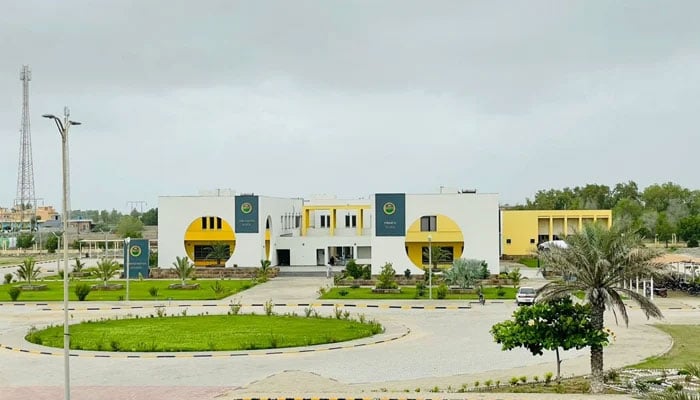
A student’s letter recently published in a newspaper laid bare more about Balochistan’s education crisis than years of official reports ever have. It didn’t come from a policymaker or consultant, but from someone inside the wreckage.
“We learn nothing all year. Cheating is the norm – without it, we fail. Teachers don’t teach; exams come with high fees and open cheating. No one checks slips or roll numbers. I attend school two or three days a week and study at home the rest. The system is broken.”
This system isn’t just broken but hollowed out and quietly collapsing. In Balochistan, the state has abandoned even its most basic duty: to educate its children.
The truth is that this system was never built for Balochistan. With its vast, sparsely populated terrain, scattered settlements and frequent political tension, conventional schooling models simply don’t fit. Expecting children in remote areas to attend school five days a week is unrealistic. Schooling must be reimagined, with mobile classrooms, community-led models and tech-based solutions. Without this shift, most children will remain excluded.
Over 90 per cent of the province lacks reliable internet, making online learning nearly impossible. The University of Balochistan, once a symbol of hope, is now paralysed. Classrooms sit empty, hostels are deserted, buses idle. Sardar Bahadur Khan Women’s University and the University of Turbat offer the same silence. Even Bolan Medical College and secondary schools like Government High School Quetta and Girls’ School Panjgur have closed, citing vague ‘security risks’ – a cover for systemic failure.
The scale of exclusion is staggering. Of Balochistan’s nearly 15 million people, 51 per cent (about 7.7 million) are under 15. Of those aged 5 to 15, 3.4 million (69 per cent) are out of school. The highest rate in the country.
And here lies the paradox: Balochistan leads Pakistan in per-student spending. In 2017–18, it spent Rs37,957 per student, compared to Sindh’s Rs23,760 and Khyber Pakhtunkhwa’s Rs22,333. By 2022, this rose to Rs61,000 – higher than Sindh (Rs40,000), KP (Rs38,000) and Punjab (Rs31,000). Yet, Balochistan’s literacy rate remains the lowest: just 41.7 per cent in 2023.
This is not about funding along. It is about power, planning and political will.
Balochistan spans 347,190 square kilometres – larger than many countries, but with fewer than 15 million people. Beneath its soil lie copper, gold and gas. Above it, a whole population including Baloch, Pashtun and Hazara are facing a state that treats education as an afterthought. Crumbling buildings, ghost schools and unchecked bureaucracy have turned learning into a mirage.
In 2008–09, Balochistan’s education budget was Rs3.3 billion – half for development, half for salaries. By 2019–20, it jumped to Rs75 billion. By mid-2024, it reached Rs146.9 billion – 15.4 per cent of the total provincial budget. But Rs114.8 billion went to salaries and administration. Just Rs32 billion, less than a quarter, went to actual development: building schools, toilets, water facilities, textbooks and boundary walls.
The result? Disaster, not development. Had these billions been used well, the story might have been different. But literacy has barely budged: from 26.6 per cent in 1998 to 43.6 per cent in 2017, now back down to 42 per cent in 2023. Male literacy barely touches 50 per cent. Female literacy is stuck at 32.8 per cent. In districts like Awaran and Washuk, it’s in single digits. In Quetta, it reaches 74 per cent. These extremes expose the truth: money can’t fix a broken system without planning, inclusion, and accountability.
The numbers continue to scream. Of children aged 5 to 16, 69 per cen (about 3.43 million) are out of school. For girls, it’s worse: 75 per cent are excluded. Sindh’s rate is 47 per cent, KP’s 30 per cent. Net primary enrolment rose only slightly: from 40 per cent in 2008 to 45 per cent in 2019–20. Sindh stands at 53 per cent, KP at 61 per cent. Only 20 per cent of Baloch teens make it to Grades 9 and 10. More than half drop out before they finish.
Infrastructure is a key reason. In 2024, 79 per cent of Balochistan’s schools had no electricity. Seventy-one per cent lacked clean water; 52 per cent had no boundary walls; and 51 per cent had no toilets. After floods in 2022 destroyed 2,000 classrooms, fewer than 30 per cent were rebuilt by early 2024. Sindh rebuilt 60 per cent, KP 70 per cent, and Balochistan, once again, was last.
And even where schools exist, many barely function. According to ASER’s 2023 survey, only 25 per cent of Grade 3 students could read a basic Urdu story. Fewer than 20 per cent could solve a simple two-digit division problem. Forty per cent of schools have only one teacher. Fewer than 15 per cent of teachers get any in-service training. When most of the budget
is spent on salaries, not learning, classrooms become shells – open but empty.
At the root of the crisis is centralised control. Despite promises of devolution under the 18th Amendment, real decision-making is locked in Quetta. District councils have no authority over hiring, procurement or planning. Projects stall. Funds go unspent. Tenders expire. Money returns to the treasury. In 2012, 2,007 ghost schools were uncovered. Today, thousands of ghost teachers still collect salaries without teaching a single child.
The curriculum fails as well. Textbooks erase Balochistan’s history, languages, and identities. Balochi and Brahui are sidelined. The ‘national curriculum’ reflects a distant centre, not the lives of children in Gwadar or Dera Bugti. For many, school feels alien. Dropout becomes inevitable.
Then comes violence. Since 2008, over 400 schools have been burned down by insurgents who see education as a tool of state control. In 2016, two teachers were killed in a bombing in Mastung. In 2025, a suicide attack on a school bus in Khuzdar claimed more lives. Schools are caught between militants and militarisation. Teachers, especially women, fear rural assignments. Parents pull children out to keep them safe.
Over all this looms political instability. Since 2008, Balochistan has seen six chief ministers. Each came with promises, none delivered. Aslam Raisani declared an “education emergency” before vanishing in scandal. Sanaullah Zehri announced a ten-year plan, then lost power within months. The Balochistan Awami Party now touts the World Bank’s $100 million GRADES-Balochistan programme to enrol 250,000 students and train 5,000 teachers. But no foreign project can mask the reality: unspent budgets, bloated bureaucracy and wasted years.
Still, some hope remains. In abandoned corners, community-run ‘citizen schools’ operate in private homes. Volunteer teachers and small donations keep them alive. NGOs like ASER monitor learning and push for reform. In Quetta’s outskirts, mother-tongue instruction has doubled reading speed. The will exists. The state does not.
Balochistan stands at a crossroads, yet again. It can continue quoting inflated budget figures and sitting through donor briefings. Or it can finally admit what children already know: this is not a province failed by fate. It is a province failed by politics, by bureaucracy, by silence.
For the barefoot child who walks to school or the girl waiting for a teacher who never arrives, the question is no longer ‘how much’ money is enough. The real question is: will anyone care enough to spend it where it matters?
The writer is former head of Citigroup’s emerging markets investments and author of ‘The Gathering Storm’.







-
 Prince William Issues Warning To Harry After Latest Remarks?
 -
 Why Justin Thomas, Keegan Bradley And Cameron Young Were Warned At PGA Championship
 -
 Iran Conflict Sparks Rising Diesel Costs, Straining US School Budgets
 -
 Savannah Guthrie Mother Nancy Kidnapping Case: Shocking Claim Sparks Reactions
 -
 Zuckerberg, Pichai Called To Testify On Child Safety Concerns
 -
 Brian Lindstrom Passes Away After Battle With Rare Brain Disease
 -
 Steve Jobs Asked This One Question Before Hiring Anyone
 -
 American Doctor, Affected By Hondius Ship Hantavirus Breaks His Silence
 -
 Asteroid 2026 JH2 To Pass Extremely Close To Earth On May 18: Should We Be Concerned?
 -
 Zayn Malik Shares Major Health Update After Emergency Hospital Visit
 -
 Is Savannah Guthrie Aware Of 'secrets' In Mother Nancy Kidnapping Case?
 -
 Israel Confirms Death Of Hamas Military Leader Izz Ad-Din Al-Haddad
 -
 Southern California On Alert: High Winds Trigger Wildfire And Dangerous Seas
 -
 MLB Star Josh Smith Viral Meningitis Diagnosis Leads Him To The Hospital
 -
 Prince Harry's Reality Hugely Shocks Meghan Markle: Biggest Source Of Tension In Marriage?
 -
 President Putin To Visit China On May 19–20 After Trump’s Trip, Drawing Global Attention