
NCSW affirms support for ICT Child Marriage Restraint (Amendment) Act
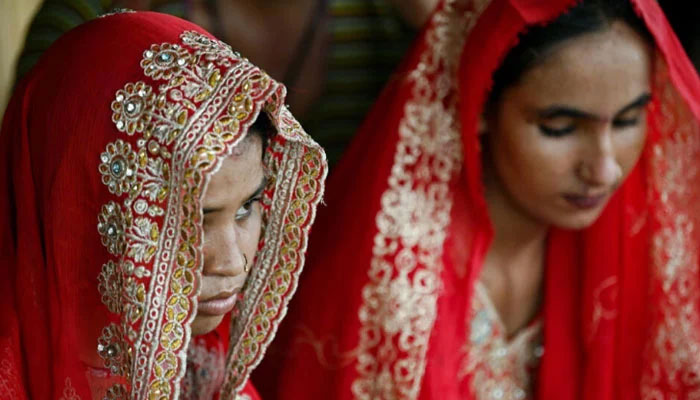
Islamabad:The National Commission on the Status of Women (NCSW) has taken note of the recent remarks made by the Council of Islamic Ideology (CII) regarding the passage of the Child Marriage Restraint (Amendment) Act in the Islamabad Capital Territory (ICT), which establishes the minimum legal age of marriage for both boys and girls at 18 years. The Commission has also affirmed its support for this legislative reform as a crucial step toward upholding the rights of children, particularly girls, and aligning national laws with constitutional mandates and international human rights commitments.
The Council of Islamic Ideology (CII) has declared the Khyber Pakhtunkhwa government’s ‘Prohibition of Child Marriage Bill 2025’ and the National Assembly’s ‘Prohibition of Child Marriage Bill’ as un-Islamic. The council stated that setting an age limit, declaring marriage below 18 as rape, and imposing penalties on it, do not conform with Islamic rulings. However, the council emphasized discouraging child marriages and rejected the bill.
In a statement issued by NCSW on Thursday, the Commission stated that the Child Marriage Restraint (Amendment) Act is based not only on extensive consultations with legal experts, civil society organizations, healthcare professionals, youth, religious scholars, and members of the CII, but also on the broader legal principle that marriage, being a legally binding contract, must adhere to the same foundational requirements as other civil contracts in Pakistan.
It mentions that under existing Pakistani law, individuals must be at least 18 years of age to obtain a Computerized National Identity Card (CNIC), vote in national and provincial elections, and acquire a driving license, “Each of these rights and responsibilities is conferred at 18 in recognition of an individual’s legal and mental capacity to make informed decisions. If the law deems a person under 18 incapable of voting and driving due to presumed legal and developmental immaturity, it follows logically and legally that such individuals should not be permitted to enter a far more consequential contract — marriage — which carries lifelong implications for personal, social, and reproductive health,” says the statement.
It further says that the recent judgment of the Lahore High Court titled Azka Wahid Versus Province of Punjab & others 2024 LHC 1392, which upheld the age of 18 years as the minimum age of marriage for both boys and girls under the Child Marriage Restraint Act, further reinforces the legal and constitutional standing of this amendment. “The Commission has been working diligently, in consultation with a broad spectrum of stakeholders, toward the standardization of the marriageable age across Pakistan — a commitment grounded in constitutional protections, international obligations, and evidence-based concerns around the health, well-being, and empowerment of girls. In pursuit of this objective, the NCSW organized countrywide consultations with legal experts, civil society organizations, health professionals, youth representatives, religious scholars, and members of the CII itself. These discussions involved informed, respectful dialogue on the far-reaching implications of child marriage, particularly the severe health risks and complications faced by young girls as a result of early pregnancies. In several such engagements, members of religious institutions and clerics extended their understanding and support for the proposed legal reforms.”
NCSW emphasized that the amendment is consistent with both Islamic teachings that prioritize protection, dignity, and maturity in contractual obligations, and with Pakistan’s constitutional duties under Article 25 (equality before law) and Article 35 (protection of the family, mother, and child). The Commission’s statement said that this reform is neither in conflict with Islamic principles nor a foreign imposition.
Rather, it is a measure grounded in Pakistan’s own constitutional commitments to safeguard the rights of children, uphold gender equality, and protect public health. In light of these considerations, the Commission urged all stakeholders, including religious and legal institutions, to support efforts aimed at ensuring a safe, healthy, and empowered future for all children in Pakistan.







-
 Kylie Kelce Explains Why She Avoids Raising Kids With 'silver Spoon'
 -
 Meghan Markle Is Above Royal Family ‘empty Threats,’ Says Insider
 -
 Anne Hathaway Opens Up About 'defeated' Feeling As Working Mom
 -
 Shamed Andrew Should Testify In Epstein Case As ‘act Of Service’
 -
 What Really Happened Before Nicholas Brendon Was Found Dead At Home?
 -
 Sarah Ferguson Branded ‘most Famous Missing Person’ In UK Right Now
 -
 Why King Charles Does Not Need A Driving License? Expert Reveals
 -
 Did Graham Norton Really Sign NDAs For Taylor Swift’s Wedding?
 -
 ‘Polite’ King Charles Treats Staff Better Than ‘boorish’ Andrew
 -
 Princess Beatrice's Husband Raises Eyebrows With Deleted Instagram Post
 -
 Dua Lipa 'snubs' Priyanka Chopra
 -
 Will Taylor Frankie Paul Still Get Her 'Bachelorette' Salary?
 -
 'Harry Potter' Returns: First Glimpse Of HBO's New Series
 -
 Ryan Gosling Credits His Kids For Key Detail In New Role
 -
 Prince William, Kate Middleton Mark 'historic Moment'
 -
 Why Roberts Pattinson Says Couples 'ruin' Their Big Day Amid Suki Waterhouse Wedding Rumors?