
‘Kuttay Ji Qabar’ jurisdiction dispute sparks debate in Senate panel meeting
A representative from Sindh govt provided literary, historical, and geographical references to support Sindh’s claim
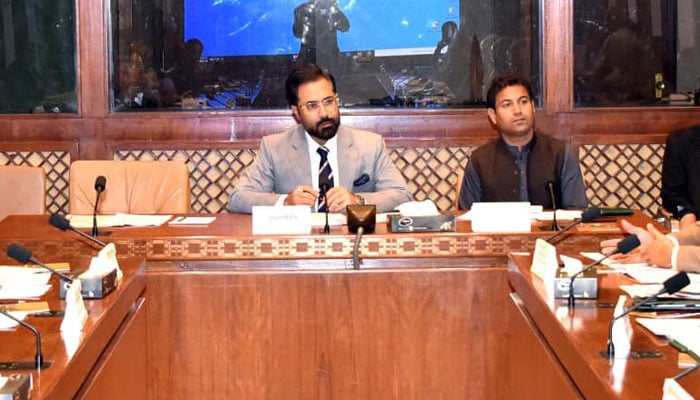
ISLAMABAD: The dispute between the Sindh and Balochistan governments over the jurisdiction of “Kuttay Ji Qabar” Friday sparked a debate in the Senate Functional Committee on Problems of Less Developed Areas.
Chaired by Senator Agha Shahzaib Durrani at the Parliament House, the committee critically analyzed the ongoing jurisdictional dispute. The contested site, a historical location in Mouza Dhadaro, Union Council Sunchuko, Tehsil Karkh, District Khuzdar, Balochistan, was declared a protected heritage site by the Sindh government in January 2025. However, the Government of Balochistan refutes this claim, arguing that historical records, maps, and legal frameworks place the site under its administrative jurisdiction. This marks the third time Sindh has laid claim to the site as the protected heritage. A representative from the Sindh Government provided literary, historical, and geographical references to support Sindh’s claim, emphasizing that the matter concerned the jurisdictional clarification. He also asserted that the resolution through coordination between both the governments was preferable to escalating the issue at this forum. Senator Agha Shahzaib Durrani stated that while Sindh claimed the forum lacked jurisdiction, constitutional matters involved both the province and the federation. Citing Article 143 of the Constitution, he highlighted that any dispute between two entities fell under the federal jurisdiction and should be addressed accordingly. He disagreed with Sindh’s stance, noting that while it sought the federal government’s intervention for water disputes, it now denied the federation’s role in this matter. “Historically, territorial boundaries have changed —where was this region in the 4th century BC, in 1711, or during the Third Battle of Panipat? Borders shift over time due to wars and political changes. The focus should be on the present legal status rather than historical gazetteers,” he remarked. Senator Durrani further questioned the electoral jurisdiction of the area, asking under which territory the residents of Kuttay Ji Qabar vote, and demanded the voter list. He also pointed out that the current MPA from the contested territory represented Balochistan, not Sindh. A representative from Balochistan stated that while historical references were being presented, the issue must align with the constitutional provisions, which affirm the area as part of Balochistan. He stressed that any territorial changes required a two-thirds majority approval and reiterated that the village was located 25km inside Balochistan. In a gesture of goodwill, he suggested withdrawing Sindh’s notification while still recognizing the site’s significance as a protected heritage. After hearing both sides, Senator Agha Shahzaib Durrani recommended that both the governments form a joint committee to resolve the matter amicably within 30 days. If unresolved within 90 days, the Inter-Provincial Coordination (IPC) Ministry will intervene, and once the issue is settled, a report must be submitted to the Senate Committee. Additionally, ongoing and completed Pakistan Petroleum Limited (PPL) projects for the past 10 years were discussed. The MD Petroleum Division highlighted gas shortages in Sui Town as a major concern and outlined key initiatives benefiting the local residents. Durrani recommended the authorities submit a comprehensive province-wise report on projects completed under CSR (Corporate Social Responsibility) in the last decade, assessing their impact, future initiatives, and employment generation.


