
Pakistan’s digital revolution
Without right policies and infrastructure, country risks falling behind in rapidly evolving landscape
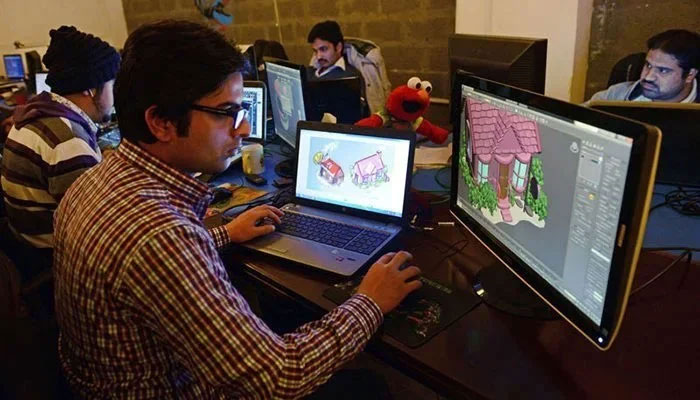
Pakistan stands at the brink of a digital revolution, with AI and the metaverse offering unprecedented economic opportunities.
The global metaverse market, valued at approximately $234 billion in 2022, is projected to soar to $3.4 trillion by 2027. Pakistan’s virtual assets market is expected to reach $17.3 million by 2025, reflecting a growing interest in this transformative space.
As nations race to integrate AI into digital economies, Pakistan has a unique chance to harness this technology for job creation, entrepreneurship, and financial inclusion. However, without the right policies and infrastructure, the country risks falling behind in this rapidly evolving digital landscape.
The metaverse, a vast and interconnected digital universe powered by AI, blockchain and virtual reality is redefining how people work, trade, and interact. Within this space, users can purchase virtual land, establish businesses, and engage in commerce using cryptocurrencies and NFTs. Global brands like Nike and Gucci have already entered the metaverse, selling digital assets and creating immersive brand experiences. AI-driven platforms like Decentraland and The Sandbox allow users to buy and develop virtual properties. At the same time, gaming ecosystems like Axie Infinity offer play-to-earn models that generate real income.
The financial sector is also adapting, with decentralised finance (DeFi) platforms enabling instant transactions and AI-powered virtual banks operating in these digital environments.
For Pakistan, the metaverse presents several lucrative opportunities. Digital entrepreneurship is one of the most promising avenues, allowing Pakistani developers, designers and content creators to sell virtual assets and AI-driven services on a global scale. Remote work is another game-changer, with AI-powered virtual workspaces enabling professionals to secure international jobs without geographical constraints.
Blockchain-based financial systems could also bring millions of unbanked Pakistanis into the formal economy, fostering secure cross-border transactions. AI-powered virtual education could further revolutionise learning, granting students access to global resources and interactive training simulations. If Pakistan capitalises on these prospects, it could become a key player in the global digital economy.
Despite these opportunities, significant challenges remain. Pakistan’s digital infrastructure is still underdeveloped, with many areas lacking reliable high-speed internet and 5G connectivity – both crucial for seamless metaverse interactions. Regulatory uncertainty is another barrier, as unclear policies on digital assets, cryptocurrency, and AI governance deter investors and entrepreneurs.
Moreover, while Pakistan has a young and tech-savvy population, digital literacy remains a challenge, necessitating large-scale training programmes to prepare individuals for the future of work. Cybersecurity is another pressing concern, as AI-driven virtual platforms are vulnerable to hacking, data breaches, and financial fraud. Addressing these issues is vital for Pakistan to establish itself in the metaverse economy.
Policymakers must act swiftly to ensure Pakistan does not miss this digital transformation. Investment in digital infrastructure, including broadband expansion and 5G networks, is crucial. A well-defined regulatory framework for virtual businesses, blockchain transactions, and AI governance is needed to provide security and attract investors. National-level digital literacy initiatives should be launched to equip Pakistanis with AI and metaverse-related skills.
The government should also support metaverse startups through funding, incubation programme and incentives to drive innovation. By taking these steps, Pakistan can harness the metaverse revolution to create new economic opportunities and position itself as a leader in the digital age.
The AI-driven metaverse is no longer a futuristic concept – it is here, shaping economies and redefining global industries. For Pakistan, it offers a chance to leapfrog into the future and establish itself as a key player in the digital economy. By embracing innovation, overcoming infrastructural and regulatory challenges, and equipping its workforce with digital skills, Pakistan can unlock a future of prosperity.
The time to act is now; delaying could mean missing out on the next major economic revolution.
The writer is a planning officer with the government of Sindh.


