
Jinnah and Iqbal: Bridging Islamic principles with progressive statecraft
Jinnah adhered to Islamic principles to guide creation of welfare state, blending idealism with practicality
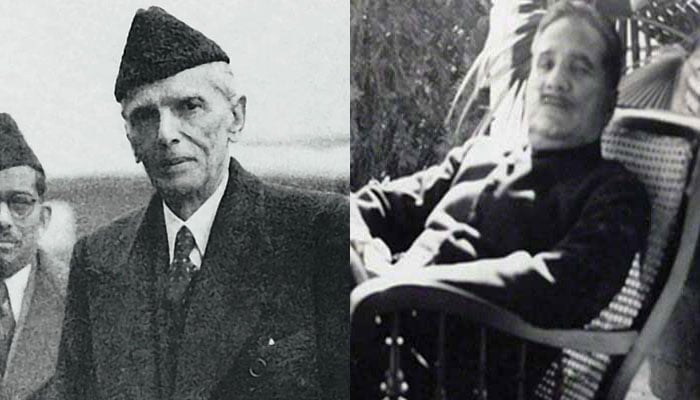
Quaid-i-Azam Muhammad Ali Jinnah said on November 8, 1945, “Personally, I believe that in modern times, essential key industries ought to be controlled and managed by the state.” Jinnah envisioned a welfare state founded on Islamic principles, which emphasise social justice and equality.
In Muslim Modernism: The Case for Naya Pakistan,«Nadeem Farooq Paracha argues that the progressive and modern elements of Islam, combined with political philosophy, resonate with modern skills and techniques. Muhammad Ali Jinnah adhered to Islamic principles to guide the creation of a welfare state, blending idealism with practicality.
A welfare state undertakes all essential responsibilities for its citizens, ensuring that all are treated equally. Addressing the All-India Muslim League (AIML) Planning Committee in Delhi on November 5, 1944, he said, “It is not our purpose to make the rich richer and to accelerate the process of the accumulation of wealth in the hands of a few individuals. Our ideal should not be capitalistic but Islamic.”
Jinnah speaks of the Islamic ideals, which mean basic social protections which Islam provides to its citizens. Mustafa Abdullah Kuyateha argues in “Islam and Social Welfarism: The Role of Islamic Social Interventions,” “The ‘theory of infaq’ emphasises spending one’s wealth and resources in the course of Allah.” This epitomises the Islam that Jinnah spoke about when he said that the Pakistan movement is not directed at making the rich richer but at fostering equality, with accumulation strictly banned.
Quaid-i-Azam Muhammad Ali Jinnah bridged idealism and practicality to achieve the goal of a welfare state. Recorded on February 26, 1948, in his speech to the people of America, Jinnah pointed out some basic social principles of Islam that would form the foundation of Pakistan. First, he believed that democracy is the basis of the Islamic political system. Social justice is the cornerstone of the Islamic welfare state, along with justice and fair play for everybody. Jinnah said, “In any case, Pakistan is not going to be a theocratic state to be ruled by priests with a divine mission. We have many non-Muslims, Hindus, Christians, and Parsees, but they all are Pakistanis.” Jinnah stressed and focused on the practicality of Islam’s ideal principles. Even in the same speech, Jinnah said that the tenets of Islam, though 1300 years old, are still applicable.
Muhammad Ali Jinnah believed that Pakistan would be a Muslim state guided by Islamic principles. Jinnah’s approach in this regard is ideal. However, when one studies Allama Iqbal’s explanation of a Muslim state, it becomes clear that Jinnah’s understanding of political Islam was closely aligned with the concept of a modernist or progressive state. This is because Allama Iqbal considered Ijtihad the essence of movement and reform.
In Arshia Javed’s The Need of Ijtihad for Sustainable Development in Islam, it is stated, “Ijtihad is the key to providing an Islamic interpretation of modern developments and circumstances.” Allama Iqbal believed that without Ijtihad, the Muslim political system would stagnate and fail to meet modern challenges. In his book The Reconstruction of Religious Thought in Islam, Allama Iqbal emphasises the significance of Ijtihad in Islam. Muhammad Ali Jinnah echoed similar thought in his vision of political Islam for Pakistan.
Allah says in the Holy Quran: “Indeed, Allah will not change the condition of a people until they change what is in themselves.” (Quran 13:11). Allama Iqbal further elaborated, “The teaching of the Quran that life is a process of progressive creation necessitates that each generation, guided but unhampered by the work of its predecessors, should be permitted to solve its problems.”
Pakistan is not merely a country but a vision or program that Jinnah aimed to direct toward a state that would revive the genuine principles of Islam. It is now upto new generations of politicians to turn his vision into reality.


