
SBP eliminates minimum profit rate requirement for corporates
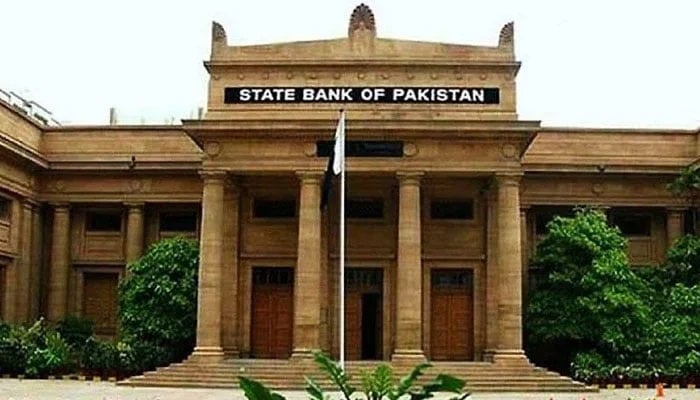
KARACHI: The central bank on Tuesday removed the minimum deposit rate (MDR) for deposits held by financial institutions and public sector companies and mandated Islamic banks to pay profits on savings deposits, excluding those held by these entities.
The State Bank of Pakistan (SBP) has revised its instructions, eliminating the MDR requirement for conventional banks on deposits held by financial institutions, public-sector enterprises and public limited companies. From January 1, 2025, the MDR will only apply to deposits from individual account holders.
Brokerage firm Topline Securities said banks are now withdrawing huge monthly fees on month-end balances with immediate effect after the SBP provided relief on minimum deposit rate. These notices of withdrawal are also posted on their social media handles.
Awais Ashraf, director of research at AKD Securities Limited, said that the SBP’s latest guidelines regarding profit sharing for Islamic banking institutions (IBIs) and commercial banks will foster a competitive environment between Islamic and conventional banks while also protecting deposits within Islamic banks.
There was speculation that the government may reverse the advance-to-deposit ratio (ADR) tax measure. There was also growing anticipation of potential changes to regulations regarding minimum deposit rates for conventional banks. In particular, there was optimism over the possibility of eliminating minimum deposit rate requirements for corporate and government entities. According to analysts, such a change would encourage these entities to invest their funds in more productive areas of the economy, rather than relying solely on fixed returns from bank deposits.
According to a report by Topline Securities, the removal of the MDR will benefit banks that have a higher proportion of corporate deposits, as they will no longer be required to pay any MDR. Instead, banks will pay negotiated rates to corporate clients.
The report, which cites the 2023 annual accounts of all listed banks, shows that the total deposits amount to Rs27 trillion, with 53 per cent (Rs14 trillion) represented by corporate deposits. The top conventional banks with a higher mix of corporate deposits include the Bank of Punjab, Bank of Khyber, Samba Bank, National Bank and Askari Bank, with corporate deposits ranging from 65 to 88 per cent. In comparison, other major banks like MCB Bank, Bank Al Habib, Habib Bank, and United Bank have a corporate deposit exposure of about 35 to 40 per cent.
The report has assumed a 50-100 basis points (bps) decline in the deposit costs for corporates.“We also believe that it will be difficult for banks to reduce rates further due to the competitive environment and the risk of these deposits shifting to alternative sources, such as investments in T-bills,” said the report.
The SBP stated in another circular that it has decided that IBIs will pay profit on their Pak-rupee saving deposits (excluding deposits of financial institutions, public-sector enterprises and public limited companies) equivalent to at least 75 per cent of the weighted average gross yield of all pools of IBIs.
For the purpose of determining the gross yield of each pool, the monthly gross earnings of the pool will be divided by the monthly average assets of the pool (excluding fixed assets). However, the pools created by IBIs for Sharia-compliant standing ceiling facility and Sharia-compliant open market operations will be excluded while calculating the weighted average gross yield of pools.
The current annualised gross yield on assets (net of fixed assets) for Meezan Bank is 15.2 per cent, according to the Topline report. Of that amount, 75 per cent, or 11.4 per cent, must be paid.
The bank’s current weighted average deposit cost, however, is 6.1 per cent, and after accounting for current accounts, it is 13.1 per cent. On the surface, it appears that Meezan is already paying depositors more than the minimum required of 11.4 per cent, or 13.1 per cent.
Assuming an average of 9-10 per cent being paid to retail accounts, the bank will be required to pay an additional 1.5-2.5 per cent to their retail deposit holders of Rs933 billion, the report said.
According to one banker, the payment of higher profits to individuals who keep savings deposits in Islamic banks will encourage deposit inflows to Islamic lenders. It will, however, reduce the Islamic banks’ earnings. Will Islamic banks be able to provide the government with financing through Sukuk at more reasonable or lower rates if their earnings are negatively impacted, he questions?







-
 Why Attorney Says Justin Baldoni 'not Off The Hook' Despite Court Ruling? Report
 -
 'Abuses' Shouted At Andrew Mountbatten-Windsor As Protesters Breach Security
 -
 Jenna Dewan Reveals Mindset She Follows When Life Gets 'nuts'
 -
 Erika Kirk Dating Claims Surface As She Reclaims Charlie Kirk's Legacy
 -
 Karoline Leavitt Joins Erika Kirk At Washington Event
 -
 Princess Beatrice’s Husband Edo ‘questioning Marriage’: ‘His Standing & Status Is Impacted’
 -
 Petition To Strip Blake Lively Of 'It Ends With Us' PGA Credit Gains Massive Support
 -
 New Development In Blake Lively Lawsuit After Judge Dismisses Major Claims
 -
 Blake Lively, Taylor Swift Texts Resurface After Court Ruling
 -
 Prince Harry’s Behavior Towards Queen Elizabeth Gets Exposed: ‘He Drove Her To Paranoia’
 -
 Blake Lively, Justin Baldoni's Legal Case Receives Latest Update
 -
 Kylie Jenner Says Goodbye To Her Halloween Era: 'I've Retired It'
 -
 Mel B Reveals Why Spice Girls Documentary May Never Happen
 -
 Maggie Gyllenhaal Recalls Emotional Impact Of Seeing Husband With Other Woman
 -
 Scarlett Johansson Shares Wild First Concert Story
 -
 Inside King Charles, Queen Camilla's First US State Visit