
Pakistan’s deadly air pollution crisis
Lahore, city of 14 million people, has – again – topped rankings of world’s most polluted air
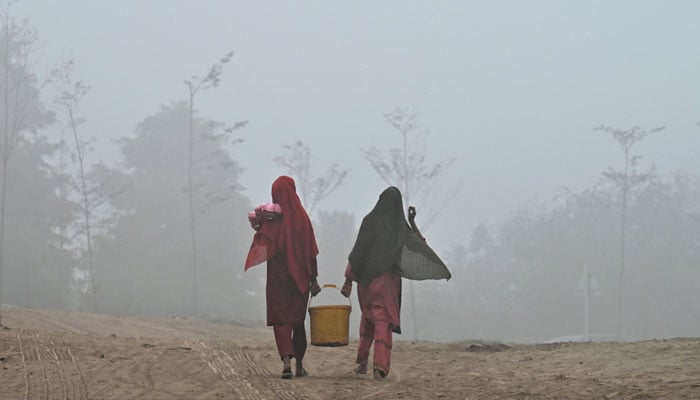
On November 7, as Pakistan was reeling from days of deadly air pollution, Punjab Chief Minister Maryam Nawaz flew to Europe to get medical care for a severe throat infection. The chief minister is one of millions of Punjab residents who are finding it hard to breathe these days. But the vast majority don’t have the luxury of escaping or getting world-class medical care.
Punjab’s capital, Lahore, a city of 14 million people, has – again – topped the rankings of the world’s most polluted air, with air quality index (AQI) readings of up to 1900 in and around the city. The US Environmental Protection Agency considers readings over 300 hazardous. Exposure to fine particulate matter (PM2.5), one of the most deadly pollutants, was reported to peak at 601 micrograms per cubic metre, more than 40 times what the World Health Organization (WHO) considers safe. Polluted air is not a problem limited only to Lahore. On November 8, Multan, a major city in southern Punjab, recorded a reading of 2000.
Burning fossil fuels for transportation, heating fuel, waste incineration, electricity generation, and other industrial activities is responsible for increasing levels of air pollution. The destruction of green spaces in Lahore, replacement of agricultural land with concrete structures, crop burning, and lack of a viable public transport system have also contributed to worsening air pollution over the years.
In response to the latest air pollution crisis, the Punjab government has closed schools, shifted classes online, and imposed lockdowns. But Pakistan’s national and Punjab governments are doing little to address the root causes of toxic air.
The use of coal for electricity generation, alongside vehicle emissions, waste burning, and other industrial pollution, is one of the driving factors of air pollution in Pakistan. Yet, the government has allowed coal power in Pakistan to expand dramatically. Last year, Prime Minister Shehbaz Sharif inaugurated two new coal-fired power plants in Sindh and is planning to commission up to five more.
Pakistan has made significant progress in expanding access to electricity over the past 20 years, rising from only about 75 per cent of the population in 2002 to 95 per cent in 2022, according to data from the World Bank. Access to electricity is fundamental to nearly every aspect of living and participating in present-day societies and essential to the realization of human rights. But relying on fossil fuels, especially coal, for electricity production has tremendous costs for both human and environmental health.
Scientific research has found that exposure to air pollutants from coal power plants is associated with a risk of mortality more than double that of exposure from other sources. Coal plants are also responsible for over 20 per cent of the world’s greenhouse gas emissions: more than any other single source contributing to the climate crisis.
The WHO describes air pollution as the “single biggest environmental threat to human health” and estimates that 99 per cent of the world’s population is breathing toxic air. Polluted air affects everyone but it does not affect everyone equally: pregnant people, children, older people, people with disabilities, people with conditions such as asthma and socially and economically marginalised populations are more likely to be exposed to or adversely affected by toxic air. While some can work from home, use air purifiers or relocate abroad, few Pakistanis can afford these options.
Based on WHO estimates of the death rate attributable to outdoor air pollution, more than 140,000 people in Pakistan died from air pollution in 2019. Fair Finance Pakistan, an organisation working to address the impact of climate change, has called on the government and businesses to ensure a just transition to renewable energy.
According to the Air Quality Life Index, air pollution in Pakistan shortens average life expectancy by 3.9 years. Of Pakistan’s cities, Lahore is the worst affected, with air pollution cutting life expectancy by seven years.
Under international human rights law, the Pakistani government has an obligation to protect its citizens’ rights to life, health and a clean, healthy and sustainable environment. With respect to air pollution, this means addressing the root causes of toxic air and climate change by phasing out fossil fuels and stopping the expansion of coal plants. The government should also monitor air quality and put in place measures to protect those most at risk when pollutant levels are high. It should also introduce regulations to limit air pollution, enforce rigorous air quality standards, and develop more green spaces for urban communities.
In October, the government introduced in parliament an amendment to the constitution creating a right to a clean and healthy environment. For this right to become a reality, people need clean air to breathe.
The writer is associate Asia director at Human Rights Watch.


