
A history of ignoring seniority principle in judiciary since 1947
Research shows principle being ignored multiple times in country’s eventful judicial history
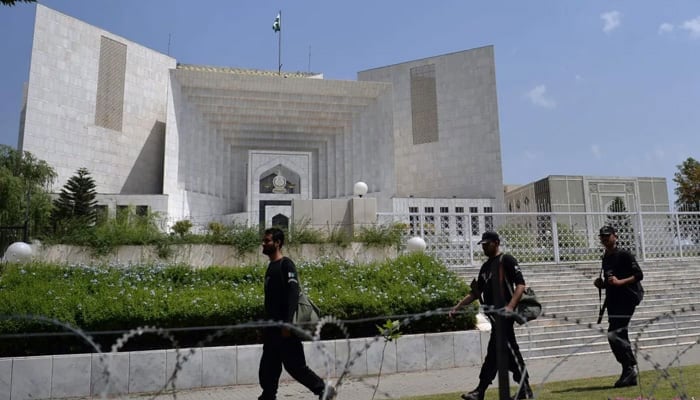
LAHORE: Even before the passage of the 26th Constitutional Amendment, when the senior-most judge of Supreme Court was supposed to be appointed as Chief Justice of Pakistan by President on advice of Prime Minister in line with the principle of seniority, this tradition was flouted a few times in country’s eventful judicial history littered with eyebrow-raising accounts of favouritism, intrigues and conspiracies, research shows.
The principle was also not adhered to in elevating high court judges to the apex court.
Here is a list of some Pakistani Supreme Court judges available on the Supreme Court website (from 1947 to 2021), some of them became chief justices later, who were elevated to the apex court by superseding their senior colleagues:
Justice Abdul Rehman (1950), Justice Fazle Akbar (1960), Justice B.Z. Kaikus (1960), Justice Hamood-ur-Rehman (1960), Justice Sajjad Ahmed Jan (1968), Justice Abdus Sattar (1968), Justice M.R. Khan (1968), Justice Salahuddin Ahmad (1971), Justice Qazi Muhammad Gul (1973), Justice M. Afzal Cheema (1974), 11. Justice Abdul Kadir Sheikh (1974), Justice Malik Muhammad Akram (1975), Justice Dorab Patel (1976), Justice Muhmmad Haleem (1977), Justice Karam Elahi Chauhan (1979), Justice Muhammad Afzal Zullah (1979), Justice Dr. Nasim Hasan Shah (1979), Justice Shafi ur Rehman (1981), Justice S.A. Nusrat (1981), Justice Zafar Hussain Mirza (1981), Justice Muhammad Saleem Akhtar (1991), Justice Mukhtar Ahmed Junejo ((1996), Justice Raja Afrasiab Khan (1996), Justice Muhammad Bashir Jehangiri (1996), Justice Tanvir Ahmed Khan (2000), Justice Khalil-ur-Rehman Ramday (2001), Justice Muhammad Nawaz Abbasi (2001), Justice Faqir Muhammad Khokhar (2001), Justice M. Javed Buttar (2004), Justice Tassadduq Hussain Jillani (2004), Justice Ch. Ijaz Ahmed (2005), Justice Syed Jamshed Ali (2005), Justice Khilji Arif Hussain (2009), Justice Mian Saqib Nisar (2010), Justice Asif Saeed Khan Khosa (2010), Justice Gulzar Ahmed (2011), Justice Amir Hani Muslim (2011), Justice Munib Akhtar (2018), Justice Amin-ud-Din Khan (2019), Justice Sayyed Mazahar Ali Akbar Naqvi (2020), Justice Muhammad Ali Mazhar (2021).
The tradition or principle of appointing the senior-most Supreme Court judge as Chief Justice was first ignored in 1954 when Justice Muhammad Munir was elevated as Top Arbiter instead of a Calcutta-born Bengali judge, Abu Saleh Muhammad Akram (1988-1968).
The Pakistan Supreme Court was called the Federal Shariat Court then.
Justice Akram was one of the two members from Pakistan at the Bengal Boundary Commission for the Radcliff Award in June 1947, and was the first Chief Justice of the Dacca High Court soon after partition.
In 1954, he was in line to succeed the retiring Chief Justice, Mian Abdul Rasheed, but stood aside under pressure from Governor-General, Ghulam Muhammad, and Justice Munir was appointed instead.
(Reference/Source: “A history of judiciary in Pakistan” by eminent lawyer Hamid Khan)
However, despite being ignored and bypassed, Justice Abu Saleh Muhammad Akram did not resign and continued working under the new Chief Justice and was on the bench that heard the famous “Moulvi Tamizuddin Khan Case” after Ghulam Mohammad had dissolved the Constituent Assembly and Assembly’s Speaker (Moulvi Tamizuddin) had clanged the case in Apex Court.
Earlier, in 1952, Justice Abu Saleh Muhammad had led an inquiry against Khan Najaf Khan, Punjab’s Inspector General, in connection with the assassination of Pakistan’s first Prime Minister, Liaquat Ali Khan.
In 1994, Justice Sajjad Ali Shah was made the Chief Justice of Pakistan by Benazir Bhutto, after Dr. Nasim Hassan Shah had retired.
Benazir Bhutto bypassed three senior judges (Justice Saood Jan, Justice Abdul Qadir Chaudary, and Justice Mian Ajmal) to help Sajjad Ali Shah win keys to the prestigious office.
It is imperative to note that when Justice Sajjad Ali Shah was sworn in as the Chief Justice, a case was immediately filed against his allegedly illegal and hence invalid appointment by advocate Akram Sheikh. Instead of dealing the case on merit, lawyer Akram Sheikh was proceeded against under contempt of court charges.
It goes without saying in country’s high courts, the principle of seniority has been ignored dozens of times.
In 1976, Prime Minister Zulfiqar Ali Bhutto appointed Justice Aslam Riaz Hussain, who was number eight on seniority list as chief justice of Lahore high court. The senior most justice, Maulvi Mushtaq Hussain, who was expected to be the chief justice, never forgot that insult.
Bhutto also extended the tenure of Supreme Court Chief Justice, Muhammad Yaqub, by enacting a Constitutional amendment. The next senior justice, Anwar ul Haq, who was expected to succeed Yaqub, obviously felt aggrieved.
In an ironic twist of fate, three years later, justice Maulvi Mushtaq Hussain ( chief justice of Lahore high court at that time) presided a bench of high court which sentenced Bhutto to death for ordering the assassination of a political opponent.
And rest is history.
Research also shows that numerous Pakistani Supreme Court Chief Justices were earlier elevated to the Apex Court judges by superseding senior arbiters.
However, Justice Munir, when he was heading Lahore High Court, had clung to his post by refusing elevation and having junior judges, including Justice Cornelius, sent in his place to the Federal Court.
Research also shows that in India, the senior-most judge was surpassed for the appointment as the Chief Justice three times in the history of the Supreme Court of India.
These instances were: In February 1964, Justice Gajendragadkar superseded Justice Imam (who was seriously unwell), in 1973, Justice Ray was appointed Chief Justice by superseding three senior-most judges (Shelat, Hegde and Grover), and in 1977, when Justice Beg superseded Justice Khanna







-
 King Charles, Camilla To Snub Prince Harry’s America Meet-up Attempt
 -
 Zendaya Crashes Young Couple Wedding In Las Vegas
 -
 Patrick J. Adams Breaks Silence On How 'The Madison' Role Echoed Family Loss
 -
 Prince William, Kate Middleton Push Drastic Changes
 -
 Prince William Has ‘little Forgiveness’ In Heart For Prince Harry
 -
 Netflix Eyes Shock Revival Of 'The Crown' After Andrew Mountbatten Windsor Controversy
 -
 Jennifer Aniston's Beau Jim Curtis Becomes Her Guiding Light
 -
 Prince Harry, Meghan Markle Swimming Dangerous Waters With Australia Trip
 -
 Lewis Hamilton Warned Against Kim Kardashian Romance To Save Brand Name
 -
 'American Pie' Star Shannon Elizabeth Makes Rare Admission About Legacy Role
 -
 Prince William Spectates Team Wales During Rugby Match In Cardiff
 -
 Teyana Taylor Drops Cryptic Hint About What Could Happen At The Oscars
 -
 Andrew Mountbatten Windsor, Sarah Ferguson 'flagged By Intelligence Services'
 -
 Kim Kardashian Headed For Another Love Crash With Lewis Hamilton
 -
 Kris Jenner Recalls Trying To Save Kylie Jenner From 'biggest Failure' Of Life
 -
 Britney Spears Leaning On The Kardashians Post DUI Arrest