
Unlock the sky
Globally, aerospace and defence industry commands an impressive annual market of $697 billion
The aerospace industry represents the pinnacle of innovation, driving both technological advancement and economic growth. As artificial intelligence (AI) and information and communications technology (ICT) continue to evolve, Pakistan finds itself at a critical juncture of economic transformation.
Aerospace tech presents a high-growth avenue. In a groundbreaking collaboration, Ignite NTF, the Ministry of Information Technology and Telecommunications (MoIT&T), and the National Aerospace Science and Technology Park (NASTP) have established a dedicated Aerospace and ICT Innovation Center. This centre, the National Incubation Center for Aerospace Technologies (NICAT), is the region's first Aerospace & DeepTech Incubation center, reshaping the country's aerospace and deep-tech landscape.
Globally, the aerospace and defence industry commands an impressive annual market of $697 billion, with commercial aerospace valued at $298 billion. Boeing forecasts a demand for over 43,500 new airplanes worth $7.2 trillion by 2040, underscoring a substantial growth opportunity. However, Pakistan's current metrics reveal considerable untapped potential. For example, the cost of a flight per mile in Pakistan is $0.064, compared to $0.049 in neighbouring countries. Additionally, Pakistan's aircraft seats per person ratio is 0.03, compared to India’s 0.16, Nepal’s 0.11, and Bangladesh’s 0.04.
To address these challenges and harness the opportunities, Pakistan has outlined comprehensive policies. The National Aviation Policy aims to advance the aerospace sector through technology and innovation, enhancing infrastructure, regulatory reforms, and research initiatives. The National Space Policy complements this by focusing on developing indigenous satellite technology for improved communication, Earth observation, and navigation systems. It promotes public-private partnerships to drive innovation and investment while emphasizing international collaboration to access advanced technologies and research.
The National Aerospace Science and Technology Park (NASTP) exemplifies this commitment. As a nationwide network of science and technology parks, NASTP aims to elevate the aerospace sector through advanced research and collaboration, attracting global aerospace companies and research institutions. It seeks to become a hub for cutting-edge aerospace technologies, supporting the development of new materials, systems, and solutions. By integrating industry leaders, government bodies, and academic institutions, the NASTP drives scientific advancement, stimulates economic growth and creates high-tech jobs.
Parallel to this, the National Incubation Center for Aerospace Technologies (NICAT) is set to leverage Pakistan's aerospace potential. NICAT, focusing on aerospace, deep-tech, and ICT, provides access to specialized equipment, advanced production facilities, R&D labs, and a global marketing network. Its goal is to stimulate growth in Pakistan’s aerospace and high-tech manufacturing sectors, akin to Vietnam’s economic transformation, which saw high-tech exports rise from 10 per cent to over 40 per cent of total manufactured exports within a decade.
The potential of aerospace technologies to address challenges in mobility, healthcare, agriculture, and emergency services is immense. In the mobility sector, advancements such as Urban Air Mobility (UAM) and enhanced satellite navigation systems can revolutionize transportation in cities like Karachi and Lahore. These technologies promise to alleviate congestion and improve travel efficiency.
In healthcare, aerospace innovations in medical imaging, telemedicine, and air ambulances can significantly enhance diagnostic capabilities and emergency medical services, especially in remote areas. In agriculture, remote sensing technologies and aerial spraying can optimize crop management and increase yields, benefiting Pakistani farmers. Aerospace technology also plays a crucial role in emergency services by improving search and rescue operations and disaster response through advanced satellite monitoring and drones.
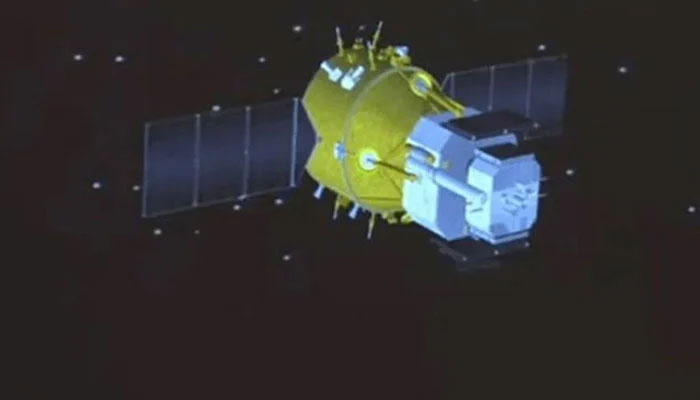
Recent advances in space technology highlight this potential. The successful launch of ICUBE-Qamar, Pakistan’s first lunar mission, aboard China’s Chang’E-6, showcases the country's growing capabilities in space exploration. This mission, aimed at lunar surface imaging and magnetic field data collection, underscores the need for a comprehensive space policy to guide future initiatives.
International examples highlight the impact of public-private partnerships in advancing aerospace technology. India’s collaboration between the Indian Space Research Organization (ISRO) and private companies has led to innovations such as the Mars Orbiter Mission and Chandrayaan-3. China’s space programme, through partnerships with private firms, has achieved milestones in lunar exploration and satellite technology. Similarly, Turkey’s partnership with Turkish Aerospace Industries has enhanced its capabilities in unmanned aerial vehicles (UAVs) and satellite technology.
These global examples demonstrate how public-private partnerships can drive technological innovation and economic growth. Pakistan should adopt a similar strategy, leveraging NICAT and other initiatives to advance collaboration among government, academia, and industry. This approach will enhance Pakistan's strategic position and stimulate economic growth through high-tech innovation.
The aerospace sector presents immense opportunities for Pakistan. Continued state investment, a supportive policy framework, and a focus on high-tech sectors, particularly aerospace and space technology, will drive sustainable economic growth. NICAT and the ICUBE-Q mission highlight the transformative potential of innovation and international collaboration.
By embracing public-private partnerships and prioritizing high-tech manufacturing, Pakistan can secure its place at the forefront of technological advancement and economic development, alongside its international counterparts.
The writer is project director at the National Incubation Center for Aerospace Technologies (NICAT).


