
‘Karachi’s coastline could become dead zone for seafood if pollution is not checked’
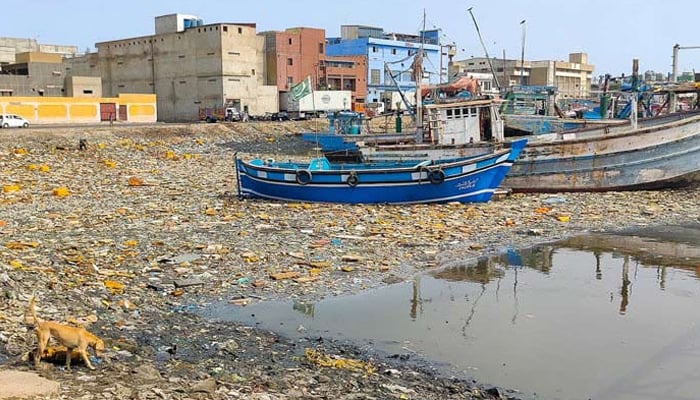
Local and international non-governmental organisations have expressed concern over marine pollution and emphasized the need to reduce it.
Due to pollution, the sea from Keamari to Manora has turned black, causing severe damage to mangrove forests and leading to the disappearance or migration of over 27 species of fish, crabs, and shrimp.
As a result, two million people involved in fishing have been severely affected, as fish is no longer found within 10 nautical miles of the coast. Due to marine pollution, Karachi’s 129-kilometer coastline gradually turns into a dead zone.
Marine experts report that pollution has dangerously reduced the population of fish species such as white pomfret, pampas, taro, pamto, makri and kergen fish, which were exported to Europe. Meanwhile, fish species like dandiya, dotar, danthi, bhanwar, boi, somai, mengartarli, bangara jerli, among 27 others, are no longer found within 10 nautical miles of the coast. These fish have either disappeared or migrated to deeper waters, causing small-boat fishermen to struggle financially.
According to Environment Protection Agency sources, 450 million gallons per day (MGD) of sewage water from the Malir and Lyari rivers are being discharged into the sea, along with 600 MGD of industrial and 175 MGD of toxic water from tanneries.
Additionally, untreated sewage from thousands of flats near the coastline, including Keamari, Shireen Jinnah Colony, Mauripur, Lyari, Machhar Colony, Clifton, Sea View, DHA Phase 8, and riverside restaurants, is also being dumped into the sea. Furthermore, coal transported to port berths pollutes seawater through airborne particles, while foreign ships and hundreds of boats illegally dump used oil into the sea. Despite existing regulations, authorities need to enforce them.
Export Promotion Bureau (EPB) sources said that Pakistan’s seafood exports are steadily declining. In 1992, Pakistan earned $120 million in foreign exchange from seafood, and in 1993, 500 metric tons of fish and shrimp were caught, which remains a record.
However, EPB sources indicate that fish landings have decreased by 70%. Pollution has also drastically reduced mangrove forests, which are the first barrier against marine floods and serve as nurseries for marine life.
In 1977 these forests covered 263,000 hectares, but now they have shrunk to just 70,000 to 80,000 hectares. Since mangroves are nurseries for marine life, their decline has naturally led to significantly reduced marine biodiversity. Experts warn that if marine pollution is not controlled, Karachi’s coastline could become a dead zone for seafood.


