
Navigating net zero
Pakistan textile manufacturers supply products to leading retail brands, including H&M, Target, and Primark
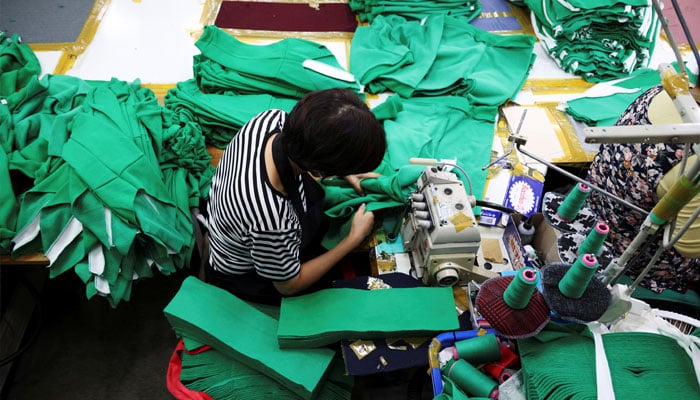
Have you ever walked into an H&M or ZARA store, tried on a pair of pants, and been pleasantly surprised by the ‘Made in Pakistan’ tag? Well, it’s not that surprising. After all, Pakistan is the world's eighth-largest exporter of textile products.
The sector also accounts for eight per cent of the country’s total GDP and contributes significantly to the national economy. Several of the country's textile manufacturers supply products to the world's leading retail brands, including H&M, Target, and Primark.
In recent years, the sustainable fashion movement has grown, and brands have been compelled to confront their fast-fashion identity. They now must respond to rising consumer demands for ethically sourced clothes and a circular model that promotes the principles of recycling, reusing, and re-wearing. Globally, brands have adapted in various ways. Most significantly, several of these leading brands have committed to reducing their GHG emissions to Net Zero by 2050, which is in line with the United Nations' Sustainable Development Goal 13 on Climate Action.
As sustainability takes centre-stage for these brands, it is set to have a transformative impact on their suppliers. The journey towards company-wide decarbonization necessitates a reduction in scope 3 emissions, which are essentially the emissions of their supply chain.
A quick look at the websites of several Pakistani manufacturers reveals a strong emphasis on sustainability and the use of ethically sourced material. Pakistani manufacturers are not just aware of these sustainability requirements, but they are also taking proactive steps to cut down their scope 1 (direct emissions from sources owned by the manufacturer) and scope 2 emissions (indirect emissions from purchased electricity). These efforts not only align with global sustainability trends but also position Pakistan's textile industry for a more competitive and sustainable future.
However, the manufacturers face an uphill task of reducing their scope 3 emissions, which encompass all indirect emissions in the manufacturers’ value chain, for example, the emissions produced by the trucks carrying cotton to the manufacturing unit.
Textile supply chains are fragmented, with various suppliers operating across multiple tiers of the production process, providing raw materials, dyeing and finishing units, and transportation services. These suppliers range from diverse backgrounds across Pakistan's rural landscape and have limited awareness of climate change or sustainability regulations. Amid such a complex industrial landscape, textile manufacturers face various challenges:
Several suppliers are not aware of Environment, Social, and Governance (ESG) practices or global regulation requirements, such as the EU Carbon Border Adjustment Mechanism, a policy designed to prevent carbon leakage by charging on imports of carbon-intensive goods. The lack of awareness creates a gap between suppliers' understanding of the business case for emission reduction.
Manufacturers, as the leaders in the industry, have the power to bridge this gap. They need to begin by providing basic awareness of climate change and sustainability-related issues and emphasize how the future of the suppliers' continual relationship with the manufacturer is contingent on increased sustainability awareness and training.
Over time, manufacturers need to equip suppliers with advanced knowledge of the emission profiles of diverse raw materials such as cotton, wool, and synthetic fibres. By taking these steps, manufacturers can empower their suppliers to become more sustainable, thereby contributing to the overall sustainability of the industry.
Manufacturers require emissions data from suppliers to report their Scope 3 emissions. However, most suppliers do not have this data readily available, and calculating it can be a tedious task. However, manufacturers can develop simplified guidelines in various regional languages to aid in reporting the data. This process would ensure the provision of consistent data as all suppliers will be following the same standards for calculating and reporting their emissions.
In fashion, the H&M Group collects data regarding the energy consumption (electricity bills) of its suppliers every month and verifies it every third quarter. Beginning similar data collection practices will help Pakistani textile manufacturers create momentum amongst suppliers, and while there might be errors in reporting data initially, once suppliers are familiarized with the process, emissions data will become more efficient over time.
Several companies already work with suppliers to boost their ESG performance. Many textile companies work closely to uplift farmer communities. However, companies need to identify large-scale industrial decarbonization projects that they can undertake to reduce their upstream and downstream scope 3 emissions. In the past decade, several companies have taken proactive measures to reduce their scope 2 emissions by developing in-house solar and biomass capacity. However, they must also focus on capacity building for their suppliers.
Pakistan ranks high on the global climate risk index. Due to its water-intensive nature and reliance on the cotton crop, Pakistan's textile industry is extremely vulnerable to climate shocks. The increasing frequency of extreme weather events, such as the 2022 floods, disrupt supply chains and drive up production costs, making it less favourable in a highly competitive market, including Indian and Bangladeshi manufacturers.
Despite being a relatively low emitter of GHG emissions globally, Pakistan must prioritize decarbonization if it wants to safeguard against climate-driven operational risks and boost its global exports. The time for action is now. While economic costs associated with decarbonization can affect the competitiveness of textile companies in the short term, slower adoption of sustainability measures will prove to be an existential threat in the long term.
In the absence of stringent environmental regulations within the country, the onus lies on textile manufacturers to foresee the need to reduce their carbon footprint and help their suppliers respond and adapt to global sustainability standards.
The writer is a sustainability professional, currently working as a programme analyst at the Pakistan Environment Trust.


