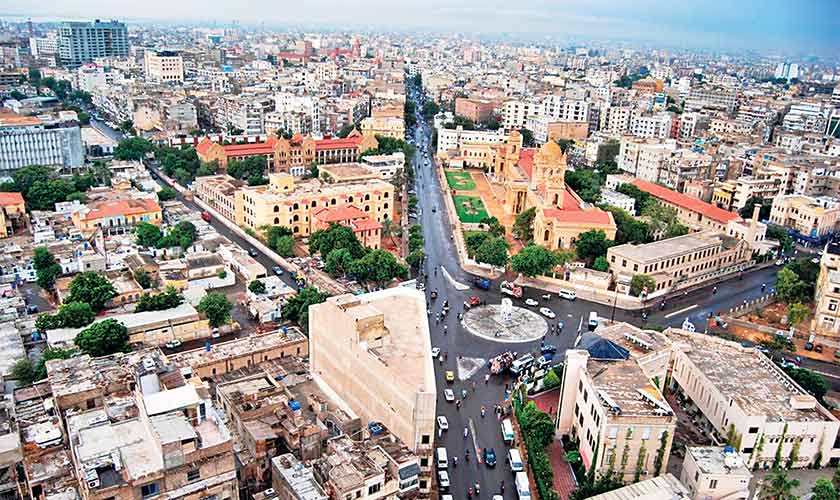
Karachi is growing without the necessary mandate that city planning demands. The city’s commercial building infrastructure is largely compromised when it comes to safety measures. You! takes a look…
city
Yasir is a much-loved cousin, admired for his impassioned approach toward agriculture and farming in particular. He migrated to Canada to pursue an organic and sustainable approach to farming and, despite many attempts to replicate the same in Pakistan, eventually gave up and settled into the Canadian prairies, where he continues to do remarkable work.
I bring him up here to share an incident. When he finally made it big and built a large factory for his work, he diligently awaited the inspection report from the authorities before putting the machines into action. That was when he faced an unexpected challenge. The inspector arrived in person to inform him that his plant had not been approved because it lacked ramps for the disabled.

At 6 feet 2 inches tall, Yasir was surrounded by a team of towering colleagues, all managing heavy machinery. Initially perplexed by the requirement to accommodate disabled workers in such a physically demanding environment, he was confronted with a profound question: What if he himself became disabled and was unable to access his own workplace?
It was a powerful lesson in inclusivity - challenging narrow perspectives and highlighting the importance of designing spaces that welcome individuals of all physical abilities. Ultimately, it broadened his understanding of workplace design, safety, and human dignity. Needless to say, the factory now has ramps, elevators, and all the facilities required to accommodate special needs.
Karachi, on the other hand, is growing without the necessary conscience that city planning demands. Its population of 30 million - comprising all ages, abilities, needs, and limitations - is subject to a mind-set of ‘might is right’ and ‘why fix it if it’s working for some.’
Take the sprawling commercial building infrastructure: my first experience of working in a commercial building in Karachi was at an A Levels college. The building had five spacious floors, beautifully designed and equipped with some of the best facilities in town, including security and student transport. Yet, it had no emergency exit. With 400 students and 44 teachers moving up and down daily, I remained anxious until I managed to install throw-down ladders and inflatable mattresses in the gym on the first floor - at least an alternative in case the main staircase was blocked.
Those were times when schools were high-profile targets, and security mode was permanently on red alert. I often shared my ironic satisfaction in the fact that, if miscreants ever entered the building and we blocked the main exit, we might just turn the tables on them. Thankfully, my diabolical theory was never put to the test, and we flourished despite the odds.
Recurring experiences of working inside these potential disaster traps highlight a severe systemic problem in Karachi’s urban infrastructure. This concern is reinforced every time I see window-cleaning teams dangling from weathered rope cradles with handheld wipers; every time I see cable workers leaping from ledge to ledge in the ironically dark ‘light’ wells to fix damaged lines; every time I walk past open, chaotic electrical wires jutting out from beneath staircases at entrances - resembling an angry witch’s hairdo; or when I notice the absence of fire extinguishers and the daily realisation that there is no alternative exit in case of fire or intrusion. From architects and contractors to owners and approving authorities, everyone needs to be questioned and held accountable.
I could not find exact data on how many such commercial structures exist in the city, nor on how many people risk their lives working in them. Sadly, the authorities have not even attempted to organise or make such data accessible.
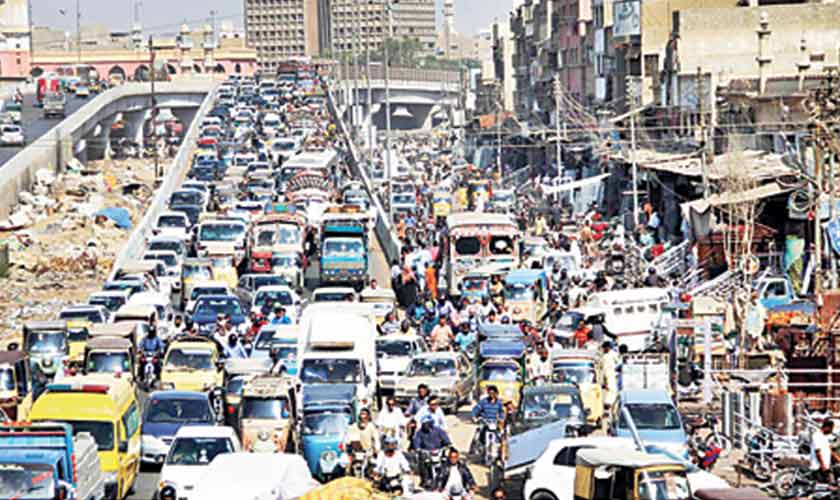
Karachi has seven districts, and apart from the grand structures owned by corporates or banks, most commercial construction - including shops - is largely compromised when it comes to safety measures. In fact, I am not sure of the corporate sector too, as very few demonstrate the awareness required to prioritise human safety over profitability. Whether it is the lack of supportive infrastructure in parks and buildings, the unchecked spread of commercial ventures in residential areas, or the chaos of traffic flow - the city screams for attention.
A simple glance at Wikipedia highlights several fundamental items to ensure safety in any building: fire safety measures (including extinguishers and required training), evacuation routes, hazard communication, clear exits, regulatory compliance, risk assessments, dedicated smoking zones, designated fire and electrical hazard wardens, escape and rescue routes, regular maintenance checks, emergency action plans, trash chutes, and proper training and education for all of the above. Copy-pasting such a list alone could serve as a tremendously useful checklist for approving authorities.
To begin with, our bazaars and commercial structures lack designated teams to maintain them. I believe this should be the first step: coordinate, collaborate, and create a committee responsible for regular checks. Trash dumps both outside and inside buildings are a nuisance. As part of building policy, all trash should be collected and moved to a designated site where it can be properly managed. While waste management is ultimately the responsibility of civic authorities, each individual building or locality system must coordinate with them.
For reference, one might look into Germany’s waste management system, which has evolved significantly since the early 19th century. What began as basic waste disposal has transitioned into a comprehensive framework governed by the Waste Management Act (KrWG), emphasising environmental protection, resource efficiency, and sustainability. Central to this framework is a five-level waste hierarchy that prioritises prevention, followed by reuse, recycling, energy recovery, and finally, disposal.
Roads are not designated parking areas, yet we often block both shoulders of the streets with parked cars. But where else can people go? The building lacks a dedicated parking floor, the roads have no empty plots, and no parking facilities are available. Still, there are standards: the typical ratio is four parking spaces per 1,000 square feet of office space. Why is this not being enforced?
Look at the blocked roads during Jummah prayers - these parked cars can, and sometimes do, cost precious lives by blocking emergency vehicles, with no accountability. Commercial restaurants may be minting money for their owners, but for residents of once-quiet residential neighbourhoods, these choked streets are a nightmare to pass through, with drivers cursing anyone unlucky enough to have their window rolled down.
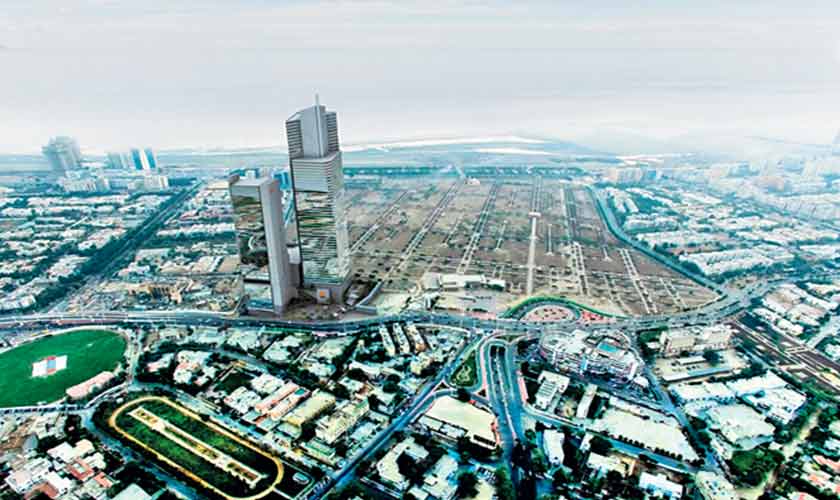
What can be done is vast in scope, but what should be done immediately is to issue show-cause notices to existing commercial structures, with a warning of hefty penalties unless manageable and actionable plans are put in place and made visible within a given period - not exceeding six months. There is a tangible way out of this morass, but it requires conscience and will for a peaceful and profitable future. This staggered jungle of concrete blocks may be generating revenue now, but it will not survive in the sustainable world that is fast approaching.
The author is a content strategist, educationist, researcher, and a corporate host. She can be reached at shaha.jamshed@gmail.com