Sri Lanka to pursue 'deradicalisation' detention, outlaw burqa
President Gotabaya Rajapaksa announces the "deradicalisation from holding violent extremist religious ideology" measures
COLOMBO: Sri Lanka announced on Saturday it will be making use of a controversial anti-terror law to deal with religious extremism that will see the detention of suspects for up to two years for "deradicalisation".
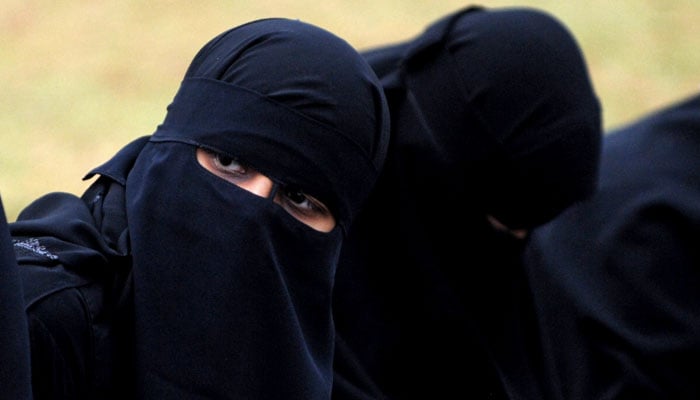
Also, the government aims to outlaw the burqa, formalising a temporary ban imposed in April 2019 after deadly bomb attacks blamed on local militants.
President Gotabaya Rajapaksa promulgated regulations allowing the detention of anyone suspected of causing "acts of violence or religious, racial or communal disharmony or feelings of ill will or hostility between different communities".
The rules, effective Friday, have been set up under the Prevention of Terrorism Act (PTA), which both local and international rights groups have repeatedly asked Colombo to repeal.
Sri Lanka's previous government, which was defeated by Rajapaksa at 2019 elections, had pledged to repeal the PTA after admitting it seriously undermined individual freedoms, but failed to do so.
Rajapaksa, who came to power with a promise to battle "Islamic extremism", announced the "deradicalisation from holding violent extremist religious ideology" measures in a gazette notification seen by AFP Saturday.
Meanwhile, Public Security Minister Sarath Weerasekera announced Saturday that the burqa, a loose garment covering from head to toe and worn in public in many Islamic states, was a threat to Sri Lanka's national security.
"The burqa is something that directly affects our national security," Weerasekera told reporters in Colombo. "This (dress) came into Sri Lanka only recently. It is a symbol of their religious extremism."
Weerasekera said he signed documents outlawing the burqa, but they need to be approved by the cabinet of ministers and parliament where the government has a two-thirds majority to see its bills through.
Sri Lanka had used emergency laws to impose a temporary ban on the garment soon after the April 2019 bombings against three churches on the island killed 279 people.
Burqa wearers are not commonly seen in Buddhist majority Sri Lanka where Muslims are a small minority accounting for 10 percent of the country's 21 million population.
The moves come ahead of the second anniversary of the 2019 Easter Sunday attacks that killed 279 people and wounded over 500.
The coordinated suicide bombings, against three churches and three high-end hotels, were blamed on a local extremist group.
But the new regulations do not only target "Islamic extremism" and could apply to any religious group or community.
A presidential commission that probed the attacks called for the banning of both Islamic extremists as well as ultra-nationalist Buddhist groups, which were accused of feeding off each other.
Tensions between Sri Lanka's minority Muslims and the majority Buddhists resurfaced after the 2019 bombings, which also seriously damaged the country's tourism-reliant economy.


-
 Trump urged to share all UFO files as lawmaker group moves to Congress
 -
 United Airlines plane diverted and passenger detained after in-flight incident
 -
 Eileen Wang, former Californian mayor, guilty of acting as secret agent to China
 -
 ‘More than capable’: Pentagon chief warns US ready for renewed Iran strikes if no deal is reached
 -
 Iran may have used Chinese-made missile to down US fighter jet, sources say
 -
 US claims $1billion Iranian crypto assets, aims to confiscate properties, says Bessent
 -
 Canada’s economy flatlines amid trade war pressure and weak investment
 -
 Hurricanes move closer to Stanley Cup final after beating Canadiens 3-0
-
 NATO condemns Russia after drone hits apartment building in Romania
 -
Pete Hegseth tells allies 'free ride' on US defence spending is over
-
Donald Trump's name to be removed from Kennedy Centre as federal judge rules signage unlawful
-
US: ICE agent arrested in Texas over Minneapolis shooting allegations
-
Mark Carney pushes new US-Canada trade partnership during New York speech
-
Who is Kenneth Law—the ‘poison seller’ linked to hundreds of suicides worldwide?
-
US federal court halts Trump DOJ’s $1.8 billion ‘lawfare’ fund program: Here’s why
-
Trump weighs Iran deal as he demands Hormuz Strait stay open
-
Pam Bondi hearing over Epstein Files: How shifted format sparks fresh cover-up claims
-
US Treasury Secretary says Trump-era economic policies made America more ‘resilient’