Turkish President Erdogan's rival Fetullah Gulen dies aged 83
US-based Muslim cleric was accused of organising failed 2016 coup against Erdogan
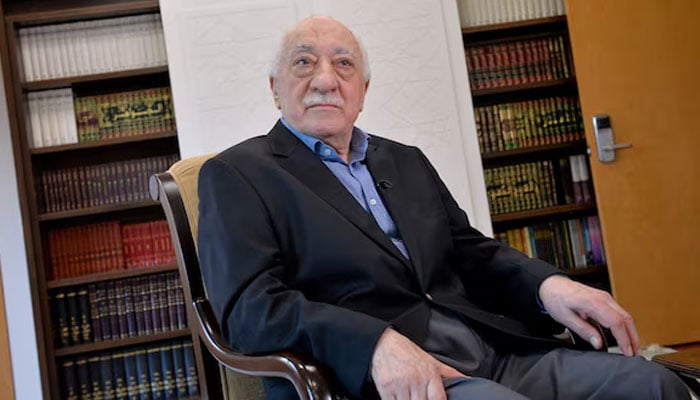
United States-based Muslim cleric Fethullah Gulen, who was accused by Turkish authorities of organising a failed 2016 coup, has died in exile in the US aged 83, his personal website said.
Turkish public television said that the preacher, who had lived in Pennsylvania since 1999 and was stripped of his Turkish nationality in 2017, died in hospital where he was being treated.
Gulen's website, Herkul, which is banned in Turkey, said the imam died on "October 20".
Gulen was a rival of President Recep Tayyip Erdogan and, after going into exile, Erdogan's government accused Gulen of attempting a coup in 2016 and his Hizmet movement of being a "terrorist" group. He denied the accusations.
Hizmet, which means "service" in Turkish, runs a network of Islamic schools around the world and has become an influential but opaque group. It seeks to spread a moderate brand of Islam that promotes Western-style education, free markets and interfaith communication.
Gulen allied with Erdogan to help him win elections in the 2000s but became a sworn enemy of the Turkish president after disagreements started in 2010.
Erdogan launched a crackdown on Gulen followers after corruption allegations were made in 2013 against the president's Justice and Development Party.
Erdogan said the investigators were Gulen followers.
The alleged failed coup against Erdogan in 2016 deepened the rift.
The president accused Gulen of mounting the coup, 3,000 Gulen followers were given life in jail and legal action was taken against 700,000 people.
About 125,000 government workers, including 24,000 soldiers and thousands of investigating magistrates, were sacked.
Known to his supporters as Hodjaefendi, or respected teacher, Gulen was born in a village in the eastern Turkish province of Erzurum in 1941. The son of an imam, or Islamic preacher, he studied the Holy Quran from infancy.
In 1959, Gulen was appointed as a mosque imam in the northwestern city of Edirne and began to come to prominence as a preacher in the 1960s in the western province of Izmir, where he set up student dormitories and would go to tea houses to preach.
These student houses marked the start of an informal network which would spread over the following decades through education, business, media and state institutions, giving his supporters extensive influence.
This influence also spread beyond Turkey's borders to the Turkic republics of Central Asia, the Balkans, Africa and the West through a network of schools.


-
 New Covid variant BA.3.2 spreads across US as experts stress vigilance
 -
 Savannah Guthrie receives secret message as search for Nancy continues
 -
 Daylight saving ends in Australia: When clocks go back in April 2026
 -
 China develops AI VF tools to raise birth rates
 -
 Vanessa Trump sparks fans reactions as she rejects rumours of rift with Tiger Woods
 -
 Tragedy at Peru football derby: One dead, 47 injured in rally at Alejandro Villanueva Stadium
 -
 Where Vanessa Trump stands with Tiger Woods amid DUI drama
 -
 NASA Artemis II moon mission captures stunning Earth images during historic lunar journey
-
 Canadian citizenship new eligibility rules explained: who qualifies and what has changed
 -
A10 Warthog hit as US jet downed in Iran, one crew rescued and search underway for second
-
Meningococcal disease, dangerous bacterial infection, hits decade high in Canada
-
Sam Altman's OpenAI buys TBPN to expand communication strategy and shape AI public debate