Print Story
X


Karachi Biennale is nearing an end in a matter of days after restoring life to several public heritages with art installations by local and foreign artists.
Over 150 artists came together to participate in exhibitions, film screenings, live performances, and educational activities held across the city.
Its debut theme, Witness, spanned 12 distinct locations clustered into four geographic zones. One cluster had a particularly strong concentration in and around central Karachi.
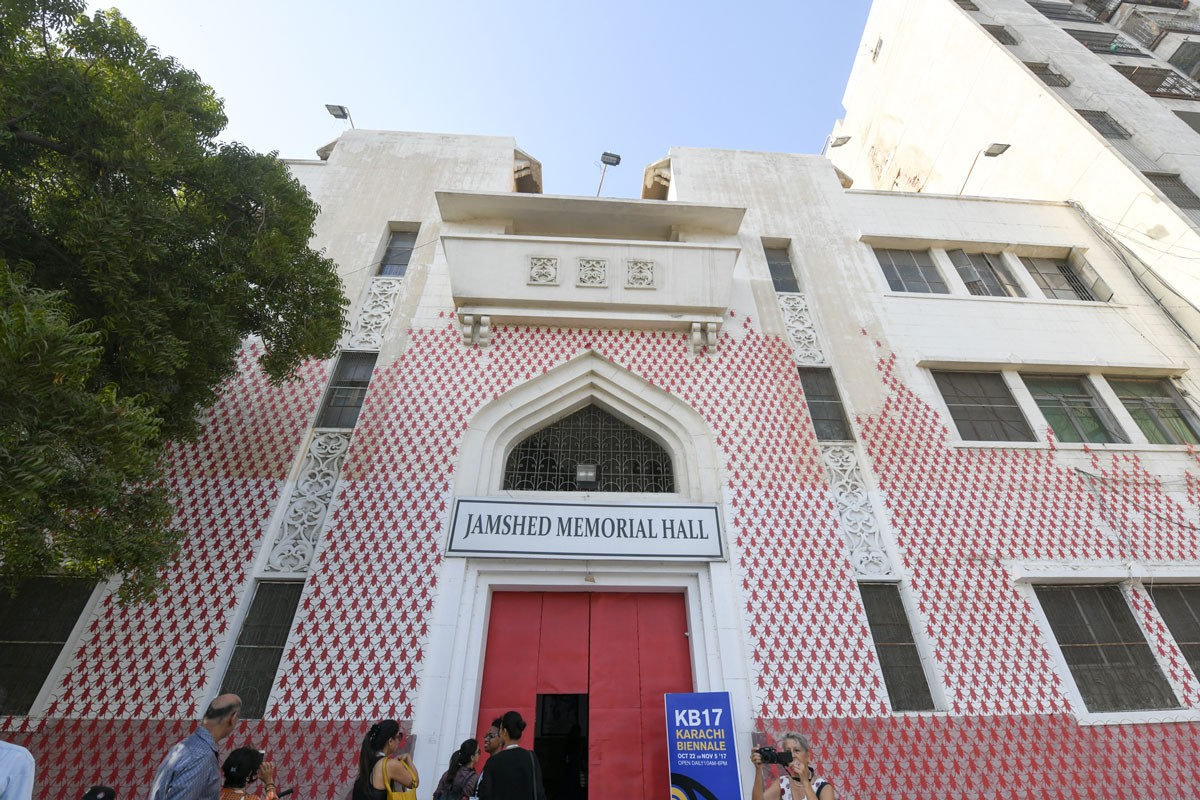
One such example was the Jamshed Memorial Hall, once home to Karachi Theosophical Society. The front of the building became a canvas to artist Tazeen Qayyum's craft—a pattern of interlocking shapes resembling household cockroaches to reflect on universal brotherhood, tolerance, and theosophical ideas.
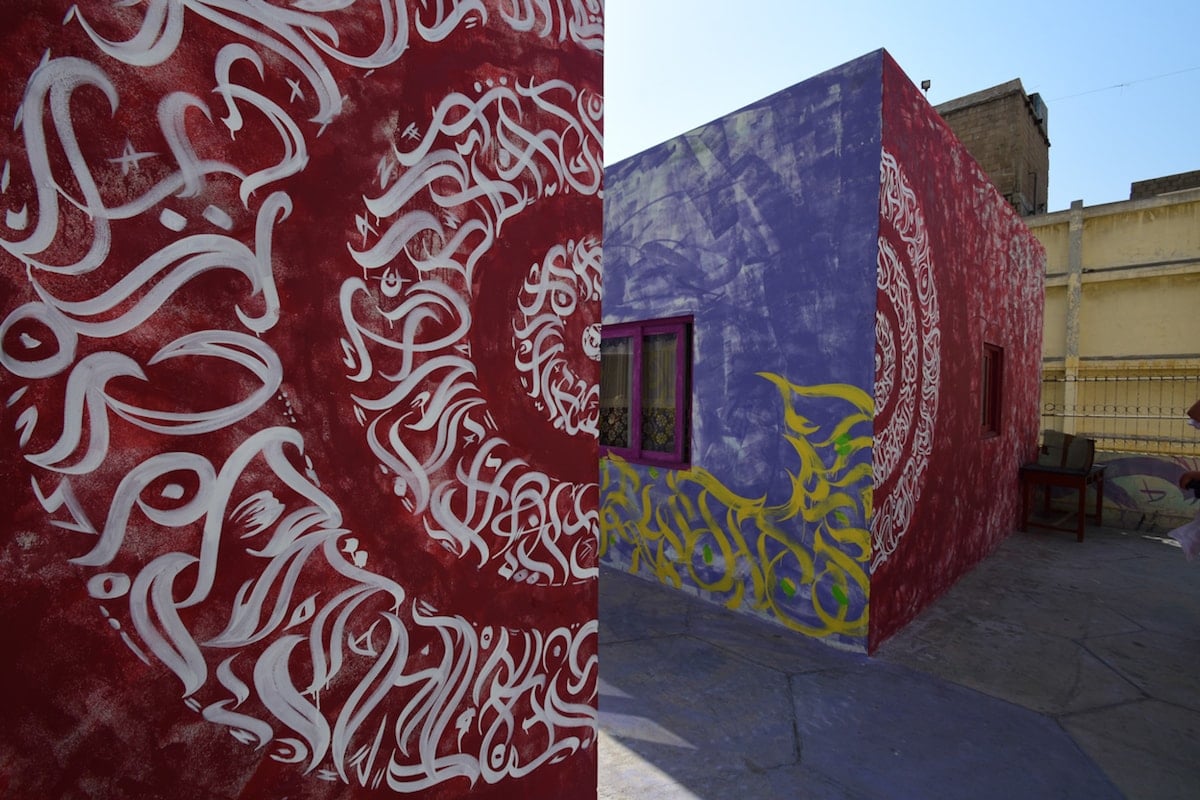
Meanwhile, street artist Sanki King transformed what once was a lifeless rooftop into vibrant classrooms and a playground for Montessori students.
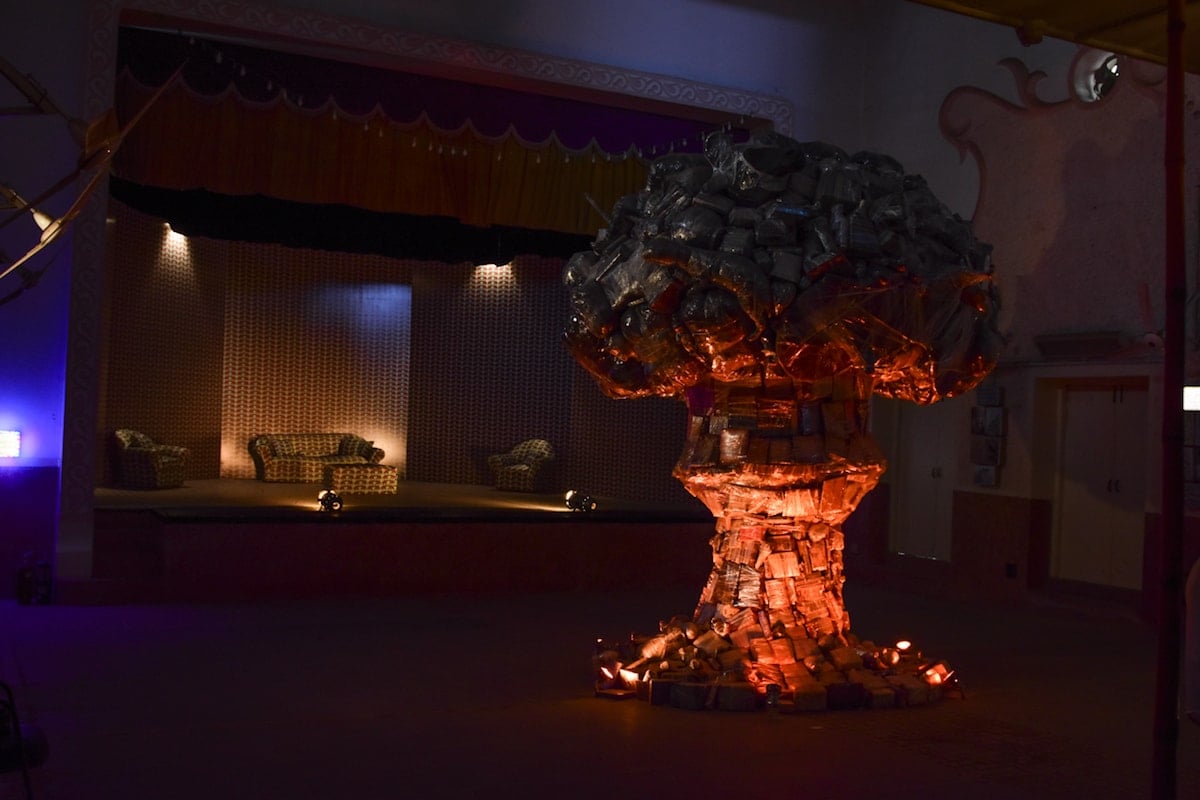
The auditorium now opens to an installation by artist Munawar Ali Syed, featuring a large structure made from books, drawings, easels, and carvings. Other installations at the venue were a multi-channel video work, performance art, and sewn, figure-like sculptures.
The next stop, NJV Government High School, featured Sonya Batla’s creation of a gazebo embellished with used bottles, bandages, wood scraps, pomegranates, and other recycled materials. The corridors displayed additional works, including C-prints, canvases, and another installation made to look like laid-out corpses.
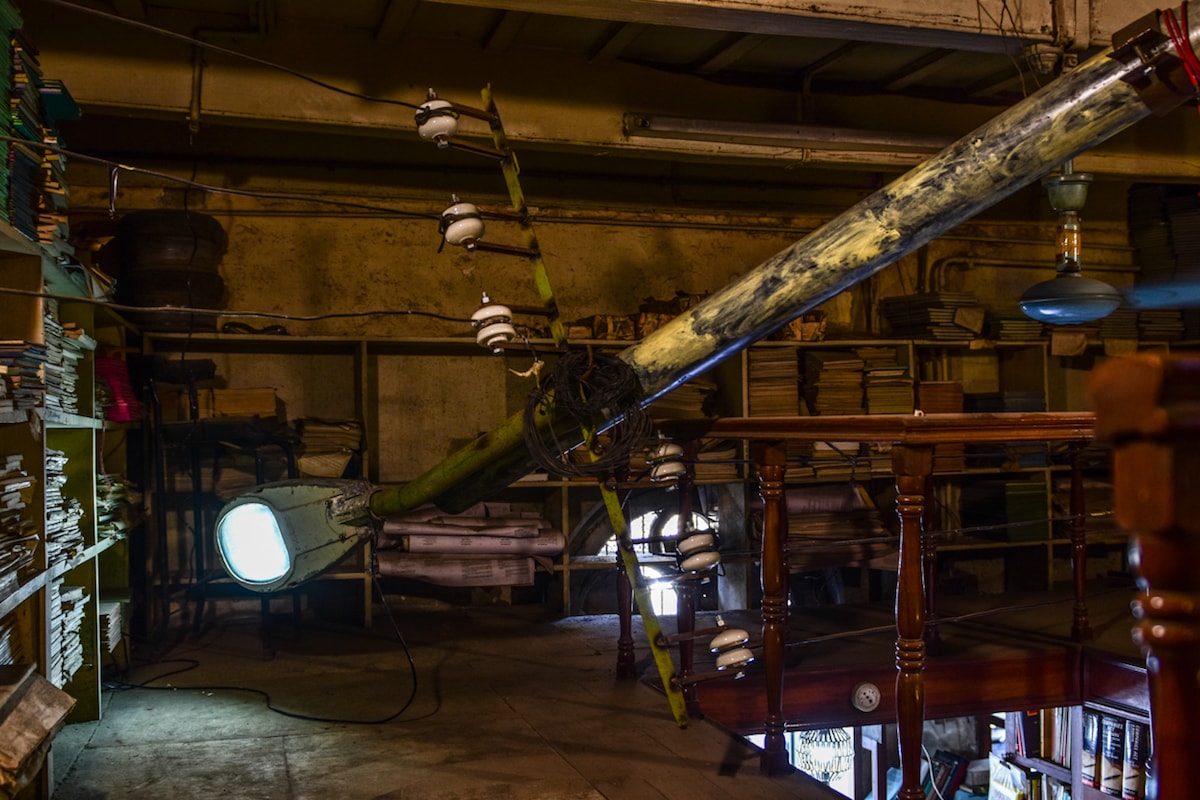
Pioneer Book House surprised visitors with a streetlight bursting through the wall in its compact space, an installation that sparked a debate about whether it was ‘art or vandalism’ among many attendees and online observers.
"Vandalism is how this art installation at the Pioneer Book House should be described. The owners of the place told me they had no idea that this is what the installation was going to be like; the walls of this heritage building got ruined during the process," one visitor wrote online.
Critics said the book owner was of the impression that the artist would have considered the space and the building before carrying out the work.
A maze of mannequins representing systemic oppression stood out as one of the key installations; visitors could write on the figures and read the thoughts left behind by others.
Another work featured rows of schoolbags placed on the floor, each bag playing audio recordings of children reflecting on how their worlds are shaped, whether they attend a government school, a private school, or a Cambridge system.
Other installations included video and sound works by Bani Abidi and Arsalan Nasir, new media sculptures and interactive pieces by Faisal Anwar, Syed Jamal Shah’s large sculptural-performance “Situation 101”, and virtual reality films by Sharmeen Obaid-Chinoy.
Claremont House
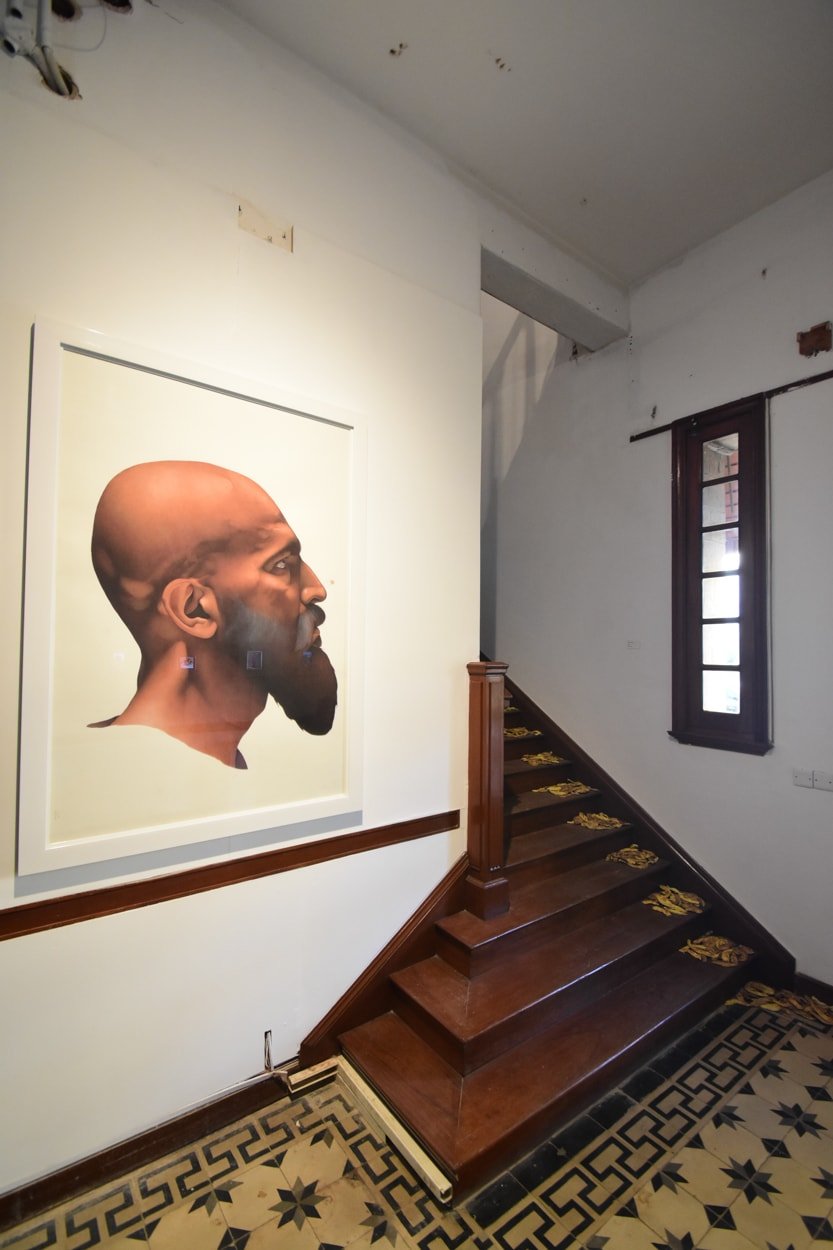
Claremont House hosted a mix of installations, including sculptural works, archival film prints, digital animations, hyper-real fiberglass pieces, portraiture, and video art exploring themes of memory, identity, migration, and consumer culture.
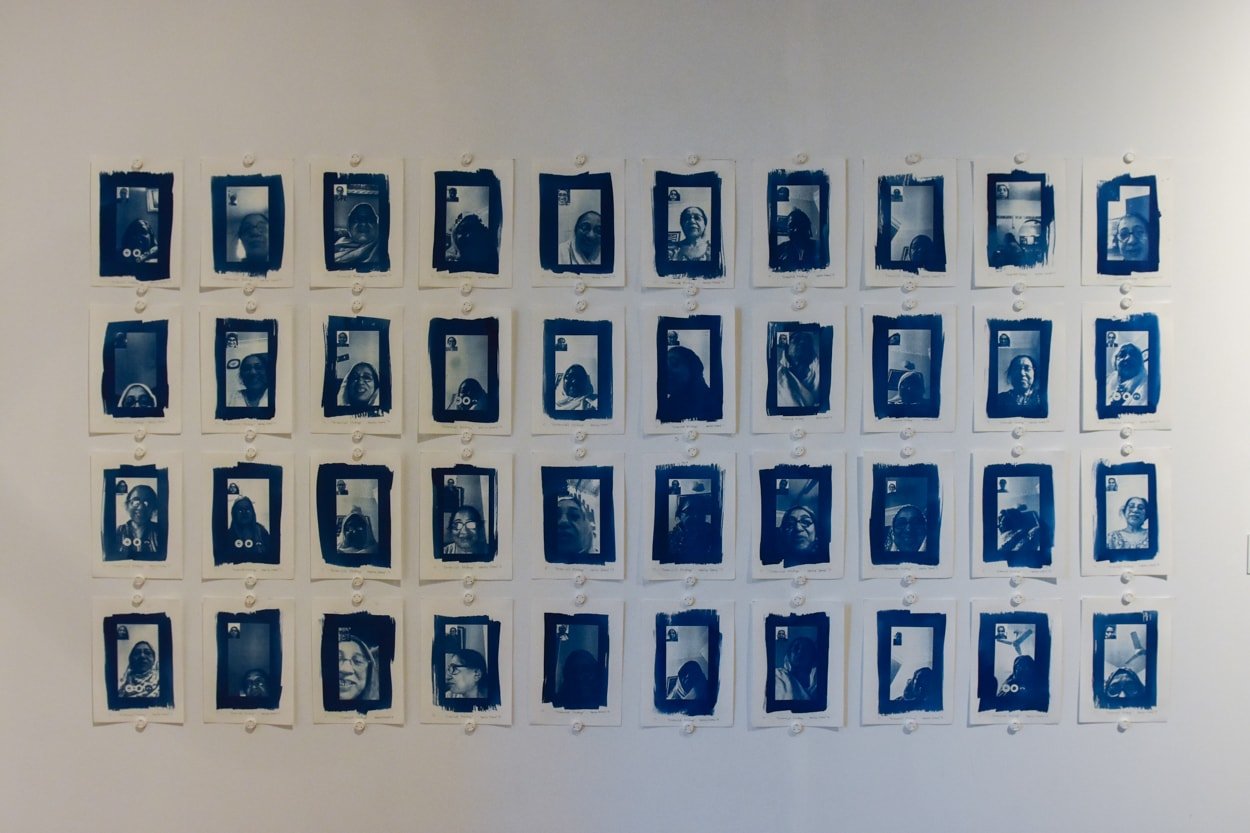
A wall-paneled display of screenshots the artist took during video calls with her mother was one of the sentimental works at the venue.
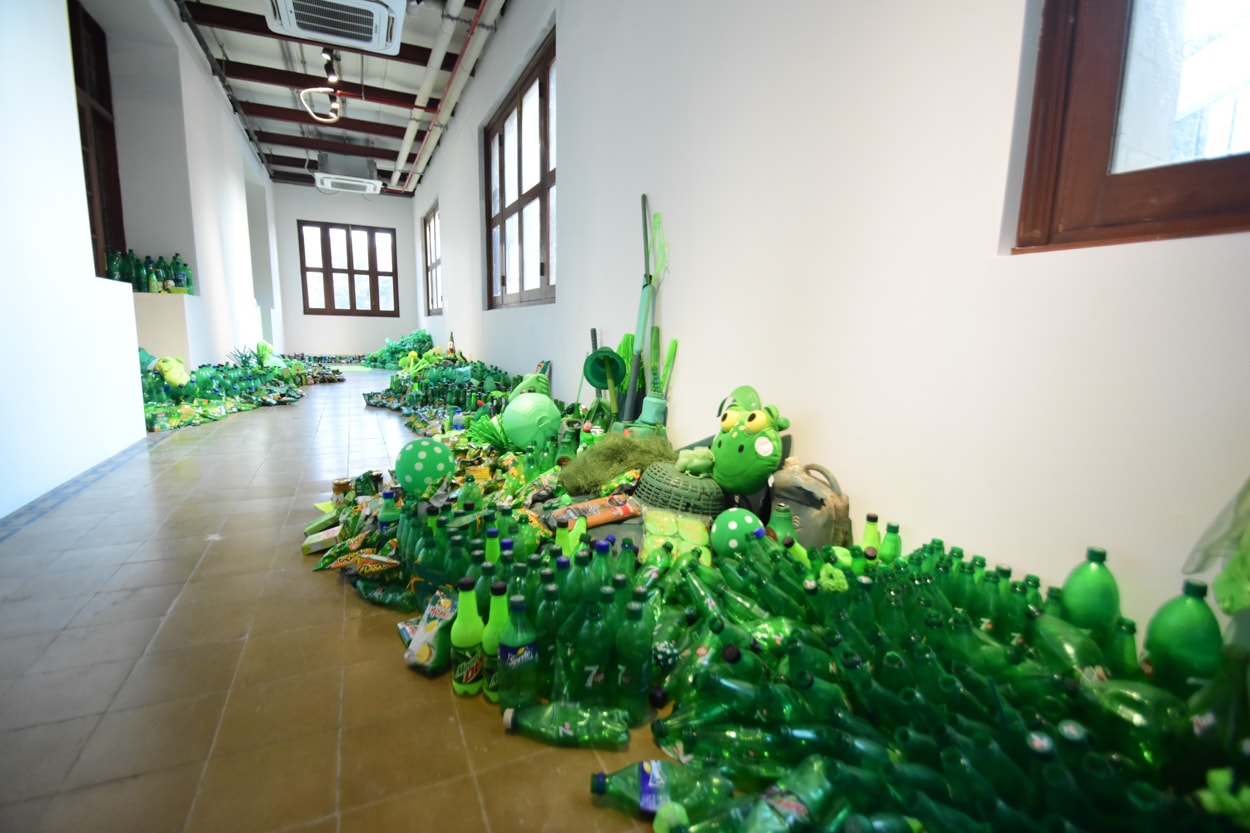
Plastic disposables assembled as shrubbery, depicting how the world embraces the obvious and hidden ecological threats.
The Karachi Biennale plans to return every two years.

