Nvidia's $500bn Wall Street deal signals AI boom strain
Nvidia can guarantee up to a quarter of any deal, a move that lowers borrowing costs for customers
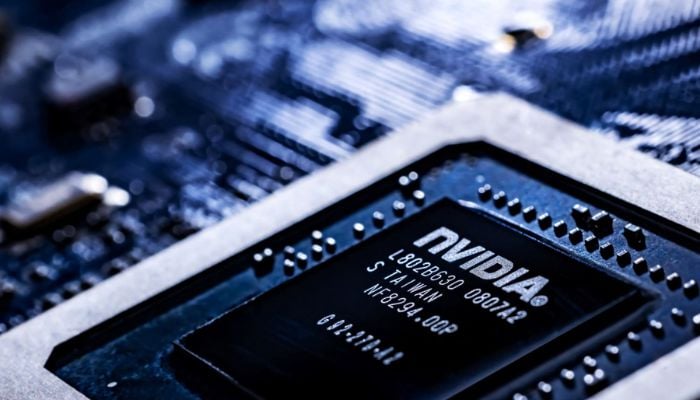
Nvidia has recruited six of Wall Street's largest asset managers to raise more than $500 billion for AI infrastructure, an arrangement built to let its own customers build data centres without the debt showing up on their books.
The chipmaker signed memorandums of understanding with Apollo Global Management, Blackstone, BlackRock, Brookfield Asset Management, Goldman Sachs and KKR, tapping institutional money, insurance funds and private credit.
The six firms will run what Nvidia calls "compute financing platforms", lending money that borrowers can spend on chips, servers, networking gear, buildings and power supply.
Nvidia can guarantee up to a quarter of any deal, a move that lowers borrowing costs for customers while leaving most of the credit risk with the lenders themselves. CEO Jensen Huang said he approached only these six firms, and all six agreed.
The agreement addresses an issue that has become acute during the year, as Microsoft, Amazon, Alphabet, and Meta have guided toward a total capex spend in 2026 of about $720 billion to $745 billion, representing a 77% increase compared to last year.
The Bank of America now sees 2027 capex by the hyperscalers at $1.08 trillion, versus an earlier prediction from last August of less than half that amount.
Moody's has pointed out that such a rate of spending growth is pressuring free cash flows, with Alphabet reporting a $5.9 billion cash flow shortfall in a quarter where it invested $44.9 billion in infrastructure projects.
Having any additional debt on separate funding vehicles, secured by Nvidia, not only keeps credit ratings protected but also leaves conventional financing available elsewhere – a factor of particular importance to companies like CoreWeave and Nebius, who do not carry investment-grade credit ratings.
The entire system relies on the assumption that graphics processing units are durable assets rather than fast-depreciating devices, akin to a toll road rather than a laptop.
Huang referred to the chips as "revenue-generating assets", but there was a mixed response from the market. The equity holders viewed the transaction as clearing a bottleneck, while the cost of protecting Nvidia's debt against default has doubled since May.
Nigel Green of deVere Group pointed out that chip financing will work only if the chips retain their value, while critics point out that Nvidia is essentially financing its customers' purchase of its own products.


-
 Apple's foldable iPhone hits stores
 -
 Apple reclaims title as world’s most valuable company overtaking Nvidia
 -
 French parents underestimate children’s AI use, survey finds
 -
 China clears DeepSeek and MiniMax for global AI deployment
 -
 Greece's social media ban for children under 15 will take effect on January 1, 2027
 -
 What Is PHP, why is everyone talking about it?
 -
 OpenAI partners with Poland’s NASK to strengthen AI safety
 -
 YouTube custom feeds could finally fix your homepage