Real problem with France's social media ban: Explained
Judges didn't reject banning under-15s, they rejected forcing every adult to prove their age too
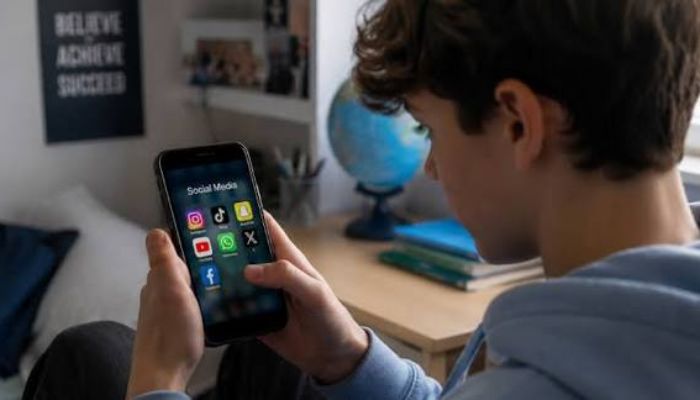
France's Constitutional Council didn't strike down the principle of banning under-15s from social media on Friday. It struck down the mechanism, and that distinction points to a problem no country has actually solved yet: how do you verify a user's age without forcing every adult to hand over identifying data too?
The Council specifically censured Article 1 of the law, ruling that the ban's "general and absolute character" made it a disproportionate restriction, an argument originally pushed by the leftist LFI group during debate. The judges' core complaint wasn't age limits themselves.
It was that barring under-15s inherently requires every person, children and adults alike, to prove their age before accessing a platform, and the law never specified how that proof should work or what safeguards would protect the data involved.
The original bill, Arcom, France's audiovisual regulator, was responsible for approving platforms' verification proposals by 1 September, as outlined in the original bill. that job to Arcom, France's audiovisual regulator, which was meant to approve platforms' verification proposals by 1 September.
This isn't a uniquely French problem. France's own 2023 attempt at a "digital majority" law requiring parental consent for under-15s ran aground on EU legal constraints and weak enforcement.
Australia's under-16 ban, which took effect in December and inspired France's approach, is now facing calls for stricter penalties after regulators found mixed compliance, including reports of children falsely claiming to be older simply flooding platforms with workaround messages.
Macron has directed the prime minister, Sébastien Lecornu, to redraft the bill taking into consideration the Council’s objections. According to the Élysée, the president wants the policy in place even before spring 2027, which marks the French presidential elections.
However, Macron is not eligible to run for the third time, which increases his pressure to push the policy through and give himself the credit for it.


-
 Bill Gates reveals the one way he refuses to use AI
 -
 China weighs allowing ByteDance and Alibaba to buy new Nvidia chips: Here’s why
 -
 Bill Gates warns unchecked AI could 'cause a billion deaths': Demands prompt regulation
 -
 Google restricts new account creation for Iranian users: What to know
 -
 Are strangers reviewing photos from your Meta glasses? Check settings now
 -
 Apple ordered to pay $5.7bn in Taptic Engine case
 -
 GlobalFoundries sees 'strong' demand for China's optical modules
 -
 Can AI agents shop freely online? Amazon's move against Meta raises questions