Musk vs OpenAI: Court battle exposes fight over AI control
OpenAI's chief scientist Ilya Sutskever will testify next week, along with Microsoft CEO Satya Nadella
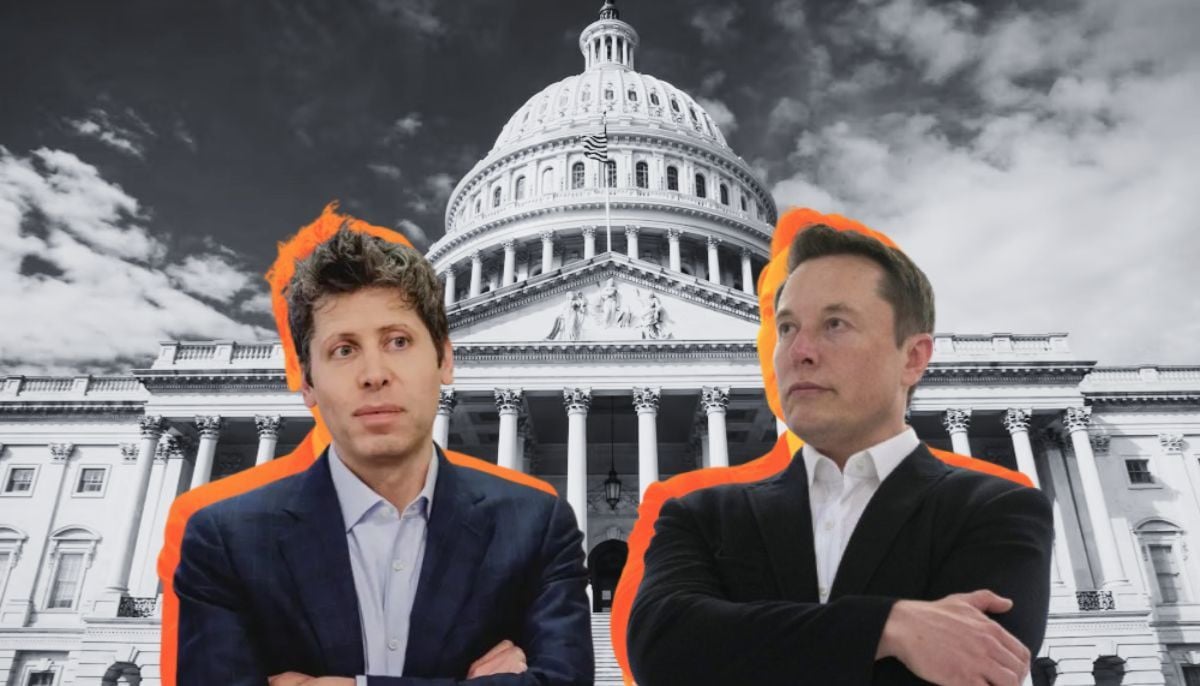
In week two of the landmark Musk vs OpenAI trial, President Greg Brockman contradicted Elon Musk's core claim that he sued to preserve the company's nonprofit mission to benefit humanity. Instead, Brockman testified that Musk pushed aggressively for a for-profit structure, demanded majority equity and absolute board control, and walked out furious when cofounders refused to cede that power.
Musk claims OpenAI CEO Sam Altman and Brockman deceived him into donating $38 million under false nonprofit promises, then accepted billions from Microsoft and converted to a for-profit subsidiary.
OpenAI counters that Musk is suing because he lost an internal power struggle and now seeks to damage a competitor to his own xAI company.
Brockman testified that in summer 2017, after OpenAI's AI model defeated the world's best Dota 2 players, Musk signalled the moment had arrived. "Time to make the next step for OpenAI. This is the triggering event," Musk emailed, referencing his earlier statement that a major public achievement meant "time to create a for-profit".
Over six weeks, Brockman said, Musk demanded majority equity in the for-profit entity, the right to appoint a majority of board members, and the CEO role himself. In August 2017, when OpenAI's cofounders proposed equal equity shares, Musk refused.
"I decline," he said flatly. He then stood up, "stormed around the table", and grabbed a Tesla painting Ilya Sutskever had brought as a goodwill gesture. Musk walked out.
"I actually thought he was going to hit me," Brockman told the jury.
Musk's lawyer, Steven Molo, attacked Brockman's credibility relentlessly. He noted that while Brockman never invested in OpenAI, he now holds a stake worth nearly $30 billion. Molo pulled up Brockman's private journal entries, displaying a 2017 note asking "Financially what will take me to $1B?" to suggest greed, not mission, drove Brockman's decisions.
Brockman pushed back, stating, "Solving for the mission has always been my primary motivation." When Molo raised his voice asking why Brockman didn't donate his $29 billion to the nonprofit he had a fiduciary duty to, Brockman stood firm, citing his commitment to serving humanity through AI development.
OpenAI's lawyer used the testimony to argue Musk is suing not out of principle but competitive spite, attempting to undermine a rival in the AI race.
OpenAI's chief scientist Ilya Sutskever will testify next week, along with Microsoft CEO Satya Nadella.


-
 AI tools for health generated nearly $1 billion in extra costs: report
 -
 Qualcomm and Apple extend global patent licensing agreement: What to know
 -
 Chinese AI startup DeepSeek hits $1 billion annualized revenue run rate following API price hikes
 -
 Morgan Stanley staffer accidentally emails Asia deal to outsiders: Key details to know
 -
 Oil prices drop for fifth straight session amid hopes for Iran diplomacy and Saudi pipeline
 -
 Apple aims to take on Microsoft, Nvidia in a rush to lower AI costs with new devices
 -
 SoFi launches first U.S. stablecoin settlements on Mastercard: What users need to know
 -
 Banks raise red flags over AI shopping bots and scam risks: What to know