Google unveils Fitbit Air: A strategic pivot toward screenless fitness tracking
Google Fitbit Air arrives with a price tag of just $100, making it one of the most affordable advanced fitness trackers currently available
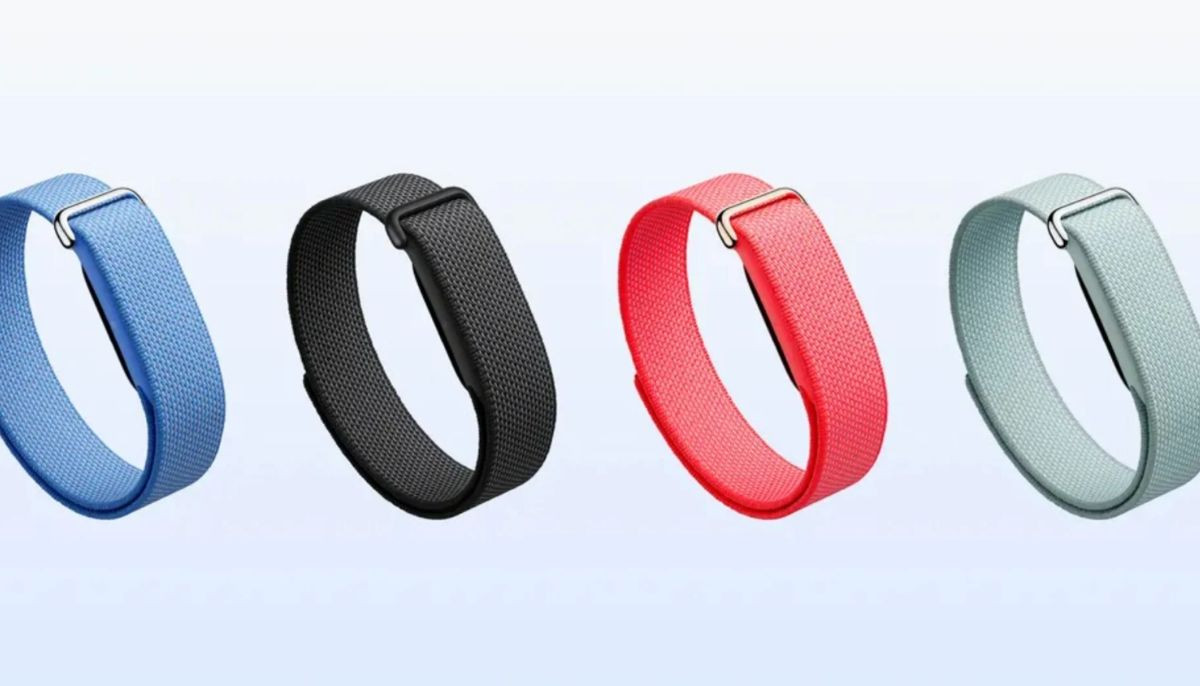
The launch of the Fitbit Air on May 7, 2026, marks a significant strategic shift for Google, as it moves to challenge premium, screenless recovery trackers like Whoop.
The primary motive behind this revelation is to prioritize minimalist design and affordability, through which Google aims to capture a growing segment of the market that favors passive health monitoring over smartwatch notifications.
This launch marks a significant shift in the wearable industry as more consumers move away from conventional smartwatches with screens and notifications, focusing heavily on health monitoring and peak fitness performance.
In line with its design, it offers a compact, screenless wearable designed for all-day continuous use. Unlike traditional watches, it lacks a display to eliminate “notification overload” and reduce distractions. It features a lightweight sensor module tucked beneath a soft, woven fabric strap.
In terms of its functionality, biometric data is synced directly to the Fitbit mobile app, allowing for seamless tracking of heart rate, sleep, and activity.
The absence of a screen significantly boosts battery life and reduces weight, making it optimized for sleep and high-intensity workouts.
Disruptive pricing strategy: How Google is under-cutting Whoop
The Fitbit Air retails for $100, roughly half the annual entry cost of competitors like Whoop. Unlike Whoop’s mandatory subscription, the Fitbit Air can be purchased outright.
While an optional $10/month Google Health subscription offers AI-powered coaching and advanced analytics, the core tracking features remain available without a monthly fee. Industry analysts believe that the Fitbit Air could become Google’s most successful wearable in years.
By bridging the gap between basic fitness trackers and high-end recovery platforms. Google is appealing to users seeking a distraction-free lifestyle. Fitbit Air represents a “less is more” philosophy in wearable tech.
By combining a $100 price point with a screen-free, comfort-first design, Google is betting that the future of fitness tracking lies in simplicity and deep data integration rather than wrist-based smartphone features.


-
 Is AI deskilling you? 2 habits that weaken your skills
 -
 Can Trump's voluntary AI safety agreement be enforced?
 -
 China's new battery charges to 80% in nearly 3 minutes
 -
 Could a department of AI prevent an ai market crash?
 -
 OpenAI reveals new detail on Australia Medicare hack probe
 -
 Data centre backlash hits $42bn of Europe projects
 -
 Nearly 1 in 4 UK leaders may be bluffing about AI skills
 -
 Anthropic warns government pressure could hurt customer ties ahead of IPO