Banning teens from social media is ‘madness’: Wikipedia's founder
Wikipedia founder says age verification demands are training children to normalise surveillance
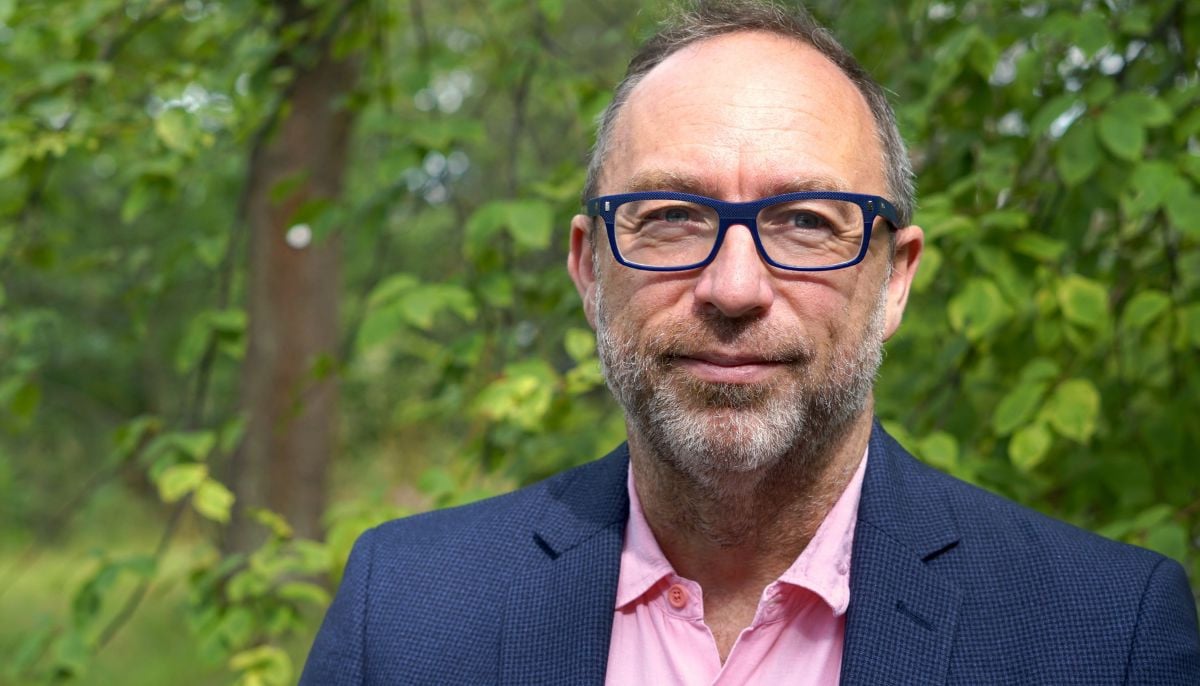
Jimmy Wales, the founder of Wikipedia, has called Australia's ban on social media for under-16s an "unmitigated disaster", not because he defends social media platforms, but because of what he says the policy is teaching children to do.
Age verification systems that require young people to turn on cameras or submit identifying documents are, in Wales's view, normalising surveillance behaviour that will follow them into adulthood.
"This is madness and it's really unsafe," Wales told Guardian Australia during a visit to the country for a writers' festival tour. He cited Roblox, the gaming site where kids as young as five play, which has just launched facial age verification that divides users into age group silos.
His proposal is practical and ready to go; parental control settings for Android and Apple products, according to Wales, are easy to set up but are not common knowledge among parents.
He has called on governments to require retailers to sell phones pre-configured as child-safe devices, placing the responsibility for safe defaults on the industry rather than on individual families. "Why don't we have regulation requiring retailers to sell phones pre-configured as child phones?" he said.
He sees today's ecosystem as one in which users are “just serfs on the master’s estate", bound by terms of service dictated from above, moderated by nameless enforcers, and governed by software that rewards provocative posts.
Wales is currently touring Australia to promote his new book, "Seven Rules of Trust", which posits that the principles that make collaborative editing possible on Wikipedia transparency, courtesy, and direct conversation can help build a roadmap for overcoming political polarisation.
He knows the internet’s history well enough; long before there was Wikipedia, and long before there was Twitter, there were the Usenet message boards, which he remembers as “unbelievably toxic". People, he adds, have never needed software to be nasty to each other.
Wales sees the growing debate over the impact of social media on youth as a “moral panic” that has not been sufficiently scrutinised. The politicians and parents who are pushing the ban do not understand that they are making an implicit bargain between surveillance and censorship.
"Most of the people who are in favour of this sort of thing aren't in favour of that surveillance state," he said. "I just think they haven't really thought it through."


-
 Lili Reinhart reveals why she 'felt convinced' to do 'The Love Hypothesis'
 -
 Madonna's secret adoption after daughter Lourdes Leon's birth exposed
 -
 Secret UFO tape discovered after 70 years may reveal hidden details about 'Invasion of Washington'
 -
 Jenna Leigh Green drops bombshell about her role in 'Sabrina the Teenage Witch' after decades
-
 Apple speeds up software updates amid AI-driven cybersecurity threats
 -
 WhatsApp will now let you chat without sharing your phone number
 -
 Trillionaire Elon Musk celebrates birthday with rocket-themed cake
 -
 Breaking: Is Minecraft down? Several users report outages
 -
 Europe's heatwave puts AI data centres under pressure
 -
 US plans to build world's first fault-tolerant quantum computer: Check details
 -
 Base iPhone 18 likely to feature 9GB RAM, leak suggests
 -
 South Korea plans massive $576bn AI-chip bet to challenge global rivals