Study reveals new AI chip to cut energy use by 70%
AI data centres have become one of the world's fastest-growing energy demands
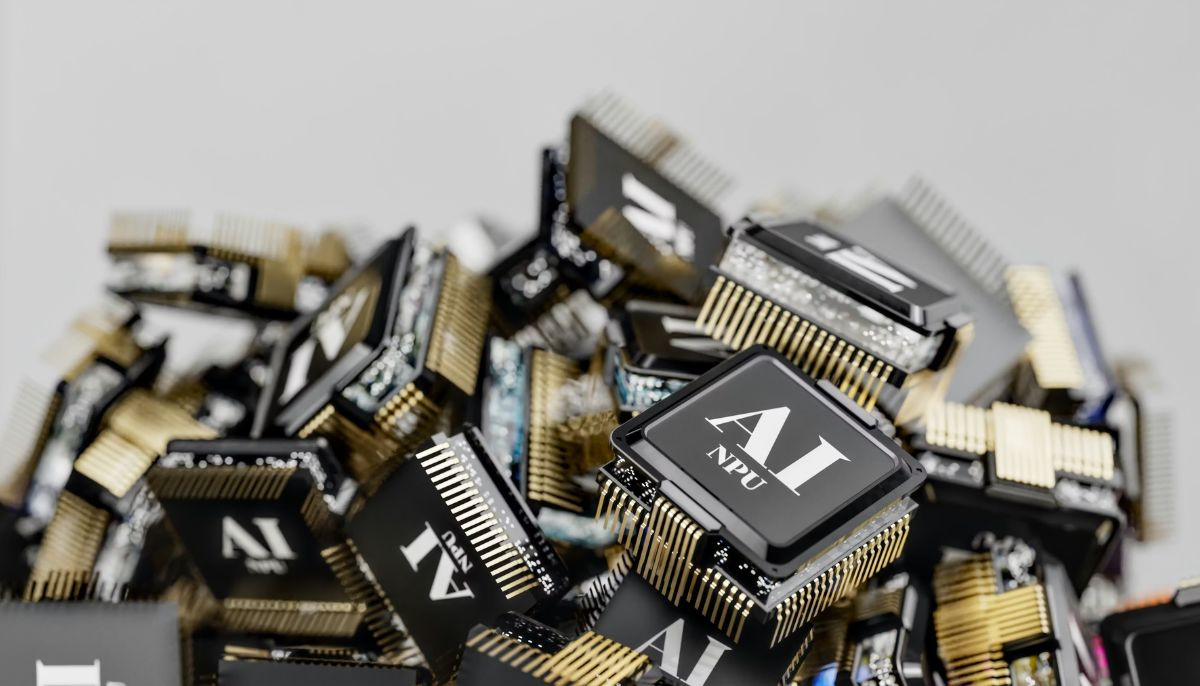
A new type of AI chip developed at the University of Cambridge operates at switching currents roughly a million times lower than conventional oxide-based memristors, a finding that could reframe how the industry tackles one of its most stubborn problems: runaway energy consumption.
Current AI models involve the constant movement of information back and forth between dedicated storage and computing systems. Each such transfer involves energy consumption, which is becoming increasingly expensive as AI use cases become more and more common across different industries.
According to the International Energy Agency, AI data centres have become one of the world's fastest-growing energy demands. The answer offered by the Cambridge team to this growing problem lies in eliminating data transfers altogether.
Standard memristor devices created as artificial versions of neurone connections use the formation of microscopic filaments in a metal oxide to perform their functions. These filaments are highly unpredictable and need very high voltages, limiting the development of such technology.
Dr Babak Bakhit of Cambridge University's Department of Materials Science and Metallurgy, along with his colleagues, came up with a hafnium thin film enriched with strontium and titanium.
Instead of creating a conductive filament, this new technology creates changes by altering the energy barrier at interface layers. "Since our devices operate based on interface switching, we demonstrate excellent cycle-to-cycle and device-to-device uniformity." As stated in Science Advances.
In testing, the devices held stable through tens of thousands of switching cycles and demonstrated spike-timing-dependent plasticity, the biological process by which neurones strengthen or weaken connections based on timing.
That, in turn, is what makes an electronic chip just a storage device and not capable of actually learning anything. The electronic chips are also capable of storing more than a hundred different conductances, something necessary for analogue in-memory computing, which today’s memristor-based devices lack.
The current technology requires temperatures to be about 700°C. This is beyond the reach of current semiconductor technology standards. "We've had thousands of failures before this, and we've been struggling for almost three years before this, but we finally managed to get this temperature," said Bakhit, who is now working on bringing that temperature down.


-
 Anthropic loses appeal over Pentagon supply chain risk designation
 -
 Health Canada warns against use of AI smart glasses, issues immediate recall
 -
 Intel's 14A chips draw interest from Apple, Nvidia, Amazon
 -
 Paramount+ plans free tier ahead of HBO Max merger
 -
 Google gives Gemini Live a face with new talking AI avatars
 -
 US seeks to join Elon Musk’s legal fight against €120m EU fine
 -
 TikTok faces first US trial over teen mental health crisis claims
 -
 Can you trust AI chatbots with your holiday shopping?