
NA body slams Pakistan Post over stamps without serial numbers, insurance delays

ISLAMABAD: The Standing Committee of the National Assembly on Communications has expressed concern over systemic weaknesses in Pakistan Post, including the issuance of postage stamps without serial numbers, terming it a major administrative lapse that creates opportunities for corruption.
Delays in the disbursement of insurance cheques were also criticised, with members observing that such inefficiencies open the door for unethical practices.
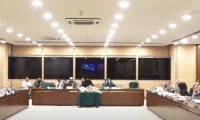
The Standing Committee on Communications held its meeting on Wednesday under the chairmanship of Aijaz Hussain Jakhrani.
The director general of Pakistan Post briefed the committee on the organisation’s mandate, strategic objectives, operational structure, business model, financial performance, and regional comparisons. He also presented short- and long-term plans aimed at modernising the institution and improving service delivery.
A member highlighted a fraud incident in Sukkur and sought an update on the actions taken to be presented at the next meeting.
In light of ongoing issues with insurance services, the committee directed that the Postal Life Insurance Company be invited to the next session to brief members on its MOUs, insurance policies, and the number of cheques issued this year, along with supporting documentation.
The committee further instructed Pakistan Post to submit a proposed bill or amendments to the Pakistan Post Office Act, 1898, to align it with modern-day requirements and public-private partnership models.
Additionally, the committee was briefed on the number of Pakistan Post rest houses across the country and the revenue generated from them, and it directed that a detailed report be submitted at the next meeting.
The members unanimously voiced concern over the repeated absence of the secretary and chairman of the National Highway Authority (NHA) from committee meetings. They urged the chairman to take appropriate action, saying that such absences without prior notice reflect disregard for parliamentary proceedings.
It was emphasised that parliament is the voice of the nation, and last-minute notifications or failures to appear undermine the institution’s authority. The meeting notice had been issued on September 10, 2025, giving sufficient time to the ministry. However, no prior communication about the prime minister’s directives or the officials’ unavailability was received until a day before the meeting, by which time all members had already arrived in Islamabad.
The committee highlighted that under Rules 227(3) and 227(4) of the Rules of Procedure and Conduct of Business in the National Assembly, 2007, it holds the authority to summon individuals using civil court powers. The matter could also be referred to the speaker, the house, or the privilege committee for further action.
However, in view of the prime minister’s official directives-copies of which were submitted to the committee-the members resolved to defer the agenda items relating to the NHA to the next meeting.
The inspector-general (IG) of the National Highways and Motorway Police (NHMP) briefed the committee on a recent incident involving public manhandling by a motorway police officer. The committee was informed that immediate disciplinary action had been taken: the officer was suspended, found guilty in an internal inquiry, and issued a show-cause notice. The IG assured that the dismissal process is underway and will be finalised within weeks, upon completion of legal and departmental formalities.
He further informed the committee that a new code of conduct for motorway police officers has been introduced to help prevent such incidents in the future.
A member raised concern over similar incidents circulating on social media, emphasising that a show-cause notice alone was insufficient and demanding that the officer’s dismissal notification be formally shared with the committee. The member also drew attention to another alleged case of manhandling involving a family travelling from Sukkur to Multan during late-night hours.
In response, the IG committed to thoroughly investigating the matter and reporting back at the next meeting. The committee also recommended that speed limit caution signboards be installed more frequently along motorways to discourage over-speeding, rather than at selective locations.
While appreciating the overall performance of the motorway police, the committee recommended that their salaries be brought at par with those of the Punjab police to boost morale and ensure professionalism. The members unanimously commended the leadership of the committee chairman for ensuring equal representation and consideration of all provinces in the parliamentary oversight process.


-
 State institutions ‘fail’ to perform constitutional duties: KP CM
 -
 CTD orders psychological testing of police on VVIP security duty
 -
 Navy busts drug consignment valued at $130m
 -
 Three ex-secretaries in race for ETPB chief post
 -
 Punjab govt forms 71 JITs to probe cases against banned TLP
 -
 Some UNSC members ignoring broader reforms, seeking privilege: Pakistan
 -
 PAC body discusses non-recovery of Rs15bn gas cess
 -
 Pakistan received $2.29bn foreign loans in first 4 months of 2025