
Meteorite that blazed across US skies is 20m years older than Earth
Scientists analyzed meteorite fragments that smashed into a Georgia home
A meteorite that was spotted over the US skies and cracked into a Georgia home on June 26 is believed to be older than Earth, according to researchers.
The researchers at the University of Georgia who examined the fragments of McDonough meteorite that pierced the roof of a home called it 20 million years older than Earth.
The meteorite was formed around 4.56 billion years ago and the Earth is thought to be 4.543 billion years old, reported by BBC.
Scott Harris who led the study issued a statement: “This particular meteor that entered the atmosphere has a long history before it made it to the ground if McDonough, and in order to totally understand that we actually have to examine what the rock is and determine what group of asteroids it belongs to.”
Harris and his team used optical and electron microscopy to determine the nature of rock. The rock was a chondrite, the most abundant type of stony meteorite found in space.
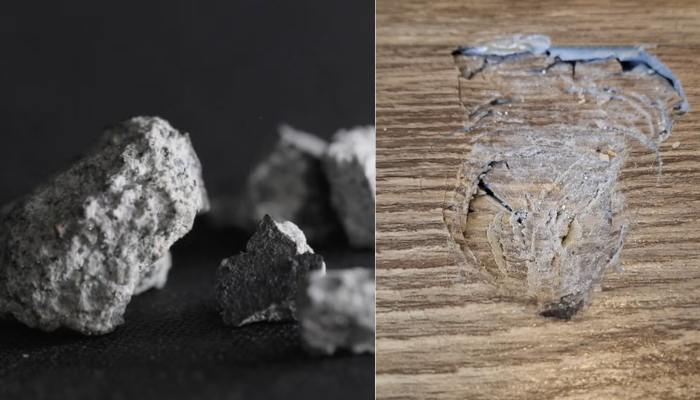
“It belongs to a group of asteroids in the main asteroid belt between Mars and Jupiter that we now think we can tie to a breakup of a much larger asteroid about 470 million years ago,” Harris said.
The home resident said he is still in the search of finding lost pieces of space dust. The meteorite that blazed across the US southeastern skies is the 27th to have been found from Georgia.
According to Harris, “This is something that used to be expected once every few decades and not multiple times within 20 years. Modern technology will help us to receive more and more meteorites.”
Harris is striving to make a breakthrough in the study by finding the composition and speed of rock that will further revolutionize the research on asteroids.






-
 Britney Spears' ex lawyer breaks silence on singer's DUI arrest
 -
 Ray J, Kim Kardashian sex tape saga gets shocking twist after his lawyer's recent claims
 -
 Savannah Guthrie's missing mom Nancy whereabouts revealed?
 -
 'American Idol' alum Taylor makes steamy offer to Kelly Clarkson amid rare confession
 -
 Nicole Kidman's secret date to Met Gala comes to light after Keith Urban divorce
 -
 Jack Harlow shares rare insight into his dating life
 -
 Stephanie Buttermore fans continue to raise big question
 -
 Harper Beckham makes bold move to become next Kylie Jenner