From the sky to the stadium
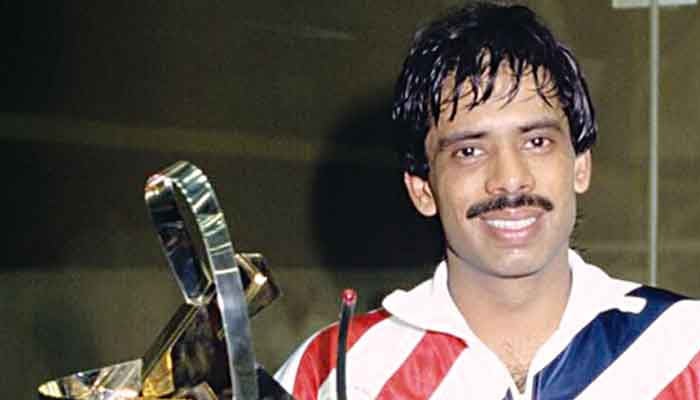
Air Marshal Nur Khan, a distinguished military leader, served as the sixth commander-in-chief of the Pakistan Air Force from 1965 to 1969. He played a pivotal role in transforming the PAF into a disciplined, capable force, earning acclaim for his leadership during the 1965 war with India.
Succeeding the legendary Asghar Khan, Nur Khan was known for his strategic brilliance, integrity, and hands-on leadership. His ‘Midas touch’ extended beyond the military; he elevated PIA to global standards and brought success to Pakistan’s hockey, cricket and squash federations.
Born on February 22, 1923, in Tamman, Chakwal District, Nur Khan hailed from a prominent family linked to the nawab of Kalabagh. Educated at Aitchison College and RIMC Dehra Dun, he was commissioned as a pilot officer on January 6, 1941. Trained at the Lahore Flying Club and Ambala, he later received advanced training in the UK as a bomber and gunnery pilot. Rising quickly through the ranks, he became a flight lieutenant by 1944. He led bombing missions from Assam during WWII and was appointed flight commander of No 4 Squadron in 1946, gaining vital command experience before Partition.
After independence, Nur Khan joined the Pakistan Air Force, serving as base commander in Lahore and later as air attache in the UK. He became commandant of the Flying Training School, Risalpur, and quickly rose through the ranks, playing key roles in modernising the PAF. Promoted to group captain, he commanded major bases, and as air commodore, led No 1 Group. Appointed PAF Commander on July 22, 1965, he led with vision and calm during the war, even approving the innovative use of C-130s as bombers.
Nur Khan’s leadership was decisive. President Ayub Khan authorised him to use the PAF as needed, leading to activation of the Air Force Forward Headquarters on August 30. Demonstrating characteristic courage, Nur Khan flew an L-19 to assess Indian troop movements firsthand across the battlefield. Before the 1965 Indo-Pak War, Pakistani troops in Kashmir urgently needed supplies. Air Marshal Nur Khan, despite being the air force chief, personally co-piloted a perilous C-130 mission to deliver essential provisions to remote, mountainous areas under threat of enemy fire.
Meanwhile, the Indian Army launched a major ground offensive towards Lahore on September 6. In a wave of premature excitement, ‘The Statesman’ of New Delhi released a special supplement heralding the fall of Lahore. At the same time, even the BBC reportedly announced an Indian victory over Pakistan. It was said that the Indian Army’s commander-in-chief had instructed his officers to prepare for a victory wine party at Lahore’s Gymkhana Club. During the war, Nur Khan’s exceptional leadership proved vital in securing air superiority against a larger Indian Air Force. Under his command, the PAF downed 66 Indian jets while losing only 16, including accidents.
Following the 1965 war, Nur Khan invited Indian Air Chief Arjan Singh to Pakistan over tea and dinner, offering a PAF aircraft for his travel. They met along with their former RAF teacher, Bill Catchpole. The event was a powerful symbol of mutual respect and military ethics.
The year 1959 proved challenging for Pakistan International Airlines (PIA), marred by multiple accidents that damaged both its reputation and finances. In response, the government turned to Air Commodore Malik Nur Khan to rescue and revitalise the struggling national carrier. Taking charge as managing director in 1959 and later as chairman from 1973 to 1980, Nur Khan brought unmatched dedication and strategic leadership to the role. He found a workforce riddled with internal conflicts and egos, which he swiftly addressed by retiring seven senior captains and enforcing strict discipline. Assembling a team of top-tier professionals. He empowered talent and instilled a results-driven culture.
Under his no-nonsense, interference-free leadership, PIA transformed within six years into one of the world’s top airlines, all without government subsidies. This remarkable turnaround earned the period its lasting titles: ‘Great People to fly with’.
During his second tenure (1973–80), he restored discipline, modernised operations with DC-10s and B-747s aircraft, expanded international routes and implemented staff training and profit-sharing schemes. His courageous leadership shone during a 1978 hijacking, where he boarded the aircraft, disarmed the hijacker and resolved the crisis despite being injured. Under his visionary command, PIA overcame financial and operational setbacks to become a globally respected carrier once more.
Nur Khan’s passion also extended to sports, with PIA football winning nine National Championships under his tenure. He also expanded PIA’s portfolios beyond aviation, acquiring several prestigious properties and hotels worldwide, like the Roosevelt Hotel, New York, the Hotel Scribe, Paris and PIA Training Centers & Offices abroad. Queen Elizabeth II flew with PIA and appreciated its hospitality and service brought international acclaim. PIA also helped establish Emirates Airlines and Air Malta.
A larger-than-life figure, Air Marshal Nur Khan played a decisive role in elevating Pakistan’s national sports – hockey, squash and cricket – from near obscurity to international acclaim. Utilising PIA’s resources and sponsorship, he invested generously in sports development, bringing Pakistan global recognition.
He also played a transformative role in global hockey and is said to have been the visionary behind the creation of both the Hockey World Cup and the Champions Trophy – tournaments that later became cornerstones of international hockey. Under his leadership, Pakistan secured Olympic gold medals (1968, 1984), two World Cup titles (1978, 1982), Champions Trophies (1978, 1980), and the Junior World Cup (1979), and secured silver medals in the 1983 and 1984 editions.
Though not a cricketer by background, Nur Khan’s exceptional administrative abilities greatly influenced Pakistan cricket. His tenure led to landmark changes, co-hosting the 1987 Cricket World Cup with India and pioneering the use of neutral umpires in international matches.
Air Marshal Nur Khan was instrumental in reviving Pakistan’s squash dominance after a decline following its 1951–63 golden era. To rejuvenate the sport, he launched the PIA Colts Scheme, offering young talent monthly stipends, expert coaching, and international exposure – fully funded by PIA. Promising players were given jobs and rewarded with promotions for achievements. This support produced a new generation of stars in the 1970s, including Qamar Zaman, Gogi Allauddin and Hiddy Jahan, with several Pakistanis ranked in the world’s top ten.
In 1975, Nur Khan invited Azam Khan to coach in England, leading to Qamar’s British Open win after a 12-year gap. He also backed 15-year-old Jahangir Khan, initially rejected by selectors, to compete in the 1978 World Amateur Championship, which he won. Jahangir went on to win the British Open ten times (1982–91), followed by Jansher Khan’s six-year reign (1992–97), marking 16 years of Pakistani dominance in global squash.
Air Marshal Nur Khan remains a revered national icon, celebrated for his exemplary leadership and brilliance as an accomplished pilot throughout his distinguished air force career.
The writer is a freelance contributor. He can be reached at:
mozammilhaq7595@gmail.com