As world mourns, cardinals prepare pope's funeral
"He was a good man, he worked hard and loved the world," says US President Trump
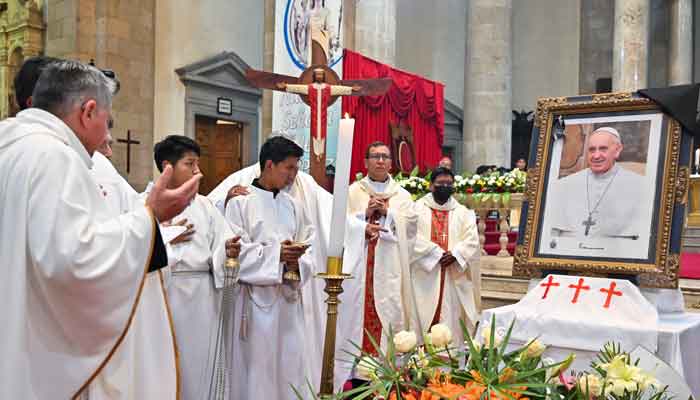
VATICAN CITY: Cardinals will meet Tuesday to decide the date for Pope Francis's funeral, starting a process that will culminate in the election of a new Catholic leader within three weeks.
Francis, the head of the world's 1.4 billion Catholics, died at his home in the Vatican on Monday aged 88 after suffering a stroke.
He had been recovering from double pneumonia that saw him hospitalised for five weeks.
Tributes have poured in from around the globe for Francis, a liberal reformer who took over following the resignation of German theologian Benedict XVI in 2013.
The Argentine pontiff's home country prepared for a week of national mourning while India began three days of state mourning on Tuesday, a rare honour for a foreign religious leader in the world's most populous nation.
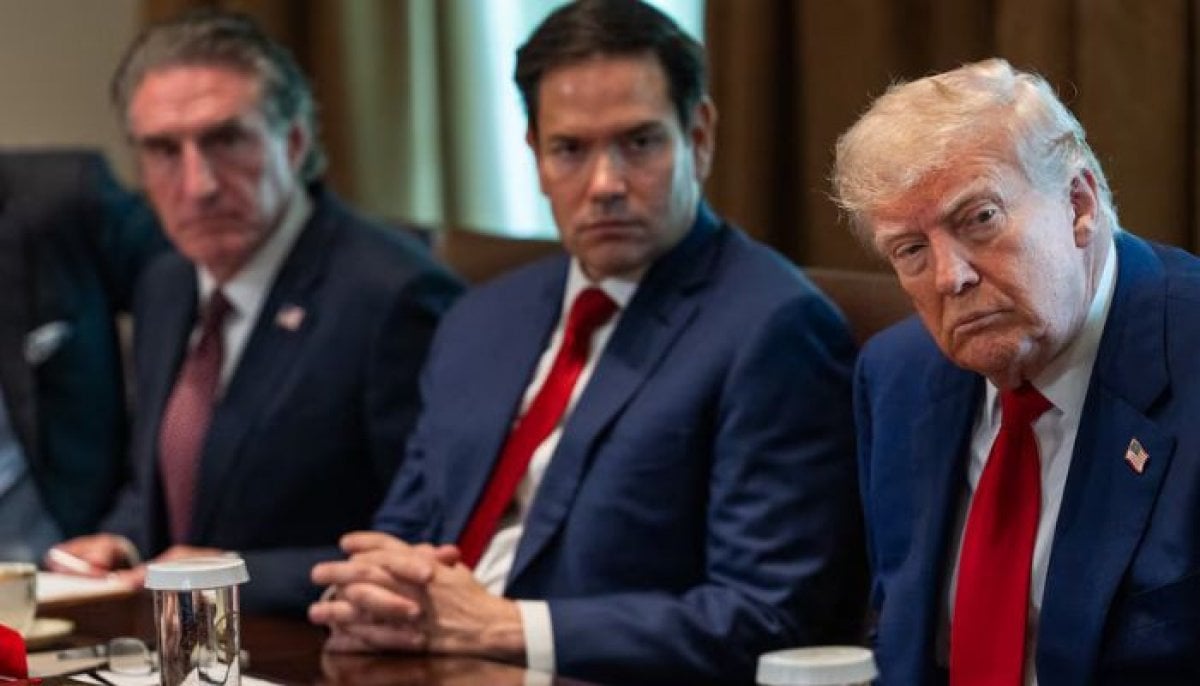
Heads of state and royalty are expected for his funeral, due to be held at St Peter's Basilica, with Donald Trump the first to announce he would attend.
"He was a good man, he worked hard and loved the world," the US president said, despite the pontiff's criticisms of his migrant deportation programme.
The funeral should be held between the fourth and sixth days after the pope's death, according to the Apostolic Constitution — so between Friday and Sunday this week.
But the details will be decided by the cardinals, who have been summoned for a first of a series of "general congregations" starting at 9:00am (0700GMT).
Cardinals of all ages are invited to the congregations, although only those under the age of 80 are eligible to vote for a new pope in the conclave.
The conclave should begin no less than 15 and no more than 20 days after the death of the pope.
Simple tomb
The pope's body was moved into the Santa Marta chapel on Monday evening, and his apartment formally sealed, the Vatican said.
His remains are expected to be transferred from the Santa Marta residence, where he lived and died, to St Peter's Basilica starting Wednesday to lie in state.
Francis, who wore plain robes and eschewed the luxury of his predecessors, has opted for a simple tomb, unadorned except for his name in Latin: Franciscus, according to his will released Monday.
He will be buried in Rome's Santa Maria Maggiore basilica, becoming the first pope in more than 100 years to be laid to rest outside the Vatican.
His death certificate released by the Vatican said Francis died of a stroke, causing a coma and "irreversible" heart failure.
He had been discharged from Rome´s Gemelli hospital on March 23, ordered to spend at least two months resting.
But Francis delighted in being among his flock and made numerous public appearances in recent days.
He appeared exhausted on Sunday during the Easter celebrations, but nevertheless greeted the crowds in his popemobile in St Peter's Square.
Argentine football great Lionel Messi hailed his compatriot — himself a huge fan of the beautiful game — for "making the world a better place".
Eyes of God
On Monday evening, thousands of faithful, some bringing flowers or candles, flocked to St Peter's Square at sunset to pray for Francis.
Born Jorge Bergoglio, Francis was the first pope from the Americas and the first Jesuit to lead the worldwide Catholic Church.
An energetic reformer, he sought to open the Church to everyone and was hugely popular — but his views also sparked fierce internal opposition.
In 12 years as pope, Francis advocated tirelessly for the defence of migrants, the environment, and social justice without questioning the Church's positions on abortion or priestly celibacy.
A fierce opponent of the arms trade, the former archbishop of Buenos Aires repeatedly called for peace in conflicts from Sudan to Gaza and Ukraine — although his pleas fell largely on deaf ears.
Outspoken and stubborn, Francis also sought to reform the governance of the Holy See and expand the role of women and lay people, and to clean up the Vatican's murky finances.
Faced with revelations of widespread child sex abuse in the Church, he lifted pontifical secrecy and forced religious and lay people to report cases to their superiors.
However, victims' groups said he did not go far enough.


-
 Macron taps Kanye West hit track for bold social media ban on children
 -
 Trump threatens Iranian infrastructure
 -
 Hitler's birthplace begins new life as a police station
 -
 New Jersey DMV software glitch led to 6,600 non-citizen voter registrations
 -
 Who was Daniel Siad? Epstein-linked model scout found dead in Paris
 -
 EU aviation agency EASA adds Jordan to 'no-fly list' amid escalating conflict
 -
 Spain, France battle raging wildfires amid extreme heat
 -
 Marco Rubio pushes back on US tech ‘kill switch’ concerns